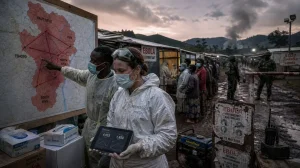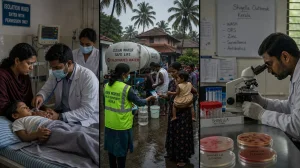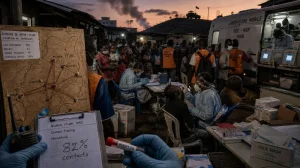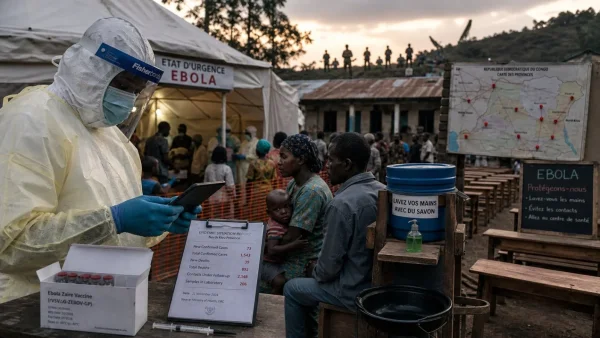
It has become a more lethal affair in Congo. The official count stands at over 6,100 cases and a death toll that has passed 3,000. Infections from the Bundibugyo strain are outpacing those trying to track them, an intensifying pressure on the families, clinics and classrooms of six provinces.
Figures from the Ministry of Health put the numbers at 6,186 confirmed and 3,007 fatalities, a clear indication of the outbreak’s escalation. Reuters has been told by experts and officials that the virus was likely present undetected as far back as January, well ahead of its May 15 declaration in Ituri province.
Speed and spread
AP considers this the most rapidly expanding Ebola outbreak to date and the largest Congo has had to contend with, having left the 2018-2020 epidemic in its wake. The World Health Organisation cautions that it is heading for figures greater than the 2014-2016 West Africa crisis, the deadliest on record.
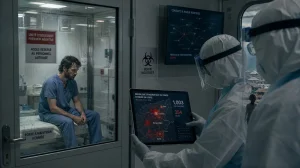
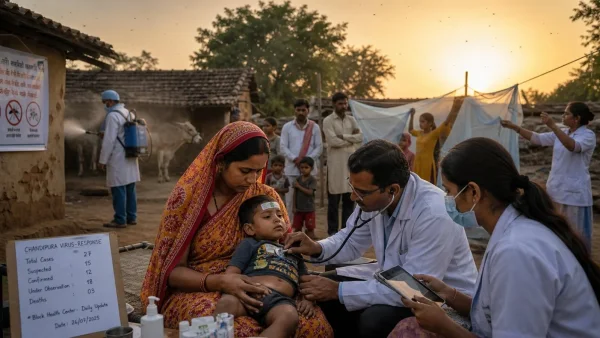
Time is of the essence when it comes to detection. The WHO puts it at 60 per cent of deaths happening away from treatment centres, which hampers isolation and allows the virus to take hold in the community. Between conflict, displacement and poor surveillance, finding cases early is no easy matter.
Responders find the virus staying one step ahead due to a host of problems pointed out by health experts. There is the matter of weak infrastructure, the comings and goings of miners and outright attacks on health staff that erode access and trust.
In the view of health experts the main impediments are:
– A lack of disease surveillance where it is remote
– Insecurity and violence against health workers
– Mistrust and resistance in the community
– The constant movement of traders and miners
– Restricted entry to the zones in question
Classrooms reopen amid outbreak worries
Tuesday saw the return of students to school even though the teachers’ union in Ituri was asking for a postponement. Turnout has been thin at some government schools. “I do not really see an increase in prevention measures,” said Aimerance Vahweka, a parent in Bunia who has decided to keep her child home.
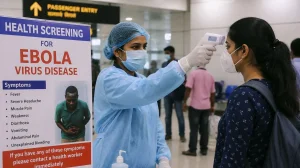
Teachers and authorities will have noncontact thermometers and hand sanitisers in place. “We also raise student awareness about adhering to hygiene protocols,” says Etienne Ndjabu of Bunia. But clean water is not to be found in many schools and Greg Ramm of Save the Children has spoken of logistical hold-ups in the more distant areas.
Those under four are in the gravest danger. Health data indicate a 60 per cent case-fatality rate for this age group, higher than any other in the current outbreak. That statistic makes every precaution in the classroom a must for parents and teachers alike.
Treatment and vaccines: What exists today
One will not find an approved vaccine or treatment for the Bundibugyo species at play here. Reuters reports that candidates are in the works, from the University of Oxford and the International AIDS Vaccine Initiative among others.
Congo has started to use Merck’s Ervebo on frontline staff; it is licensed for the Zaire strain and is thought to afford some cross-protection. After 16,250 doses were delivered late last month, vaccinations have commenced in Kisangani. The WHO has put forward a phase three trial, with initial data pointing to a measure of protection.
Funding and the road ahead
Britain has put another 50 million ($67.56 million) on the table for new support, bringing its total to 78 million. ‘As the outbreak intensifies, we are accelerating our response,’ says Kirsty McNeill, the minister for Africa. The money is for everything from safe burials and community outreach to infection control and treatment.
With 1,409 recoveries reported, Congo’s latest fatality rate is 48.6%. But resources are being stretched by the mistrust and attacks on responders in the east and northeast, not to mention the prevailing insecurity.
The West Africa epidemic of 2014-2016 was responsible for more than 11,000 deaths and 28,600 infections in Guinea, Liberia and Sierra Leone. Given the rapid spread across six provinces, the WHO sees a possibility of Congo’s outbreak going past that grim mark unless momentum changes.
What comes next
Health authorities have their work cut out for them on three counts: to detect cases before they die at home, to make sure medical teams can get in and to win over the community. For the family it means unrelenting hygiene and seeking care early. As for the schools, it will be down to sanitation and monitoring to keep the doors open without stoking transmission.