For the investor or saver, an incorrect debit is more than a bother; it is an assault on confidence and liquidity. When a bank has overcharged or will not reverse an error, the rules can be turned to your advantage. You just need to make a case of it, document everything and, where necessary, see that it is escalated to the RBI Ombudsman.
Why this matters for your money
Cash flows get disrupted and returns eroded by unexplained deductions, fees at odds with the bank’s tariff or duplicate debits. The Reserve Bank of India puts in place a framework to limit such losses right away. Report an unauthorised electronic transaction within three working days of the bank’s alert and, in certain instances, you are left with no liability at all.
But put off the matter and your own liability goes up, with the risk and cost falling back on you. Under the RBI’s rules for unauthorised transactions, the bank is under a policy obligation to issue a provisional or shadow credit in 10 working days once they are made aware. These are not optional timelines; they dictate how soon you see your money again.
Build your case before you call
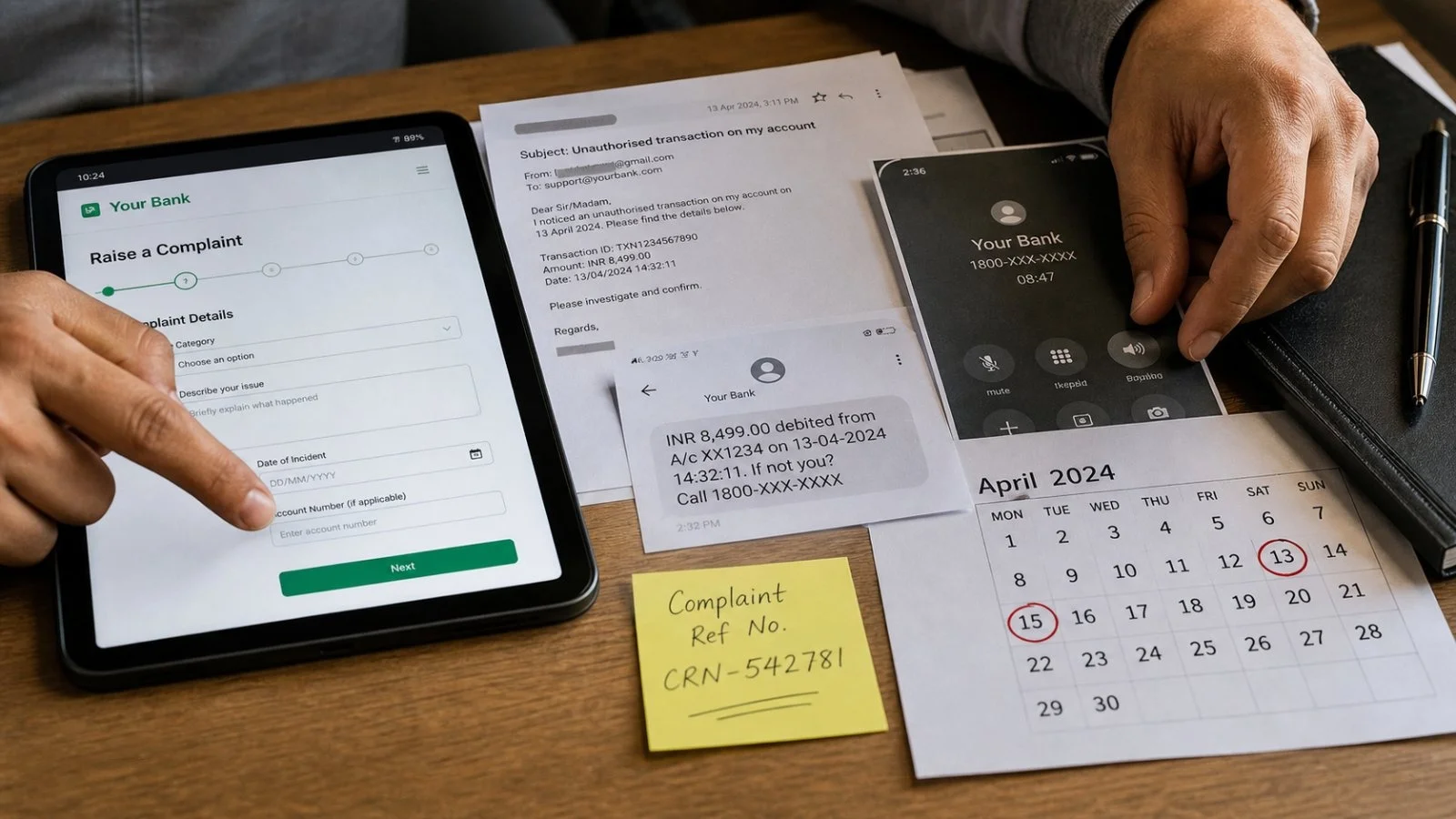
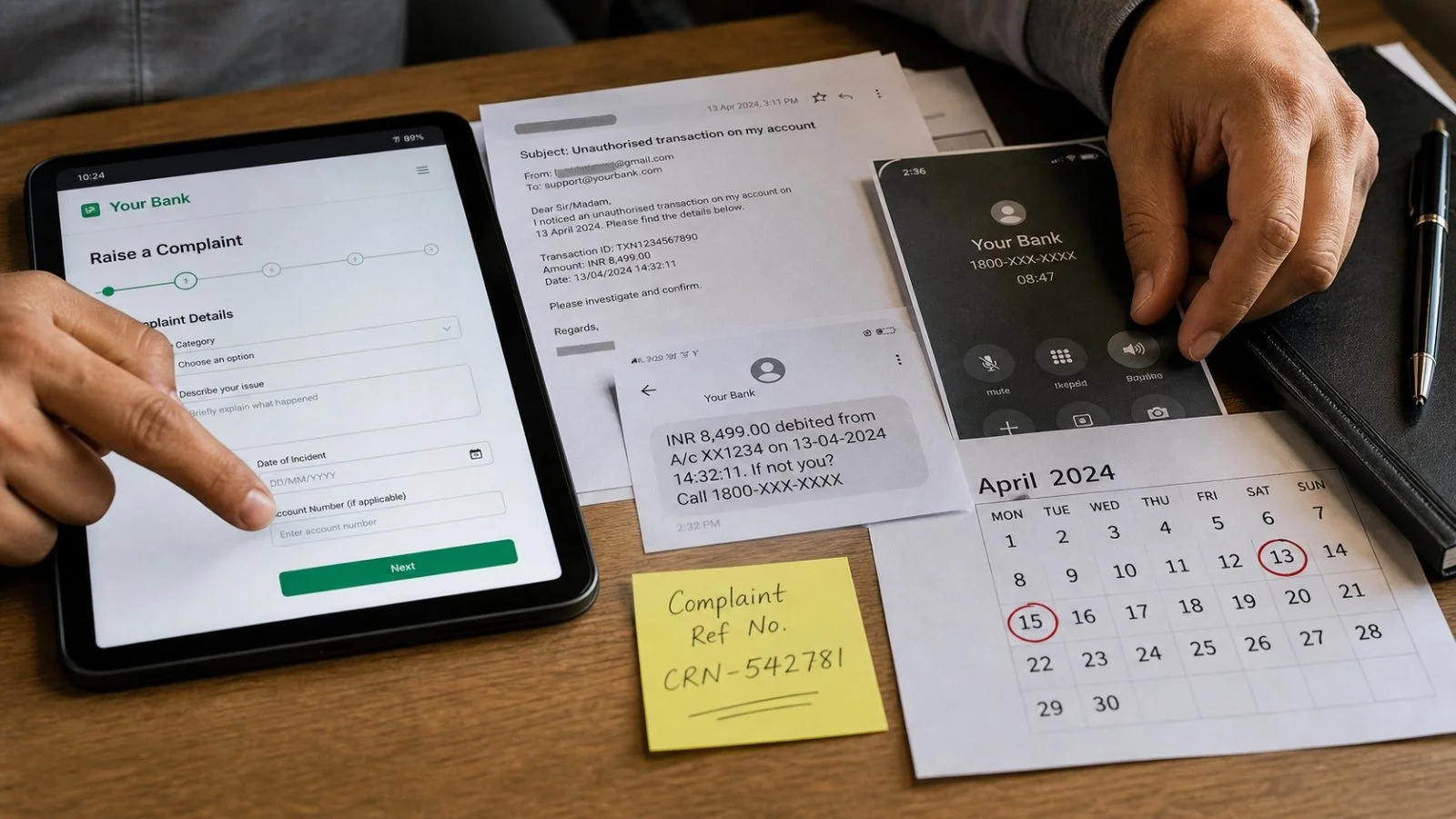
While a phone call may convey some urgency, it does not leave a trail of any legal use. Put in a written complaint via the branch, the app, web portal or email and be specific as to the date, amount and why the debit is in question.
Hold on to the reference number from the complaint, any email acknowledgements, screenshots and what the bank has to say in return. A dated and orderly record is proof to the regulator and the bank alike that you have acted and have the evidence for a reversal.
Overcharge versus unauthorised transaction
A dispute is not always a matter of fraud. Where there is an incorrect charge, put the onus on the bank to show their calculation and point to the tariff or contract that justifies it. Keep your file in order with the fee schedule, statement and correspondence so resolution comes quicker.
In the event of something you did not authorise, do not sit on it until the monthly statement arrives if you have already seen the debit. Move through official channels at once. The clock for zero liability is ticking from the time of the bank’s alert.
The escalation timeline you cannot miss
Let the bank have the first opportunity to put things right, but do not wait indefinitely. Once 30 days have gone by with no answer you like, the Reserve Bank-Integrated Ombudsman Scheme, 2026 is open to you. From July 1, 2026, the scheme provides a no-cost avenue for complaints against regulated entities.
RBI's Complaint Management System is the way to lodge a case. It is a free process and should one need direction on procedure or to check status, the contact centre at 14448 is available to help. To be valid under the scheme, a complaint has to be filed within the allotted time, either in the wake of the bank’s response or once the 30-day window has run out, and it must satisfy the maintainability criteria.
There is value for the investor in this kind of escalation structure. It puts timelines on institutions and thereby lowers value-at-risk. One also sees governance discipline at work: a compliant bank will make quick work of a resolution to sidestep any Ombudsman attention.

Manage risk while the case is pending
Filing a complaint does not bring the matter to an end. An investor would do well to keep an eye on the account for unprocessed reversals or debits that reappear. Should the bank put in place a temporary credit, hold on to all correspondence until there is final closure.
Make a habit of checking statements and have your transaction alerts enabled. There is no reason to put up with minor errors; to do so is to invite bigger ones and normalise a level of service slippage that will take its toll on returns over time. Even a small wrong debit warrants a challenge.
Strengthen the dispute file with the following:
– The complaint reference and timestamps
– Any relevant screenshots from statements or alerts
– Bank terms or tariff you are citing
– A complete record of emails and messages
How to convert policy into outcomes
The RBI framework should be viewed as a sequence for the protection of one’s position. By acting on time and on the record, loss is kept to a minimum. If the bank cannot justify a debit or misses a mandated deadline, the burden is theirs.
Take an unauthorised electronic transaction for instance. Under RBI rules the bank is obliged to make a provisional credit in 10 working days. This is important as it contains cashflow damage and shows the dispute is being formally looked at while liability is determined.

Practical road map: from detection to closure
Secure your evidence and put in a written complaint by the proper channels. An alert on something you did not authorise needs to be reported right away to fit the three working days window for zero liability.
Allow the bank an opportunity to put things right, but mark your calendar. After 30 days with no adequate answer, the Reserve Bank-Integrated Ombudsman Scheme, 2026 is the next step via the Complaint Management System. For updates and guidance, 14448 is on hand.
Do not let go of the case file when the ticket is closed and the reversal is in the books; it may be needed for an audit or if the issue resurfaces. In the end, a disciplined way of going about things is what makes regulatory protections yield actual recoveries.
Key points for the investor:
– On unauthorised debits, act in three working days
– Insist on a written trail and have your proofs
– A provisional credit is due in 10 working days
– At the 30 day mark, go through the RBI Ombudsman
– 14448 can be used for support
It is straightforward. With the right speed and documentation, RBI rules become money back in the account. A wrong debit is a risk to be solved, not a cost to be absorbed.