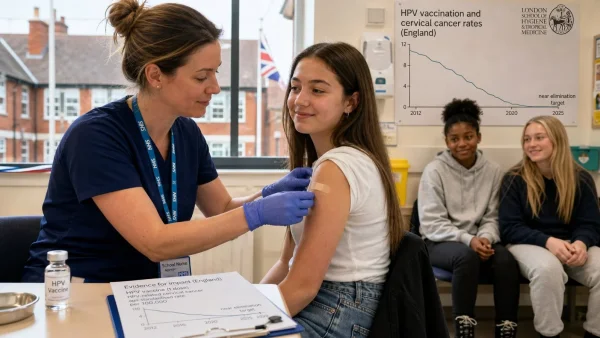
We’ve seen no such fatalities in that age group in England from 2020 to 2024, and the researchers put it down to the country’s approach to HPV. It’s a clear signal for any family on the fence about a school jab: get them in early and you can all but rule out a fatal outcome before they’re 30.
You can read the full report in The Lancet, with Queen Mary University of London at the helm. What comes through is a very tangible, real-world result. We haven’t had a year with no deaths in this youngest bracket since we started keeping track, let alone five in a row.
What the new data shows
Do the math and you’d have expected some 23 women in the 20-24 range to have died in these years if not for the programme. It’s been in place since 2008, and by most accounts it has put a stop to about 200 deaths in England so far.
‘To see one shot come close to eradicating a form of cancer is remarkable,’ says Peter Sasieni, who led the study. He sees this as just the start; the numbers should only improve as the people we’ve vaccinated get older.
It’s a far cry from before 2008, when we were seeing 20 or so of these deaths a year in under-30s. For the ones we put through the process as teens, the risk has been turned on its head.
Why timing matters for protection
The thing about the HPV vaccine is it puts your immune system in a position to neutralise the virus – the main driver of cervical cancer – before you ever come into contact with it. That’s why the health service will tell you to have it at 11 or 12, though you can make a start at nine.
Our work shows that a 12- or 13-year-old who is vaxxed is looking at virtually no chance of dying from cervical cancer in their 20s. For a parent, that’s the line between having some cover and being almost fully secure in young adulthood.
HPV is passed on in close contact. While the body usually fends it off, a lingering infection can set off a chain of cell changes that becomes cancer down the road. You don’t let that happen if you can stop it at the source.
A few of the key points to take away:
– 20-24 year olds in England: no cervical cancer deaths, 2020-2024
– 23 would have been the figure without the programme
– A 12-13 year old is in the clear for near-zero risk before 30
– Some 200 lives put in the books in England
Screening and vaccination work together
Don’t let the vaccine be a substitute for your check-ups, is the word from the medical community. You get the best of both worlds with a vax and some early detection to spot any trouble with the cells before it’s too late.
Cervical cancer is still the 14th most common in UK women, with 3,300 cases a year. So screening is a must for anyone who didn’t get the jab or could be up against a strain it doesn’t handle.
Cancer Research UK, which put up the money for the study, are hailing it as an ‘incredible milestone’. It’s the first time we have hard proof the vaccine is stopping not just the disease but the death toll that goes with it.
Global momentum and what comes next
You’re seeing this on a world stage. In India, for instance, where it’s the second most prevalent cancer in women, the government is rolling out a free national campaign in February 2026. They want to get to 11.5 million girls in a bid to cut back on a condition responsible for a quarter of the world’s cervical cancer deaths.
The UK has its eyes on 2040 to put an end to cervical cancer as a public health issue. With good coverage of both the vax and the screen, the latest figures say we’re well on our way to making that happen.
What to watch
From here it’s about keeping up the pace. Make sure people are getting in for their jabs and their screenings, and offer a catch-up where it’s called for. The kind of results we’re seeing in young women now will be with us for decades to come.