In a pointed move, the AIMPLB has put up a fight against the state’s rule to have Vande Mataram in school assemblies. They want to see the directive either rescinded or set aside for their community, making no secret of the fact that they view it as an encroachment on the constitutional rights of Muslims and a potential threat to the freedom of conscience in the classroom.
This isn’t just about a formality, according to the Board. The mandate covers everything from government and state-aided schools to madrasas with official recognition, and there, they say, you can’t simply put aside matters of faith. Now that it is being put into practice, morning assemblies have become something of a litmus test for where the Constitution ends and the state begins.
What the new rule changes
You can make Vande Mataram part of your day if you like, but as of last month, the West Bengal government has made it a must for all state-run and -aided schools, with no time to adjust. That also goes for the government-recognised and aided madrasas under the purview of the Minority Affairs and Madrasah Education Department; they are to have every stanza recited.
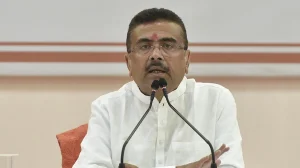
The Board puts this down to the new Suvendu Adhikari-led BJP regime in the state. It is a change from how things were done before, and now every institution is expected to fall in line.
Historically, the central government has let the recitation be up to the individual, not an administrative box to be ticked. The Board will have it no other way: any move away from that has to be within the bounds of the Constitution.
Board’s constitutional argument
In a statement put out on Tuesday, Dr SQR Ilyas, for the Board, was blunt: you can’t force a student to put words in his mouth that go against his religion. He pointed to Fundamental Rights and the relevant articles – 19, 25 and 28(3) – as being trampled on by such compulsion.
Put simply, the Board’s case is built on a few key points:
– A violation of Articles 19, 25, and 28(3)
– The Bijoe Emmanuel case law means you can’t be made to participate against your will
– You don’t get to impose religious observance in an aided school without permission
Then there is the matter of the Supreme Court's decision in Bijoe Emmanuel v State of Kerala. The Board says it is clear: citizens are shielded from being put in a position where they have to take part in a ceremony, national or otherwise, if it is anathema to their beliefs. You can’t put the cart of compulsion before the horse of consent.
Theological concerns and secular ethos
There is more to it than the law books. The AIMPLB has some theological qualms as well. Some of the stanzas in Vande Mataram, it says, do not sit well with Tawhid, the Islamic tenet of monotheism. To have a Muslim student read them is, in the Board’s view, a straight-up affront to his religious standing and his rights as a citizen.
It is also a question of whether the state is truly secular. A neutral state does not foist the customs of one group on another. This mandate, the Board feels, is at odds with the democratic and secular fabric of the country.
What AIMPLB wants next
Their ask is straightforward: put the notification away or let Muslim students off the hook. If not, then the constitutional protections need to be put in place in every school and madrasa so that those with a problem with it on principle aren’t put under a microscope.
Citing Article 28(3), the Board is on record to say that in any institution that sees public money, you cannot make a student part of a religious rite unless he is in full agreement. Anything else is a step too far and would be hard to defend in a court of law.
The word to parents, teachers and students is to be on guard. Should the authorities try to muscle in, the Board is ready to point them to the courts and the Supreme Court’s own pronouncements on the matter.
Why the debate will persist
When you add legal and moral weight to a daily assembly, you don’t expect the row to die down. The state is for uniformity; the AIMPLB is for the right to believe as you see fit in a room the taxpayer has paid for. We may have to wait and see how it plays out in the courts.