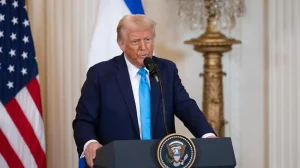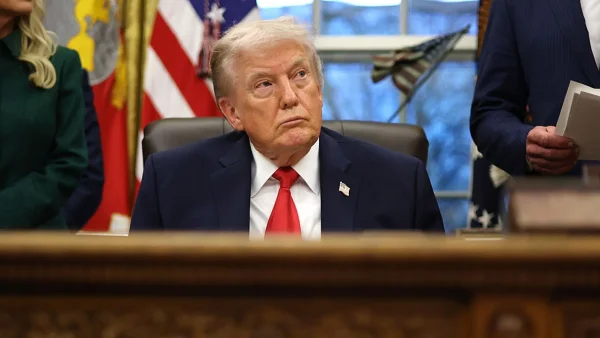
Trump said on Truth Social that Iran has already lost a lot, and that things might get even worse for them. He claimed that Tehran had backed down when put under pressure, and once more said the only way to end the fighting was for Iran to give up, without conditions.
Trump also said Iran isn’t the ‘bully of the Middle East’ any more, and presented the Islamic Republic as a country that is falling apart. He also said that some areas and groups that hadn’t been thought of before might now be targets, meaning Washington could be increasing the number of places it attacks.
However, the president did offer something good with the threats.
He said the U.S. and its allies would help put Iran’s damaged economy back together, if a new government – one Washington would approve of – came to power after Iran surrendered.
Iranian President Masoud Pezeshkian has said sorry to countries nearby for attacks that took place during the war, and said he knows the war is making things hard for the area. He said Iran would not attack other countries in the region unless they started attacking from their own land.
But Pezeshkian strongly turned down Trump’s request for Iran to surrender completely. In a speech on TV, he said Iran would not give in, and that enemies of the nation should give up any thought of seeing Tehran yield.
Iran showed it could still launch attacks, by sending off volleys of missiles and drones.
People in a temporary leadership group in Tehran have supposedly agreed to limit attacks across borders, but Iranian forces have still been firing missiles and drones at places all over the region, showing Tehran is determined to keep being a threat, even though its military sites are being repeatedly hit.
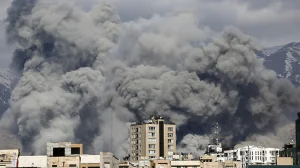
Over the last week, U.S. and Israeli military operations have been stepped up, and Israel has described some of its widest-ranging air strikes since the fighting started. Targets included a military school, a command centre that was underground, and a place for storing missiles.
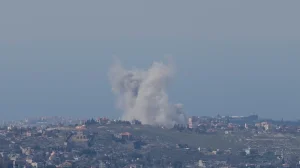
Before sunrise, flames and a lot of thick smoke went up from Mehrabad International Airport in Tehran, after air strikes set part of the airport on fire, according to pictures and reports from people in the area. The Revolutionary Guards also said they had fired on the oil tanker Prima in the Gulf, as it was trying to go through the Strait of Hormuz.
Air raid warnings sounded over Jerusalem, and Gulf states said they had stopped a lot of missiles. Saudi Arabia said it had shot down a ballistic missile which was going for an air base where U.S. staff were based.
The United Arab Emirates said it had stopped 15 ballistic missiles and 119 drones on what was one of the most intense days of fighting. Video from Dubai showed something hitting near the airport. Jordan accused Iran of aiming at important places with many missiles and drones over the last week. ## Human Toll and Damage Across Borders
As the war goes into its second week, the number of people – both civilians and in the armed forces – who’ve been killed goes up. Authorities say at least 1,230 have died in Iran, with more deaths in Lebanon and Israel; at least six American soldiers have died since the fighting got worse.
Iran’s health department stated that at least 926 citizens were killed, and a great many injured, however these numbers have not been checked by anyone else. In Iran, damage to the things people rely on and where people live is increasing, and people in Tehran are more and more worried, as security personnel show up in larger numbers.
Lebanon has been hit again and again by air attacks from Israel, especially in south Beirut and other places connected to groups Iran supports. Officials in Lebanon say over 200 people are dead and are warning of a big humanitarian emergency should the attacks and removals of people continue.
Economic Ripples and Diplomatic Maneuvering
Worldwide trading has responded to the conflict spreading, and the danger to the supply of energy. The price of oil has jumped because people are afraid the fighting could stop shipments going through the Strait of Hormuz – a vitally important trade route which, Iran says, it has closed.
Problems with air routes and reports of attacks near main airports have put flight operations and moving goods around the Gulf in trouble. Any lasting trouble could put airlines, shipping companies, and insurance firms under pressure; and higher fuel costs might affect global supply lines.
What leaders are saying diplomatically is not consistent. Trump has turned down new discussions with Tehran, saying that only giving in without conditions will end the fighting. Iran’s representative to the United Nations said changes in leadership will be decided by the country’s constitution and its citizens, not foreign governments.
Russia asked for an immediate end to fighting in a phone call with Pezeshkian, and Beijing and Moscow have mostly stayed out of it. American defense people in charge said they are not worried by reports Russia might be giving information to Iran.
What Trump’s Strategy Signals for U.S. Policy
Trump's messages mix using force to make someone do something with possibly giving economic help if certain things happen. The threat of attacking more places and a ‘hit very hard’ warning are meant to stop Iran doing more and make the leaders in Tehran tired of the situation.
Offering to help rebuild the Iranian economy, but only if the leadership changes, shows that the U.S. wants a change in the government rather than just to undo what has been done. This makes the situation riskier for both sides and makes it harder to find ways to talk and avoid fighting, at least for the moment.
At the moment, what is happening in battle seems to be what is shaping policy. American and Israeli attacks have been about reducing command centers, places where missiles are stored, and drone systems. Iran has been trying to show it can take a beating, keep several areas of fighting going, and make its neighbors pay for letting attacks happen or helping them.
With the number of dead going up and vital things people need at risk, what happens next may depend on whether either side thinks they are getting something useful from continuing to make things worse. If not, people from outside could start to help, especially if the energy markets get tighter and governments in the area ask for the fighting to be reduced.
As the United States gets ready to honor those who have died at Dover Air Force Base, the political and human dangers are increasing. Whether the war goes towards a short break in fighting, or a more severe round of attacks, may depend on how Washington and Tehran weigh stopping the other side, what people at home want, and how things are changing on the ground.