The trouble with Iran got much worse on Monday, spreading to Lebanon and causing worry in the Gulf countries; Kuwait, by mistake, brought down three American fighter planes while Iran was sending missiles and drones. The air fighting between the US and Israel against Iran isn’t letting up, and the price of energy has gone up a lot, as world markets prepare for a long time of problems.
Lebanon Now Part of a Larger War in the Area
Hezbollah sent missiles and drones toward Israel, to get back at Iran’s highest leader being killed at the weekend. These attacks started a new area of fighting, and showed how much danger there was of fighting in many places.
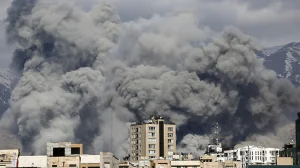
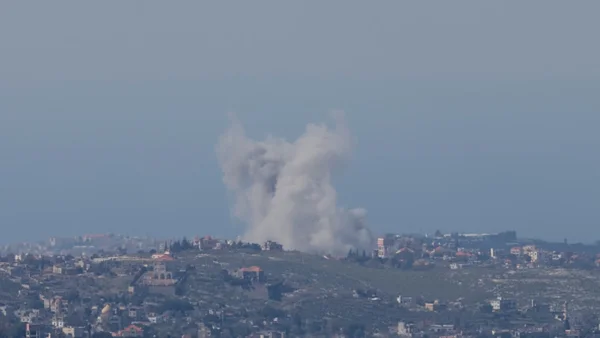
Israel answered with large air attacks all over the south of Lebanon, and in parts of Beirut that Hezbollah controls. People in charge said that the attacks were to get important soldiers and command centres.
In the first counts, people in Lebanon said that at least 31 people had been killed, and 149 hurt. Heavy black smoke was over parts of the capital, and people living there hid from the blasts which kept happening.
Israel said that Hezbollah’s leader, Naim Qassem, was to be killed, but said they weren’t thinking about sending soldiers into Lebanon on the ground at the moment. This answer showed they wanted to weaken Hezbollah without starting a full-scale war on land.
For people living on both sides of the border, the price went up by the hour. Shots fired across the border, and systems to defend against the air, broke the little peace there had been, adding to the worry that a small fight might turn into a larger one.
Kuwait by Mistake Hits US Planes in a Friendly Fire Problem
US Central Command said that Kuwait's air defences, by mistake, hit three US fighter planes when they were actively in battle. All six people flying the planes got out safely, and were found in a good state. They are looking into what happened.
The friendly fire happened while Kuwait’s defences were trying to stop Iranian drones and possible missile dangers. Video which had been independently found where it was, showed a warplane spinning down over the Al Jahra area, with a parachute seen just before it hit the ground.
Also, smoke was seen near the US Embassy area in Kuwait City. Emergency help went to the area, and US people in charge told US people to stay where they were, and not go to the embassy because of dangers which were still happening.
Kuwait said they had stopped most of the enemy drones near where people lived. Two workers at the Mina Al-Ahmadi oil factory had little injuries from things falling, people in charge said, as loud blasts shook parts of the city.
Earlier, Iranian state news said Iranian forces had hit a US plane which had crashed in Kuwait. Washington said the planes were lost because of Kuwait’s air defences, in hard, quick fighting, and said a full look at what had happened would follow.
Iran Attacks Gulf Countries and a British Place in Cyprus
Tehran made its getting back at people wider, with missiles and drones aimed at Israel, countries in the Gulf, and Britain’s Akrotiri air base in Cyprus. Britain and Cyprus said there was little damage, and no one had been hurt at the base.
Explosions were heard in Dubai and Doha, while black smoke rose near important places in Kuwait. Saudi Arabia closed its biggest oil factory after drone attacks started a fire, and more oil places in the area were aimed at.
Iranian forces also said they had hit US and UK oil carriers in the Gulf, and attacked military places in Kuwait and Bahrain. The speed of what was happening increased as Iran threatened US places all around the area.
Governments in Europe at first criticised Washington rushing to war, as not being bad enough to be an immediate danger. But in the last few days, several have said they would take part a little, to reduce Iran’s power to get back at their own interests and friends.
No One in Charge in Tehran and Washington’s Plan
The death of Highest Leader Ayatollah Ali Khamenei after 37 years in power left Iran’s process of who would take over not settled. A temporary leadership group – made up of the chosen president, the head of the courts, and someone from the Guardian Council – stated that it was now in charge for the moment.
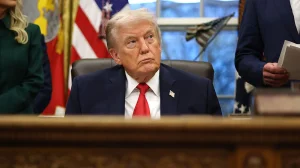
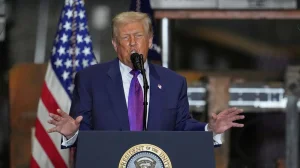
President Donald Trump presented the air attacks – called Operation Epic Fury – as a firm effort to bring an end to many years of attacks by Iran. He asked the people of Iran to revolt, and told the army and police to give themselves up, guaranteeing safety to anyone who stopped fighting.
A high-level person in the U.S. government said Washington thinks discussions with Tehran will happen eventually, but not now. At the same time, a leading advisor to Khamenei rejected talks, saying the U.S. had unrealistic goals.
Within Iran, main roads leading from large cities became blocked as people tried to get away from the air strikes. Stories of ordinary people being hurt or killed increased after explosions at hospitals and where people lived. A teacher in Tabriz talked of the fear and sadness, and said blameless people were being damaged by both the government and bombs from abroad.
Experts in military affairs warn that air power on its own may not be enough to remove Irans religious leaders without soldiers on the ground. This limitation makes a long battle more likely, with increasing costs in terms of people being harmed and the economy.
The United States confirmed the deaths of the first three American service members in the operation, on Sunday, at a base in Kuwait. This showed how dangerous a war on multiple sides is, and the political risks before the U.S. elections in the middle of the term.
Markets Shake as Energy Costs Go Up and Shipping Routes Close
The price of oil rose by a large percentage at the start of Monday, as ships going through the Strait of Hormuz slowed to almost nothing. With about one-fifth of the world’s oil usually going past Irans shore, even a small stop to the flow greatly affects world supply.
Tracking of tankers showed hundreds of ships – including those carrying oil and gas – stopping in safer waters. Insurance companies increased war-risk payments, and those who hire ships quickly tried to find new routes and get other fuel stops.
Shares in companies fell, and the dollar went up, showing a typical move away from risk. Companies connected to energy were changing a lot, and airlines said they would have to add fuel costs as they planned routes around the areas of the Middle East where the air was closed.
Worldwide air travel had a series of delays and cancellations as strikes stopped important airports. Companies were thinking about longer routes over the Mediterranean, Red Sea, or Central Asia, which would add hours to very long flights and put more pressure on crews and the number of planes available.
What Companies and People Traveling Should Prepare For
– More costs for fuel and moving goods as crude oil prices go up and war-risk insurance becomes more expensive.
– Longer times for shipping and flying because of changes to routes and areas that are closed.
– Possible lack of supply, or sudden increases in price, of fuel that has been refined, if problems with refining plants become more common.
– Better computer and real-world safety measures around harbours, pipelines, and airports.
– Greater changes and lack of certainty, with central banks trying to balance the pressure of rising prices against economic growth.
Main Points of Danger and What Happens Next
The most immediate danger is things getting worse on the Israel-Lebanon border. If Hezbollah increases rocket attacks, or Israel expands the things it attacks to include leading people, the chance of a wider war increases.
In the Gulf, the risk of mistakes in identifying things remains, as the Kuwait event showed. Planned ways of telling who is a friend and who is an enemy, and tighter ways of preventing clashes between the air defenses of countries that are allies and U.S. planes, will be very important.
Who takes over in Iran is still uncertain. A quick agreement on a new leader could allow careful talks, but a split process could cause more extreme revenge attacks and attacks using groups from outside the region.
European involvement, though small, could grow to include defense against air and missile attacks, safety at sea, and computer network operations. Any move towards official talks will depend on a clear and noticeable stop to the attacks, and clear ways of reducing tension.
At the moment, Washington is saying the air attacks could last for weeks. Israel says it is not planning to send soldiers into Lebanon on the ground at this time. Oil markets, shipping lanes, and airlines are getting ready for a longer disruption unless the Strait of Hormuz fully opens again.
What happens in the conflict will be decided by a small number of things: how often Hezbollah fires rockets, Irans ability to keep making drones and missiles, how safe the buildings in the Gulf are, and whether secret discussions between countries can stop the fighting long enough to have talks.