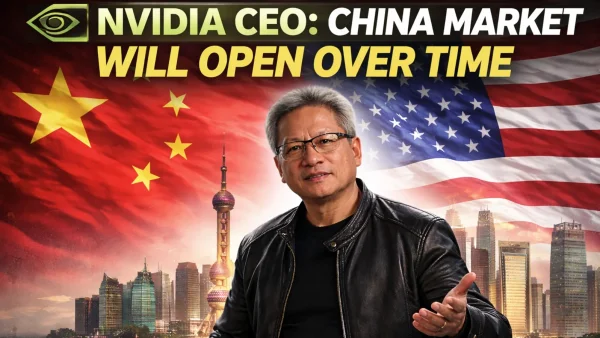
You have to look at the numbers: we’ve got our US licenses to move H200s, but the Chinese side has yet to say yes. So Nvidia is holding off on any quick deals and instead is in it for the long haul. Even back in the spring, when the company was still forecasting nothing for AI chip sales in China, they were calling it a $50 billion opportunity. That tells you where the demand is and where the wall is.
Here are the immediate markers Huang has put in play:
– US licenses cover H200 shipments
– Chinese approvals remain on hold
– Demand exists but orders are frozen
– Beijing weighs market protection
– Nvidia still sees a $50 billion prize
Market implications beyond Nvidia
Beijing is putting its own house in order first, tending to homegrown names like Huawei and deciding in their own time when to let in American suppliers. How they handle this will have an impact on data centres and AI build-outs not just in the world’s second-largest economy, but well beyond.
Licenses secured, approvals not
Over here, the way is open. The Commerce Department has given us the green light to put H200s in front of Chinese buyers. In March, I said we had clearance for ‘many customers’ and we put production in gear. But in practice, it hasn’t panned out. We may have had orders, but the Chinese companies couldn’t go through with them. They can’t import the H200 because Beijing won’t have it; it’s part of a wider drive to be self-reliant.
Inside the Trump-Xi reset attempt
Some of my confidence comes from a trip I made to China with President Trump. I was put on the business delegation at the 11th hour and there was some talk in the market that we might see a change of heart. We didn’t.
How Huang frames the decision ahead
I didn’t sit down with Chinese officials and make a case for Nvidia’s sales, but the subject did come up in the kind of talks governments have. As I put it to Bloomberg on Monday: “My sense is that over time, the market will open.”
Trump, once he was back in D.C., would only say the H200 “did come up, and I think something could happen on that.” He also made it plain why the chips haven’t been bought: “they want to develop their own.”
It’s a matter of how much of their market the Chinese government wants to put a ring around, in my view. We’re ready to provide, but the clock is in their hands.
Signals to watch next
So all eyes will be on our earnings report on Wednesday. We’ll be looking for any hint that the orders we put on ice can be reactivated. If the hold-up drags on, Chinese firms will keep looking at what they can make at home. But if we get even a little in, it could be a whole different story for the kind of work we do in AI.
Why this judgement matters now
Right now, it’s a bit of a paradox. One side of the Pacific gives us the nod, the other says wait. I believe in being patient. When or if the pendulum swings will tell us where the next round of AI spending is going.