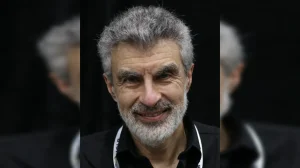
On Monday, Olah made an uncharacteristically open appeal for this very thing: stronger external checks on the industry. His warning is that we could be looking at a time when human labour is pushed aside like never before. He doesn’t think it’s up to the tech companies to be the sole arbiters of how they’re governed; he sees the prospect of job loss as a moral problem.
According to Olah, you need input from all sides – be it the government, the pulpit or the streets – to put some shape on how AI is built. “There is a real possibility” of being left with a lot of people out of a job, he said. “If that comes to pass, it will be a moral imperative of historic proportions to support them.”
Why this intervention matters now
It puts a finger on the friction between what sells and what’s good for the country. The pressures on a company like his are commercial, personal and geopolitical, and they don’t always jibe with what society needs. “Every frontier AI lab … has its own set of incentives and constraints that can get in the way of doing the right thing,” he put it.
Anthropic, the U.S. outfit behind Claude, has already made its position known on the thornier issues. They’ve even had a run-in with the Trump administration over the matter, holding firm on rules to prevent, say, the use of their tools for autonomous targeting or any form of domestic spying.
Pressure versus public interest
Olah is of the mind that you can’t do without independent eyes on the operation. “The questions AI brings up are bigger than the research community,” he says. He is looking for “earnest, thoughtful critics” to put some pushback on the big players and nudge these systems in a better direction.
He has been receptive to the Church’s role in this, too. The ethical side of things goes deeper than code. There was something of a first at the event on Monday for the Pope’s new encyclical on AI: a meeting of minds between the Catholic Church and the tech world.
Jobs, inclusion, and opaque systems
There are three things on his radar that can’t be put off. He doesn’t see them as some far-off scenario but as priorities for the here and now:
– The threat of jobs vanishing in droves
– Making sure the upside is felt around the world
– Making sense of how these black-box systems act
Then there is the matter of equity, which is still up in the air. "AI is being made in a few rich countries. How do we make sure everyone gets in on it?” It’s a question of who reaps the rewards and who is left with the consequences, and it has as much to do with transparency as it does with money.
Implications for AI market and policy
In a way, Olah is drawing a line in the sand for how top-tier labs ought to be having a dialogue with the rest of us. Even if your intentions are pure, you’re still subject to the same internal and political tugs of war. You need someone on the outside to make sure you stay on course.
When he talks about workers being made redundant, he isn’t just talking economics. He’s putting the onus on our institutions to be ready to step in. It’s an open invitation for the likes of civic groups and faith leaders to have a hand in the guardrails.
What to watch next
We’ll have to see if the non-technical world is up to the task of providing some hard-nosed oversight. For Olah, any governance worth its salt will have to come from those willing to ruffle feathers and put shared interests first.
The message is plain: let the companies have their way and you might end up with a level of upheaval we can’t handle. But if you get a few more voices in the room, you can steer the whole thing where it should be.