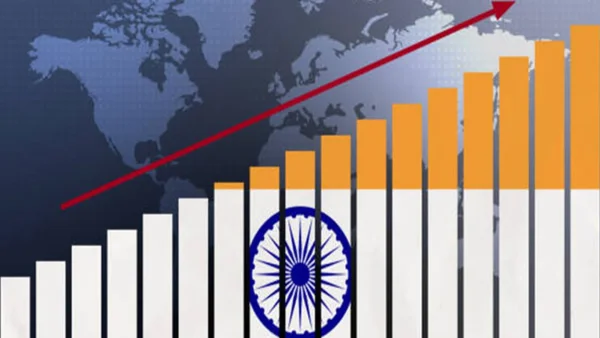
A recent United Nations evaluation shows India is likely to expand by 6.4% this year, and points to how well the economy is holding up despite problems from outside the country. This suggests continued, steady growth, with inflation under control and the service and manufacturing sectors continuing to do well.
The United Nations Economic and Social Commission for Asia and the Pacific (ESCAP) estimates India will grow 6.4% in 2026, and then 6.6% in 2027. This keeps India as one of the fastest-growing large economies and is a major factor in the recovery of the whole Asia-Pacific area.
Momentum and headwinds shaping the outlook
ESCAP reports that South and South-West Asia grew 5.4% in 2025 (up from 5.2% in 2024), and India was the main reason for this. It is thought that continued solid growth within India will offset some of the negative effects of problems with world trade and lower demand from other countries.
In 2025, India’s growth reached 7.4%, largely because people were buying a lot (consumption), especially in rural areas. Cuts in the Goods and Services Tax and bringing forward exports before new taxes were applied also helped the economy at the start of the year.
Inflation, demand, and policy backdrop
After the United States put a 50% tax on imports in August of 2025, growth slowed down in the latter half of the year, and India’s exports to the US went down by 25%. However, the service sector remained extremely important, continuing to support production and jobs.
It’s expected that inflation will average 4.4% this year and 4.3% in 2027, which is close to the middle of the range the central bank is comfortable with. Because inflation isn’t too high, people’s ability to buy things is protected, particularly for those with lower incomes and in rural areas.
Demand from within India remains the most important thing supporting the outlook. People are expected to continue to spend at a good rate, and the government’s investment in projects and specific support for manufacturing and infrastructure will continue. If government policies don’t change and measures are taken to improve the supply of goods and services, price increases should be limited.
FDI and remittances: mixed external picture
ESCAP says that inflows of FDI into developing countries in the Asia-Pacific area fell by 2% in 2025 because of trade problems and political instability around the world, even though worldwide investment went up 14%. Despite this decrease in the region, India remained a popular place for brand new projects.
In the first nine months of 2025, India attracted roughly $50 billion in announced greenfield investments, showing that investors have confidence in India’s long-term strengths and well-developed markets. These plans will strengthen supply chains and increase the amount of things made in India.
Money sent home by people working abroad is still helping people to afford what they need. India received $137 billion in log in 2024, more than any other country. But, a new 1% tax on remittances from the US (starting in January 2026) could slightly decrease the amount of money coming in and create problems for families who depend on it for essential items.
ESCAP points out that around 40% of the money sent home to India is used to pay for necessities, including healthcare. Any decrease in this income would particularly harm those in vulnerable situations, so it’s vital to have social safety nets and create jobs.
Energy transition and industrial policy opportunities
The UN highlights “green growth” as a fundamental way to improve things. By 2024, roughly 16.6 million “green jobs” were created around the world, about 1.3 million of those in India. It’s expected that as clean energy becomes more widespread, there will continue to be gains in employment.
Plans for industry are at the center of this change. India’s Production-Linked Incentive Scheme is aimed at having more high-quality solar panels, batteries, and green hydrogen made in India. By relying less on imports and supporting strong domestic companies, it will make both growth and the economy as a whole more stable.
Government investment in electricity networks, storage, and “green” industrial areas will attract private investment. These actions will secure gains in efficiency and position India as a major player in the clean technology manufacturing industry in Asia and the Pacific.
What to watch in the months ahead
Important things to watch are: how well exports do as demand around the world gets stronger or weaker (particularly for things that are heavily taxed), how the service sector performs (since it has supported growth through recent difficulties), whether announced FDI actually happens in new and growing industries and in supply chain areas, what happens to remittances after the US tax and how that affects spending, and how inflation behaves given that food prices can change and energy costs from other countries are a factor.
The UN’s most likely scenario is that India will manage a complicated international situation because of its strong basic economic strengths. Solid demand from within the country, specific industrial policies, and a reasonable outlook for inflation mean the growth story will continue. But, making progress on investment, jobs, and building strong supply chains will be essential for keeping growth above t6%.