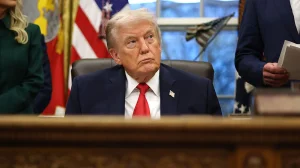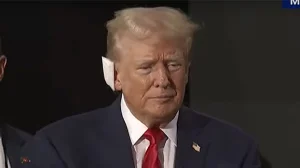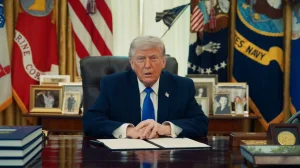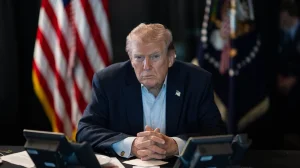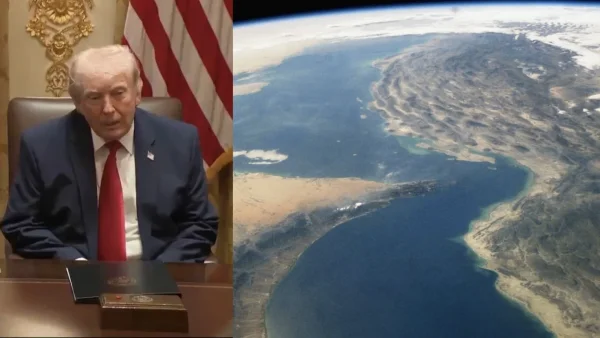
Donald Trump, the President, said Iran’s Masoud Pezeshkian asked for a truce. He said the United States would only think about a ceasefire if the Strait of Hormuz opened up, was totally free of problems, and ships could get through.
Trump also became much stronger in what he said, warning the US will continue to attack Iran until it does what the US wants. He stated plainly the US would keep attacking Iran until it gives in, showing how tough his position is with both people at home and other countries putting pressure on him.
Conflicting claims over a ceasefire request
Iran immediately said Trump’s story is false and has no basis in reality. Esmaeil Baqaei, a person who speaks for the Iranian Foreign Ministry, said the claim that Tehran asked for a ceasefire is false and without any truth to it. Iranian leaders have repeatedly stated that there are no current discussions to end the war, and that any talk of a truce must be backed up with strong guarantees.
Since the conflict started, Trump’s attitude has changed, going between aggressive threats and predictions that the war will be over quickly. On Tuesday evening, he suggested the war might be finished in two or three weeks. Pezeshkian said Iran is willing to have a ceasefire, but only if there are promises to stop fighting from starting again so soon.
The first attacks by the US and Israel on February and started a war in the region that has now spread to many areas. Those early attacks killed important Iranian leaders, including Ayatollah Ali Khamenei, the Supreme Leader. Later, his son Mojtaba Khamenei was named the new Supreme Leader, and this change has influenced how Iran is acting in the war.
Fighting intensifies across the region
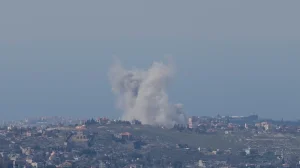
On Wednesday, explosions happened in Tehran and other cities in Iran. Israel’s military confirmed they attacked in and around the capital city. Iranian officials said the airport in the middle of Iran and steel factories in the center and southwest of the country were damaged as the conflict continued to spread.
Israel reported that an Iranian missile attack injured people, including an eleven-year-old girl. Also, Israel says it stopped a missile fired from Yemen (this is the third time Houthi forces have done this since they got involved in the war).
In Lebanon, attacks around south Beirut killed several people, including a high-ranking Hezbollah commander in charge of military matters in Iraq. The scenes of burned-out streets and people forced to leave their homes showed how terrible this is for ordinary people, and Israel has been stepping up its operations after earlier attacks by Hezbollah.
The number of people hurt or killed is increasing throughout the area, and thousands have been reported killed since the war began, the majority of them in Iran. Health officials in Lebanon said over 1,300 have died there as the fighting across the border and ground attacks become more intense.
Strait of Hormuz at the center of the crisis
Iran’s Revolutionary Guards say the Strait of Hormuz will stay closed to their enemies. This narrow waterway is extremely important for world trade, as about 20% of the world’s oil normally goes through it. Shutting it down has made both the military and economic risks much higher.
Iranian military said they attacked an oil tanker in the Gulf, and they said it belonged to Israel. A company that watches what happens at sea says the ship was hit off the coast of Qatar, was damaged, but no one was hurt. This attack shows the danger to ships as military actions happen more and more in the ocean.
All over the Gulf, attacks and stopping of ships are creating a continuing feeling of intense danger. A citizen of Bangladesh was killed by pieces of an exploded drone that had been shot down in the United Arab Emirates. Kuwait reported a large fire in the fuel tanks at their international airport after being hit. Bahrain and Saudi Arabia have said they were attacked and shot at drones, and this has put a lot of pressure on their emergency services.
Diplomacy, messaging, and the roadblocks to talks
Countries that are allies have been careful in what they do. France has said again that it won’t be taking part in fighting. The United Kingdom is going to have about 35 countries meet to discuss the very practical things that need to happen to re-open the Strait of Hormuz. Washington hasn’t said if they are speaking with anyone within Iran, and Tehran says exchanging messages isn’t the same as negotiating.
After Donald Trump said the war would end quickly, the price of oil went down, and for a short time, the value of stocks around the world went up because people hoped it would be easier to get oil. But the markets are still nervous. Crude oil is still considerably more expensive than it was before the war, and it now costs more to insure ships because of increased dangers at sea.
Global markets reel from the energy shock
In the US, the average price of a gallon of gas went over $4 for the first time in four years, which is hurting both people who drive and companies that deliver things. In Europe, inflation (prices going up) has gotten worse as energy costs go through the whole system of making and delivering goods, and because of this, several governments are giving temporary help to families and small businesses.
Industry experts point out that people don’t really think the situation will be resolved anytime soon. Prices are about 50% higher than before the war, and this shows that even a brief stop in the flow of oil through Hormuz causes problems for the entire world. How prices are expected to change in the future and how much prices can swing show that there is a lot of worry, and not a lot of calm.
You can feel the stress of the situation where people are. Nicolas Barthes, a truck driver at a protest against fuel prices in Toulouse, said the higher cost of diesel added 15,000 euros to his monthly costs, an amount he couldn’t completely pass onto his customers. In the north of Iraq, people living near the airport at Erbil said the constant sound of drones has destroyed any feeling of a normal life.
Tehran says they aren’t negotiating a ceasefire. The Iranian Foreign Minister, Abbas Araghchi, says he is still getting messages from Steve Witkoff, a representative of the US, like he was before, but he emphasized that these messages aren’t negotiations. This difference in what they say suggests both sides are “feeling things out” through these contacts while publicly remaining firm in their positions.
The United States wants the Strait of Hormuz to be re-opened to ships as a condition for any truce, and Iran says they need a promise that they won’t be attacked again before they will stop fighting. These two positions are very far apart, and there are still attacks happening and both sides feel they can get what they want by continuing to put pressure on the other.
Trump has said he will completely destroy important parts of Iran's oil industry, including the oil wells and the Kharg Island terminal where oil is exported, and has even talked about attacking plants that make drinking water from the sea. Iran has responded with continuing missile and drone attacks, and by trying to control the sea lanes in order to make the cost of continuing the conflict higher for the rest of the world.
Allies and partner countries are facing difficult decisions. Many countries that get their oil and gas from the Gulf region have asked for the situation to be calmed down instead of getting involved in military action. At the moment, international efforts are concentrating on protecting ships, working together to shoot down drones and missiles, and finding ways to reduce the chance of mistakes in the air and at sea.
What to watch next for de-escalation
There are several things to look for to see if the situation can be calmed down. If the Strait of Hormuz is verifiably opened to ships, even partially, it would reduce tensions and make the flow of energy more stable. If attacks between countries stop for a significant amount of time, especially near important cities, it would create an opportunity for diplomatic talks.
How clearly the two sides are communicating is important. If the exchange of messages turns into structured discussions, then things that would build trust might happen, such as limits on missile launches, plans for ships to be escorted safely through the area, or safe passages for civilians near where fighting is happening. Specific dates would make people believe the claims being made after many weeks of changing stories.
For now, the actual fighting and the energy market are closely linked. What each side says about ceasing hostilities will affect prices and politics, but only changes that can be proven to be happening on the ground and at sea can change the course of a conflict that has brought many countries into it and put the world’s most important shipping route in danger.