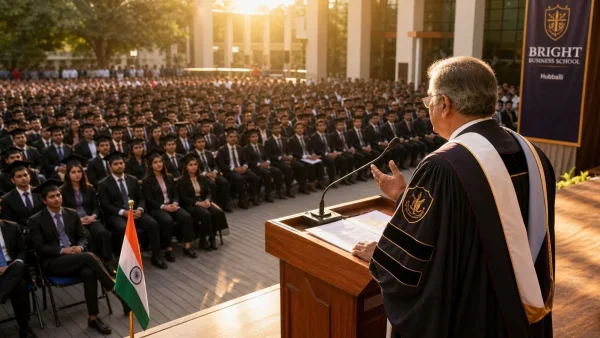
Graduation speeches can fade quickly, but one message in Hubballi on Sunday cut through the noise: turn ambition into outcomes through discipline, perseverance and hard work. Addressing Bright Business School graduates, Rani Channamma University vice-chancellor C.M. Thyagaraja tied that mantra to India’s expanding manufacturing landscape and the need to upskill relentlessly.
Why this address matters now
For a cohort stepping into a shifting job market, Prof. Thyagaraja’s guidance doubled as a roadmap. He framed the ceremony not as a finish line, but as the start of life-long learning where agility will decide who moves ahead.
He underlined India’s moment, urging graduates to seize opportunities at home as the country positions itself as a global centre for manufacturing. The implication was simple: align skills with where the economy is growing.

From degree to problem-solver
Prof. Thyagaraja cautioned that the world rewards problem-solvers, not just degree holders. Character, he said, ranks even higher than competence. Employers look for people who can own outcomes, collaborate, and deliver value under pressure.
His advice went beyond job search tactics. He pressed students to develop entrepreneurial capabilities, to become job-givers rather than job-seekers. In other words, build something that others can join.

Technology shift: adapt or be left behind
The technology baseline is moving. Prof. Thyagaraja pointed to AI, Machine Learning and Data Analytics as today’s reference points, while adding that focus may soon turn to synthetic intelligence. His message: adapt to new tools faster than peers, or risk getting sidelined.
He argued that learning velocity will differentiate careers. Graduates who update skills continuously, apply them to real problems, and document impact will compound advantages over time.
India’s manufacturing moment
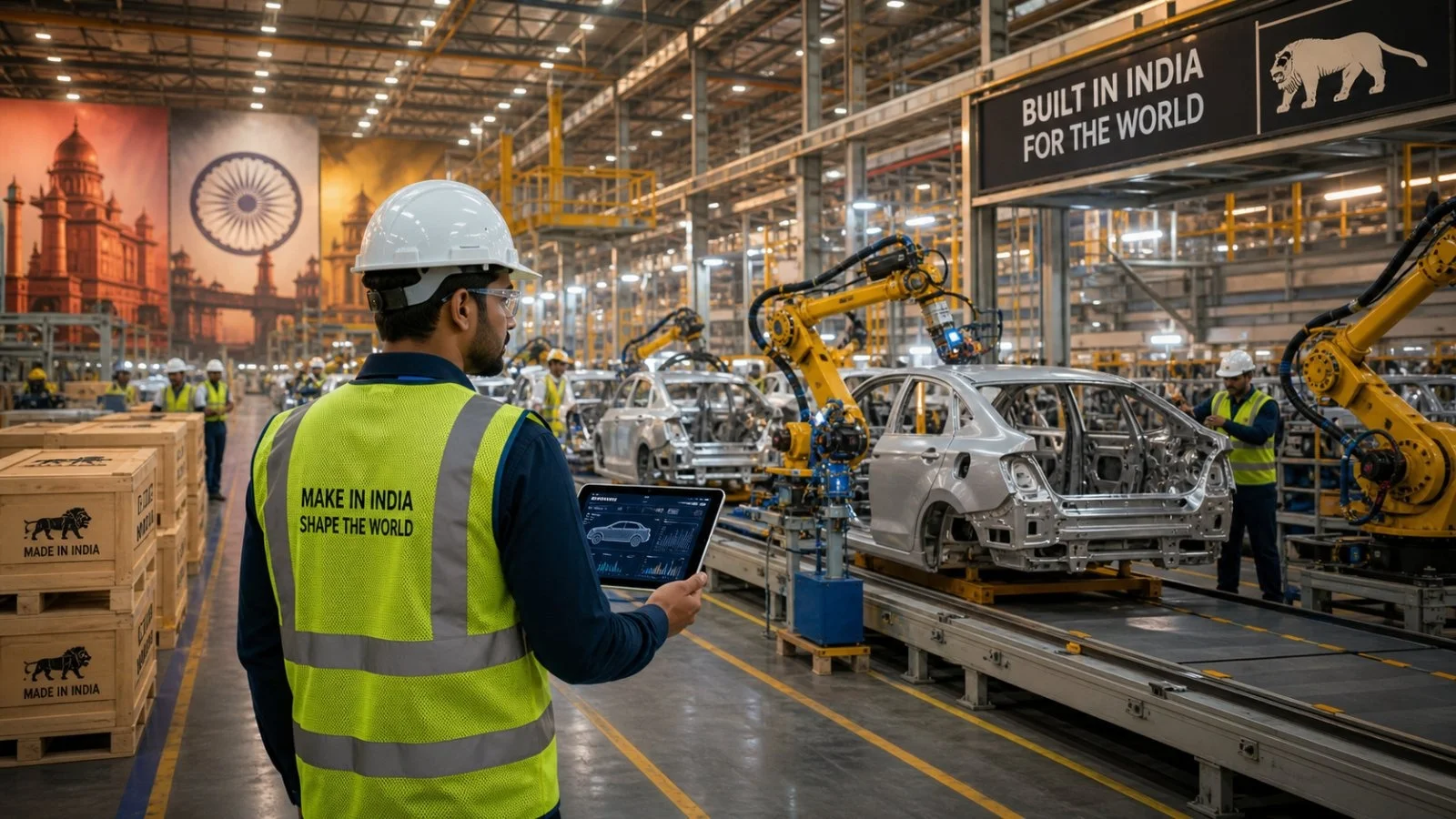
Adding a market lens, Karnataka Conveyors and Systems managing director M.V. Karmari said India’s rapid economic growth is creating space for young professionals to rise. He noted that the country has become one of the largest automobile manufacturing nations in the world, reinforcing the scale of opportunity.
Karmari also urged students to hold on to cultural values and family bonds while they chase growth. That balance, he suggested, keeps careers sustainable.
The institution’s leaders stressed readiness too. Presiding over the event, Bright Business School chairman G.B. Halyal detailed initiatives to create a strong learning ambience. Director Prasad Roodagi highlighted the institution’s fast-paced achievements, and outstanding students were recognised for academic and extra-curricular excellence.
Action plan for new graduates
Based on the speakers’ guidance, here is a crisp plan to get started:
– Schedule daily discipline blocks for deep work
– Tackle one real problem per week
– Build a portfolio that proves impact
– Learn one frontier tech each quarter
– Seek an internship in manufacturing-linked roles
– Join a startup to learn entrepreneurial grit
– Network with industry mentors monthly
– Prioritise ethics and character in decisions
Treat each bullet as a system, not a slogan. Track progress, iterate, and push for measurable results. Employers and investors respond to evidence, not intent.
What comes next for this cohort
For Bright Business School’s outgoing batch, the takeaway is direct. Shape your edge where India is accelerating, and keep skills current as technology evolves. The degree opens the door; your problem-solving ability keeps it open.
If you commit to discipline, persevere through setbacks, and work hard on the right problems, the path from dream to delivery gets shorter. The market is watching for doers.