India’s Gaganyaan programme cleared a key safety hurdle after Isro proved its main parachute can slow the crew capsule for a safe splashdown. The successful airdrop, part of IMAT-05, boosts readiness for the uncrewed G1 mission and sharpens the focus on bringing astronauts back from orbit without compromise.
Why this trial matters
When the crew module re-enters, the final seconds depend on fabric and timing. The main parachute is the last brake before ocean recovery, bringing the capsule to a safe terminal velocity.
Isro said the objective was to qualify the main parachute’s structural integrity and design margins under the maximum expected load conditions in the first uncrewed Gaganyaan G1 mission.
How Isro put the canopy to the test
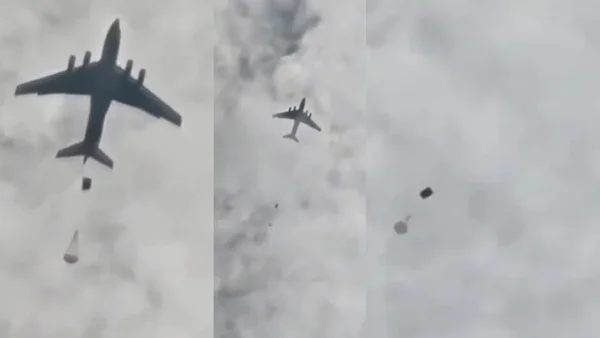
The Integrated Main Parachute Airdrop Test took place at the ADRDE drop zone in Sheopur, Madhya Pradesh. Engineers released a simulated main parachute assembly and dummy mass from 2.5 kilometres using an Indian Air Force IL-76 aircraft.
An extractor chute first pulled out a drogue parachute, stabilising the payload. Once the flight conditions were met, the main parachute opened cleanly and slowed the descent to a safe terminal velocity. According to Isro, the test met its qualification goals under demanding load cases.
What the full descent system must handle
Behind that single canopy sits a layered safety net. The Gaganyaan crew module uses 10 parachutes of four different types, each choreographed for a specific job during descent.
The main parachutes, three in total, provide the final deceleration. To pull them out reliably, three pilot parachutes are dedicated to extraction. Earlier in the fall, two drogue parachutes help tame the capsule’s motion, while two apex cover separation parachutes first clear the protective cover over the parachute bay.
A coordinated push toward human spaceflight
The trial was the fifth Integrated Main Parachute Airdrop Test in the qualification campaign. Isro said the successful completion of IMAT-05 provides confidence in the performance and reliability of the main parachute system ahead of the G1 mission.
It also showcased the multi-agency backbone of the effort. The test drew on expertise from Isro, DRDO, the Indian Air Force and the Indian Army, underscoring how India is knitting together capabilities for human spaceflight.
What comes next for G1
G1, the first uncrewed test flight of Gaganyaan, is designed to validate critical systems before astronauts fly. The parachute suite is one of the final lines of defence, ensuring a controlled splashdown at sea where recovery teams can retrieve the crew module.
Here are the key takeaways from the qualification effort so far:
– IMAT-05 marks the 5th integrated main parachute airdrop test
– Results provide confidence in performance and reliability
– Test used an Indian Air Force IL-76 aircraft
– Recovery will occur at sea after splashdown
Why it matters beyond the lab
Parachute reliability translates directly to human safety. By qualifying the main canopy under maximum expected loads, Isro is reducing risk where it counts most: the return to Earth.
For readers tracking India’s march into human spaceflight, this trial signals practical progress. Gaganyaan is not just about reaching orbit; it is about ensuring the crew comes home, every time, with speed under control and margins intact.