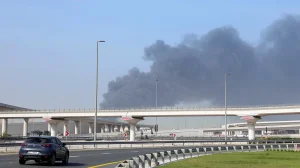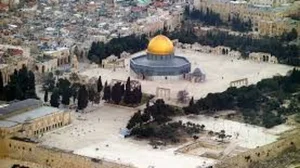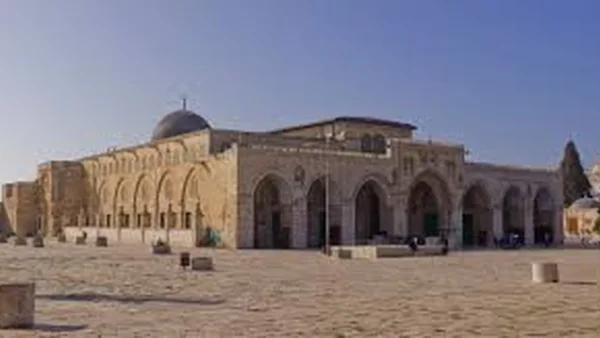
The Iranian missile actually hit Jerusalem during Eid al-Fitr, about 300 meters from Al-Aqsa Mosque, and pieces of it went all over the Old City during a very important religious time of year. Israeli authorities showed videos of where it hit and of the broken pieces near some of the most important religious locations in the city.
Missile strike near Jerusalem’s holy sites
Israeli officials said the bits of the missile and a large piece of metal fell near Al-Aqsa, the Dome of the Rock, and the Church of the Holy Sepulchre. Police photos showed the debris in the open space in front of the buildings and police removing a circular section of the missile from a roof nearby.
Thankfully, the religious buildings weren’t seriously damaged and nobody was hurt right away. However, because the debris was close to the Temple Mount, people were worried. The Old City is where many of the most central places of worship and identity are for Muslims, Christians, and Jewish people.
Impact on worship and access to Al-Aqsa
Because of the security response, the gates to the Old City were closed and hundreds of people couldn’t go in to pray for Eid, and had to gather and pray outside the locked gates. Researchers have said that if other reports confirm it, this is the first time Al-Aqsa has been closed to people for Eid since 1967.
Pictures of people praying at the closed gates showed how much this affected them. For a lot of worshipers, a day of celebration became a day of being scared and frustrated, and increased general anxiety with the security situation being so unstable already.
Wider regional escalation and security incidents
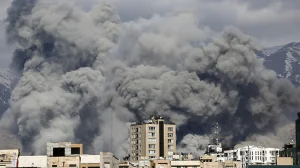
The missile strike in Jerusalem happened at the same time as more attacks going back and forth across the region. Iran said their Natanz nuclear facility was damaged in an airstrike, but that no radiation leaked. Saudi Arabia said their forces stopped dozens of drones flying over an area that makes a lot of oil.
Military leaders and officials on all sides have been saying different things about what will happen next. One minister of defense said attacks might get worse, but other officials have hinted they are thinking about changing how their military is positioned. More warships and soldiers have been sent to the wider area, and that makes it more likely that someone will make a mistake.
Casualties, displacement and reported tolls
From the area where the fighting is happening, reports are coming in of more people being killed and a lot of people having to leave their homes. Different sources are giving different numbers for how many deaths and how many people have left their homes, and that shows how chaotic things are and how hard it is to get correct information when fighting is going on.
Because more and more people are being hurt and a lot of people are moving from their homes in nearby countries, people around the world are getting more concerned. Getting help to people, places for them to stay, and enough medical care are all urgent needs as people are repeatedly disrupted in their lives.
Implications for regional stability and religious protections
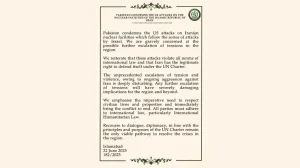
A missile landing so close to places holy to billions of people increases the chance of a wider disturbance and a strong reaction from the international community. Harm to, or even seeming disrespect for, holy places can make tensions worse and make it harder to calm things down, even if the actual damage isn’t much.
Experts say the most important thing to do now is to protect people and religious sites. It will be essential to use conversations between countries, avoid more strikes near important cultural places, and thoroughly investigate what happened to reduce the chance of the conflict getting much bigger.
What happens in the next few days will show whether the countries in the region will prioritize stopping things from getting worse and protecting people, or whether they will do things that make the conflict expand. People watching the situation say to pay attention to official statements, where attacks are happening, and reports about humanitarian needs to understand how the situation changes.