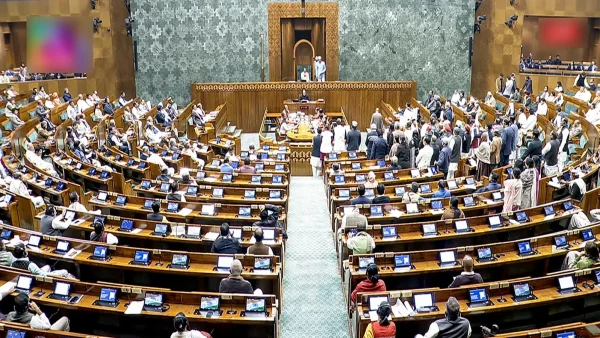
On Wednesday, the Lok Sabha passed the Andhra Pradesh Reorganisation (Amendment) Bill of 2026, allowing Amaravati to be formally named as Andhra Pradesh’s only capital. The vote followed almost two hours of discussion, a voice vote (where people say “yes” or “no”), and the YSR Congress Party’s politicians leaving the room because they disagreed with the bill as it is.
What the Andhra Pradesh Reorganisation (Amendment) Bill, 2026 changes
The bill specifically changes part (Section t5) of the 2014 Andhra Pradesh Reorganisation Act. Instead of just saying there would be a capital in the future, it now says Amaravati is the new capital.
This refers back to 2014 when Hyderabad was to be a shared capital for both Telangana and Andhra Pradesh for up to ten years. After that ten year period Hyderabad would stay with Telangana, and Andhra Pradesh would build a new capital.
The document given to politicians says the bill clearly states, in law, that Amaravati is Andhra Pradesh’s capital as of June 2, 2024. The bill says the state government chose and announced Amaravati after planning and talking to people, and work on administration and infrastructure has already begun.
Nityanand Rai, the Minister of State for Home Affairs, presented the bill and got it passed. The government also mentioned that on March 28th, the Andhra Pradesh Legislative Assembly (the state government’s law-making body) asked Parliament to include Amaravati as the capital in the national law.
Broad support in the Lok Sabha, with demands attached
Most politicians from all parties agreed with the main idea of the bill, saying it’s important to end the long-running question of where the government will be. Manickam Tagore, a Congress MP, said his party supports the bill, but with two requests: the central government should give money for the capital project, and Andhra Pradesh should get “special category” status (which brings benefits and funding).
Tagore sees developing Amaravati as part of a bigger plan for the state to grow. He wants the central government to give a lot of support, but also wants other cities like Visakhapatnam, Tirupati, and Kurnool to develop at the same time.
Chandra Sekhar Pemmasani, a TDP (Telugu Desam Party) MP and Union Minister of State, called the bill a very important step. He said the plan for the capital represents sacrifices made by the public and should have everyone’s support to ensure the capital is stable in the long run. TDP politicians said knowing the capital will be in one place will make administration run more smoothly and give investors confidence.
YSRCP walkout and focus on farmers, finances, and timelines
The YSR Congress Party disagreed with how the bill was written and left the debate. MP P V Midhun Reddy said the government is rushing ahead with a huge building project for the capital while the state doesn’t have a lot of money.
Reddy questioned how much land is being bought for the Amaravati project and asked why they need more when land that was bought earlier isn’t being used. He also mentioned the worries of farmers and said the bill should say exactly when farmers will get their money, be given a place in the new, developed area, and receive the benefits they were promised.
YSRCP politicians said the bill should have definite dates for commitments to people who gave up their land, including houses and education for their children. Without this, they said, the bill doesn’t mean much to those families and there’s a risk of delays and the resulting problems.
BJP counters three capitals idea and calls for continuity
C M Ramesh, a BJP MP, supported the bill and strongly criticized the previous state government’s plan to have three different capitals. He said that plan didn’t make sense and caused projects to be stopped or changed, wasting public money and destroying people’s faith in the government.
Ramesh also pointed out that it’s unusual for Parliament to actually name a particular city as a state capital. Once Amaravati is officially and permanently the capital in law, he said, “no one will be able to change” that decision, which will make government planning and budgeting more reliable.
Those in the BJP and TDP who support the bill say it’s a chance to start over and be consistent. They say one, permanent capital makes it easier to plan for institutions, to build infrastructure in stages, and to make sure long-term investments have a predictable timeframe.
Political and economic stakes for Amaravati’s revival
The bill itself doesn’t give money to the project or solve the problems with land ownership. Its strength is in creating legal certainty, which will change how risky people think building, providing utilities, and transport projects in Amaravati are. This certainty might make it easier to decide the order of projects and to get contracts, but getting the money for them is still the biggest challenge.
The requests for support from the central government and “special category” status show how much money will be needed for the capital. Roads, government buildings, housing, and public services will need funding for many years. The central and state governments will need to work well together as the state makes its budgets and tries to attract investment.
Getting fair compensation and finding new homes for the farmers is essential for the project to be accepted. Clear deadlines, ways to settle disputes, and keeping track of progress can reduce problems and lawsuits. If the government ties getting money to completing certain stages and publishes regular updates, it can regain the trust of the people who gave up their land and the construction companies.
Economically, having one main capital can make public services work better and encourage growth in the surrounding areas. But lasting benefits will need careful and honest purchasing, managing debt, and realistic schedules that match what can actually be done.
What comes next
With the Lok Sabha approving the bill with a voice vote, it goes to the Rajya Sabha on Thursday. Once both parts of Parliament have approved it and it becomes law, Amaravati will be legally the capital of Andhra Pradesh as of June 2, 2024, matching what the state government has announced and the state assembly has requested.
In the short term, the focus will be on deciding which projects to do first, how to get the money, and commitments to those who have given up land. The government is expected to give a plan for work to be done in stages, including government buildings, improving roads and connections, and basic city services.
For people watching Andhra Pradesh, this new law is a turning point. The next stage will show if the state can plan its finances, protect the farmers, and manage the work well enough to turn this legal decision into a functioning capital that supports growth for everyone. For now, the Lok Sabha has made it clear: Amaravati is the capital, and the state needs to continue building on that fact.