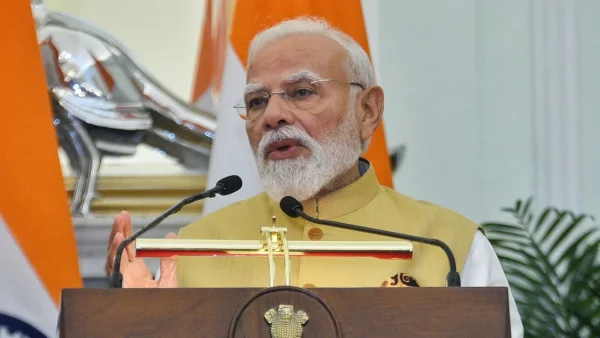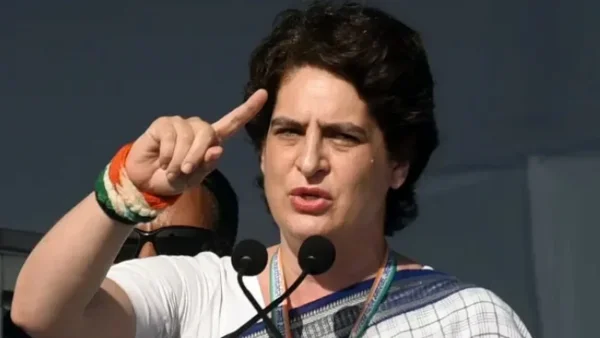
Priyanka Gandhi Vadra said ‘Chanakya would be shocked’ at how the government is dealing with the women’s quota and this caused laughter in Parliament, and made the debate about why the Nari Shakti Vandan Adhiniyam is being brought in even more focused. She said this to Amit Shah, the Home Minister, while defending the idea of reserving seats for women.
Setting of the exchange in the Lok Sabha
This comment was made during a bigger conversation about the women’re reservation bill during a special session of Parliament. Members were discussing changes to the constitution, how the boundaries of voting areas (delimitation) would change, and when the bill would actually be put into practice.
Priyanka Gandhi made it clear that Congress generally supports having a certain number of seats reserved for women. Her problem is with how and when the bill is being done, because she thinks it looks more like a political move than a true change to the constitution.
When she mentioned Chanakya, the ancient expert in strategy, BJP (the ruling party) leaders, including the Home Minister, were clearly amused. This lighthearted moment showed how strained, yet dramatic, things were in Parliament as the discussion went back and forth between the details of the bill and the political strategy.
The Chanakya line and parliamentary reaction
Priyanka Gandhi was both making fun of and criticizing the government when she said, ‘if Chanakya were alive, he’d be shocked by your cleverness.’ It really hit home with people on the other side of the room and for a short time, took the focus away from the precise details of the law to the political performance of it all.
Amit Shah and other members of the government party laughed at the combination of teasing and criticism. This exchange illustrated how using symbols and strong language can break through complicated legal arguments and get the public’s attention.
Although there was laughter, the main point remained serious: opposition politicians are asking what the reason is for bringing the bill in now and whether the way it is structured is to help democracy or the political party in power.
Political intent versus substantive reform
Priyanka Gandhi said the bill ‘has the feeling of being about politics’ and suggested it could be used to win votes. She also said the way the bill is being changed could mess up how fairly people are represented and change the makeup of voting areas after the boundaries are redrawn.
Her complaint isn’t that Parliament needs more women. She is asking why all 543 of the current seats in the Lok Sabha couldn’t have 33 percent reserved for women without the huge changes the government wants to make.
Her argument is about the intention of the changes: are they mainly to give women more representation, or to give the current ruling group a political advantage that will last a long time?
Historical context and party claims
The Congress leader said that the effort to give women a political voice began with efforts in the early 1900s. She mentioned proposals by Motilal Nehru in 1928 and later changes made by Congress. She also remembered that reserving spots in local government (municipalities and panchayats) had been introduced by previous Congress administrations.
She reminded Parliament that people across all parties have been asking for this to happen for many years, and that even opposition politicians in the past have made similar requests. She did this to push back against the idea that these changes are something new and only being done by the current government.
Implications for legislation and electoral politics
The debate shows the disagreements that will affect how Parliament votes and what people think. How the boundaries of voting areas will change, when things will happen, and whether seats will be reserved based on social class (caste) are all important to how the bill will be accepted in different states and voting areas.
If the bill passes as it is now, those who oppose it say it could redraw voting areas and change the chances of different parties winning. Those who support it respond that making laws often means making compromises, and that the Nari Shakti Vandan Adhiniyam is a step towards having a Parliament that has as many women as men.
As the discussion continues, the mixture of legal details and political drama – including moments like the Chanakya comment – will impact how both voters and members of Parliament think about the bill and the reasons behind it.