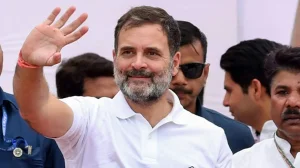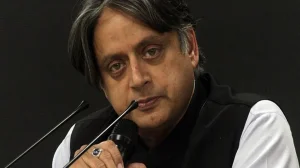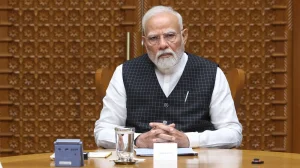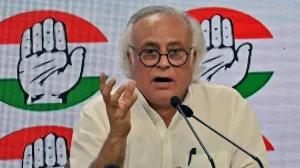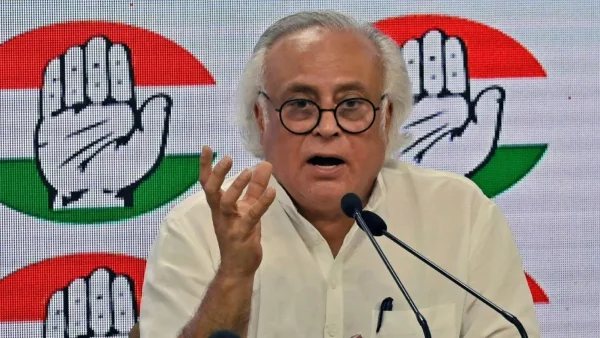
Congress has said the three bills related to the women’s quota are a trick and should be voted down as they are. Jairam Ramesh, who speaks for the party, said that although the bills are being presented as being about giving women a place in Parliament, the main thing they do is change boundaries, which could completely change the balance of political power in the Lok Sabha.
Party critique of the bills and core objections
Ramesh says the bills’ stated purpose – to make sure one-third of seats are held by women – hides a much more important plan. He’s worried the changes to boundaries will help a few of the most populous states (which are currently supporting the government), while many other states will have less of a voice in the Lok Sabha.
Congress thinks this effect is intentional and will be harmful. They point to recent boundary changes in Assam and Jammu and Kashmir as proof of how voting areas can be altered for political reasons. The party says the bills are underhanded and if they aren’t changed, will have a huge impact.
Delimitation and its regional consequences
Redrawing parliamentary seats based on how many people live in each area (delimitation) can change how much influence each state has. The government’s plan uses the 2011 Census to potentially increase the total number of seats in the Lok Sabha to as many as 850, in order to create space for a 33% quota for women.
People criticizing the plan say that both adding seats and changing how many each state gets can give more power to states with more people and make the political advantages some states already have even stronger. The idea of changing which specific seats are reserved for women each election also adds a complicated new element to how parties and candidates plan their campaigns.
Opposition proposal for implementing women’s reservation
Congress and other opposition leaders are asking for a simpler and more direct approach. They suggest reserving one-third of the current 543 Lok Sabha seats for women, and continuing to have separate reserved seats for women who are from Scheduled Castes (SC), Scheduled Tribes (ST), and Other Backward Classes (OBC).
They believe this would be a fairer way to share power and would be more in line with the Constitution. It would avoid a huge boundary change that could accidentally (or on purpose) reduce the power of some states in Parliament.
The government’s legislative package and timeline
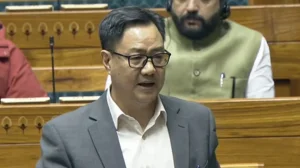
The government has planned three things to introduce to Parliament: a change to the Constitution to allow the law for women’s seats, a bill about the boundary changes (delimitation), and changes to the laws for Union Territories. The Ministers of Law and Home Affairs are going to present the bills in the Lok Sabha.
The proposed change to the Constitution considers increasing the total number of seats, expanding the state and territory assemblies, and having seats for women chosen to be filled by rotation. The plan attached to these bills aims to have the reservation system in place by the t2029 general election.
Parliamentary arithmetic and political stakes
To change the Constitution, two-thirds of the members present and voting must agree. The government group in the Lok Sabha has a definite majority, but they don’t have the large supermajority needed to change the Constitution without support from other parties.
Opposition leaders have met to decide how to act and have promised to fight together against the boundary changes, while saying they are generally in favor of giving women seats in Parliament. This disagreement raises the stakes of this special parliamentary session and makes the debate about both the policy itself and about trying to manipulate the election results.
In essence, the disagreement is about whether this legislation is a straightforward way to get more women into politics, or a much larger re-arrangement of power in Parliament disguised as a women's quota. With the goal of implementing this by 2029, politicians don’t have a lot of time to find common ground on how to represent people fairly, balance the power of states, and ensure democracy is fair.