You could call it a major fiscal reset for the state. On Monday, the government tabled supplementary demands of Rs 97,706.40 crore, headlined by the farm loan write-off, leaving a net new cost of Rs 74,817.66 crore. With the Opposition making noise over a full-scale waiver, the lines are drawn on what matters in the countryside.
Farm waiver: where politics and policy meet
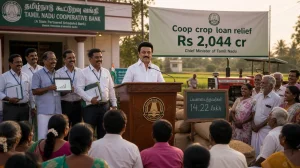
Most of the money is for the Punyashlok Ahilyadevi Holkar Shetkari Karjmukti Yojana, 2026. At Rs 20,552 crore, it is the government’s way of saying it is on top of the farm crisis, and will be the talking point of the monsoon session.
The Opposition wants a no-strings-attached waiver. NCP (SP) MLA Rohit Pawar was at it earlier this month, objecting to what he saw as too many hurdles. The government’s approach seems to be a compromise between what it can afford and what it must do.
Running the numbers
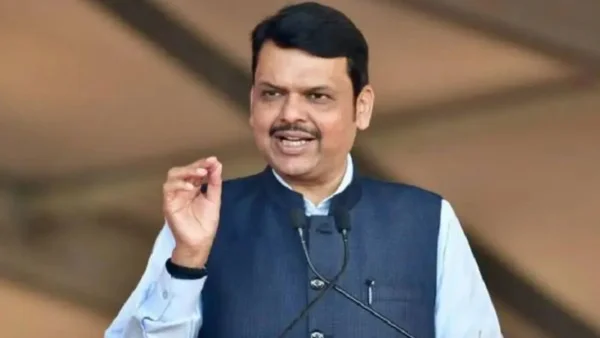
CM Devendra Fadnavis presented the case on day one of the session. An official note has it that once you factor in some adjustments and recoveries, the gross figure of Rs 97,706.40 crore comes down to a net of Rs 74,817.66 crore. You have to be careful with your cash when you are ramping up welfare and capital outlay.
There are three areas where you see the plan in action. Unavoidable costs run to Rs 13,825.71 crore. Then there is Rs 66,559.40 crore for programmes and the like. Another Rs 17,321.29 crore is tied to schemes with central backing.
In a nutshell:
– Gross supplementary demands: Rs 97,706.40 crore
– Net new burden: Rs 74,817.66 crore
– Farm loan waiver: Rs 20,552 crore
Stabilising the grid and other utilities
But it is not just about the waiver. We are also seeing some heavy lifting in the energy and utility space. There is an Rs 8,000 crore provision to clear MSEDCL’s loan and interest dues, which is as much about de-risking the discom as it is about keeping the lights on.
Power-related spending goes even deeper. A unified billing system will be used to foot the power bill for government offices to the tune of Rs 4,000 crore. And for the kind of customers who feel the pinch of high energy prices – from agri-pumps to textile and industrial units – there is Rs 2,722.42 crore in tariff relief.
Then there is the matter of capital-linked financing. The Centre’s Special Assistance to States for Capital Investment has put in place Rs 10,007.10 crore in the form of interest-free loans, a way to keep growth on track while we take on more revenue.
Employment, urban services and social protection
There is no short-changing of rural jobs and the means to make a living in this package. The Viksit Bharat-Guarantee for Rozgar and Ajeevika Mission (Gramin) is being given Rs 7,367.32 crore from both central and state coffers, which is as good as a promise that workfare and income support will be with us for the long haul.
Then there are the city end: AMRUT 2.0 is getting Rs 3,076 crore to put some order in our water and urban systems. We’ve also put down Rs 2,360.06 crore for scholarships to cover the cost of tuition and exams, and another Rs 744.45 crore to make sure people can get to care under the Mahatma Jyotirao Phule Jan Arogya Yojana.
We’re making the social safety net a bit sturdier too. You’ll see Rs 2,000 crore for the Shravanbal Seva State Pension and Rs 1,874.38 crore for the Sanjay Gandhi Niradhar Yojana. And to back up the people on the front lines of welfare, anganwadi workers’ salaries and honorariums are covered by an outlay of Rs 1,734.92 crore.
Infrastructure and the kind of projects we want to be known for
We have made room in the budget for everything from big public events to transport and sanitation. The Simhastha Kumbh Mela will have Rs 3,000 crore to plan and pull off. We are also putting in two separate Rs 1,000 crore tranches – one for Swachh Maharashtra Abhiyan (Urban) 2.0 and the other for MSRDC’s Revas-Reddi coastal highway.
Water and the financial side of things are in there as well. The Vidarbha Irrigation Development Corporation is to have Rs 1,100 crore for its work, and we are chipping in Rs 777 crore as equity for the district central co-ops. There’s Rs 942.50 crore for employment guarantees and a further Rs 600 crore to develop the area around the Shri Vitthal-Rukmini temple in Pandharpur.
Where the money is going
If you look at the departments, it’s Cooperation, Marketing and Textiles that comes out on top with Rs 22,015.42 crore; you can see why when you consider the agricultural and institutional obligations. Urban Development is next in line with Rs 15,152.43 crore, in keeping with what we need for the cities.
Industries, Energy, Labour and Mining has been earmarked for Rs 14,760.48 crore to put some heft behind energy stability. The Finance and Planning departments are at Rs 9,934 crore and Rs 9,539.03 crore respectively. Public Works gets Rs 5,361.90 crore. Social Justice and Special Assistance and Public Health are looking at Rs 3,481.01 crore and Rs 3,061.26 crore.
What it all comes down to
You have a mix here of something for the farmers right now and some longer-term work in power, the cities and welfare. It will be up to the legislators to decide how they feel about the terms of these programmes – the waiver in particular – and that will determine how fast and how far the money goes.
In the end, the government has made its hand clear: hold the line on the essentials, give some room to the countryside, and let the capital flow, even if the fiscal margins are narrow.