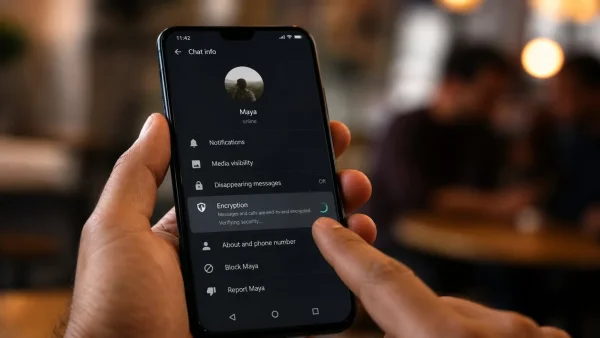
You don’t have to put out a message or make a call that gives you away. As WABetaInfo has put it, there is a way to get some answers from the encryption feature that works whether you are on an iPhone or an Android.
Why this matters
You will see the standard tell-tale signs: no profile pic, a call that goes nowhere, or a text with one tick mark. But those are not always what they seem. A change in privacy settings, a new phone, or a bit of a glitch can look just like a block.
So a method that takes some of the guesswork out of it has its merits. You don’t have to ping them and make things weird, and you still come away with a fair idea of where you stand. That is the point of using the encryption side of things.
How the quiet check works
The whole point of encryption verification is to put your mind at ease that your chats are end-to-end secure. It is supposed to run itself in the background once you go to the info screen for a chat.
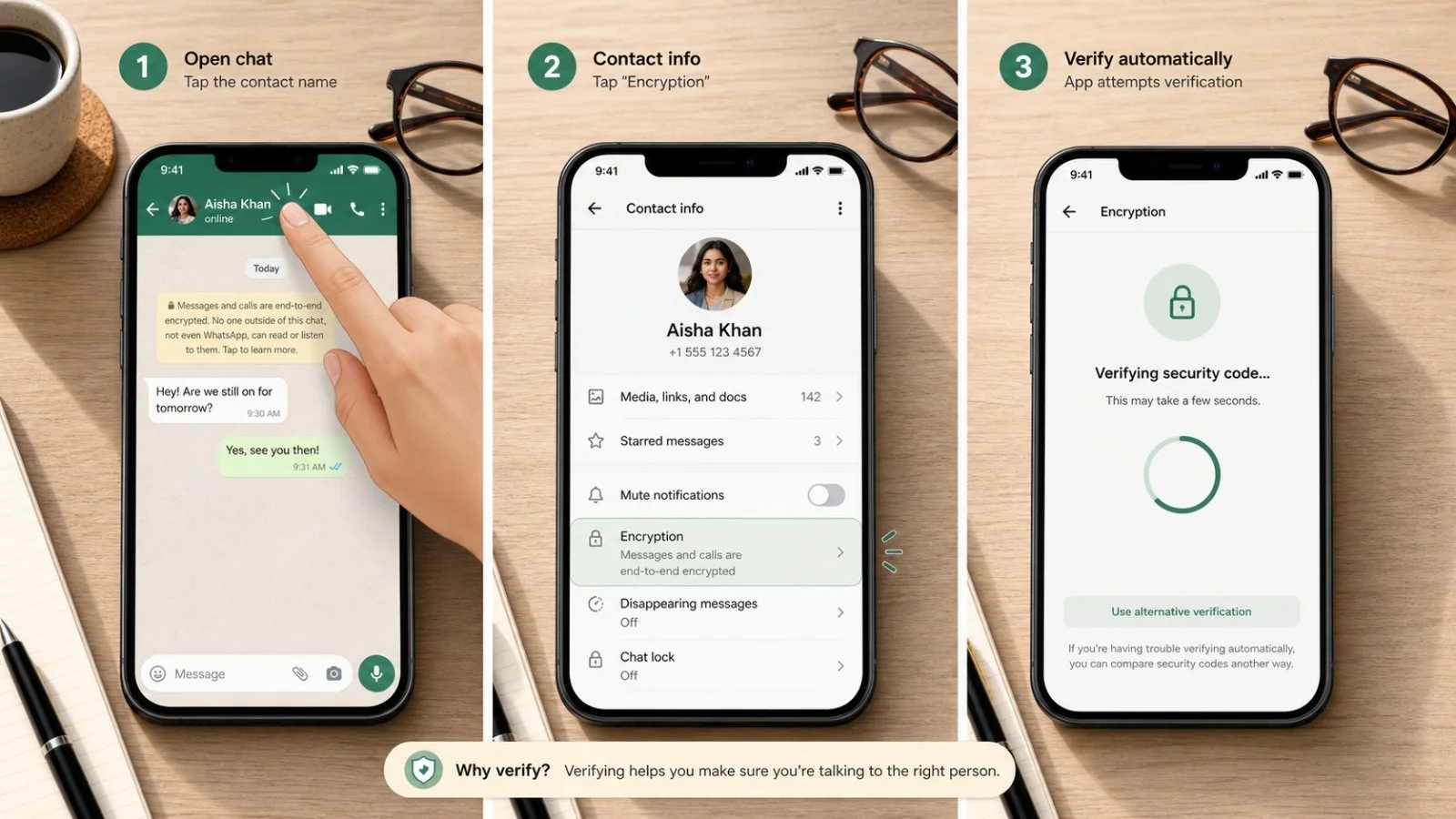
If you want to give it a try without making a scene, here is how you do it:
– Go into the chat and hit the name of the contact
– In their info, you will see ‘Encryption’
– Let the app do its thing and verify
When it all checks out, the line of communication is fine. But if it keeps failing to verify on its own and makes you use another way to do it, WABetaInfo says that is a pattern you might see when you have been blocked.
Read the result with caution
There is a but. This is not an official way to spot a block. WABetaInfo has seen the pattern hold up in some cases, but you should file it under “clue” and not “proof.”
Still, you are not tipping off the other side. It is a more solid read than the old way of guessing, and you can do it under the radar.
Don’t take it as a final word. Look at it alongside any recent changes in how the other person has set up their account or device.
The feature behind the workaround
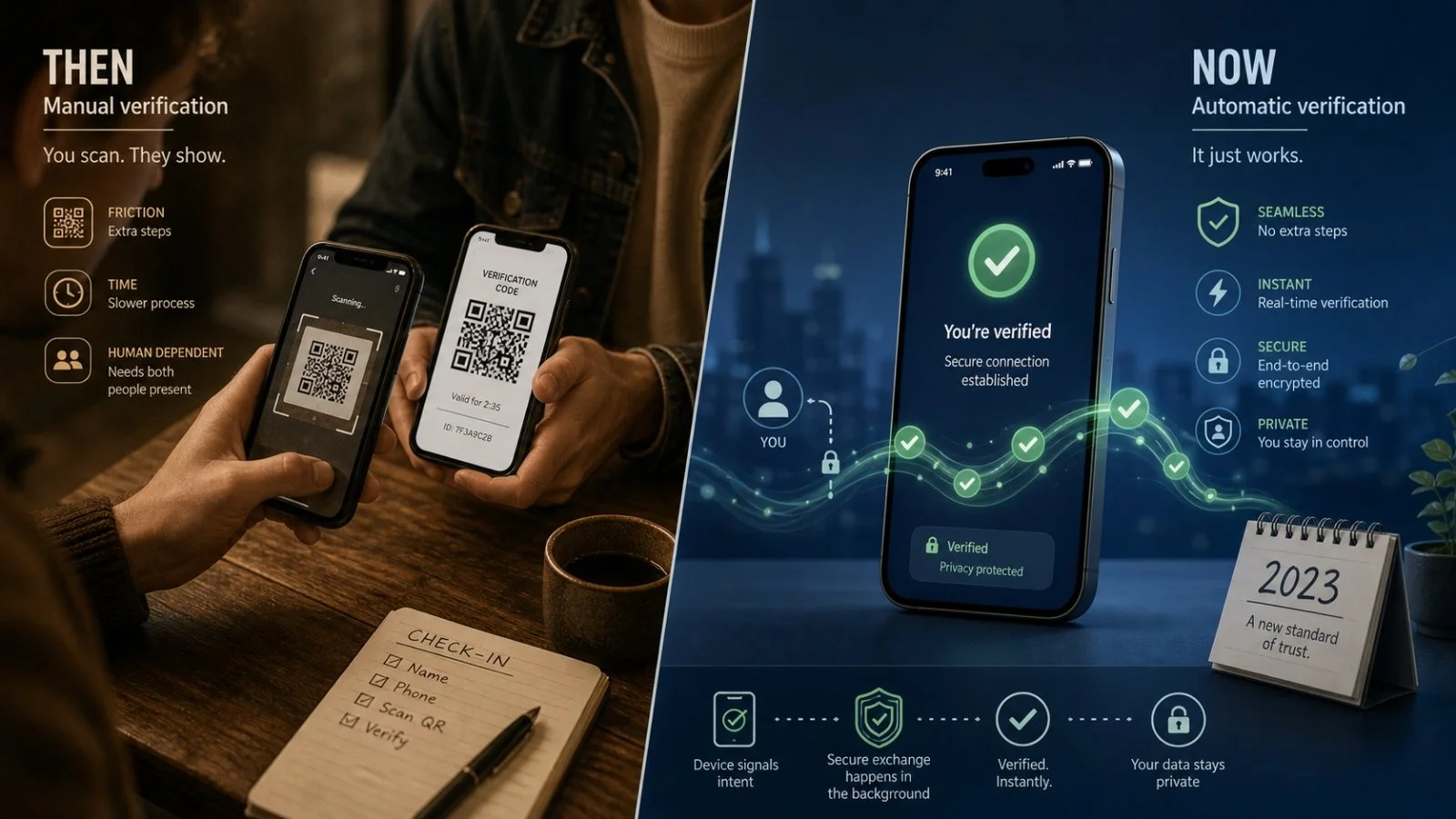
WhatsApp made automatic verification a thing in 2023. Up until then, you had to put in the work to match up a 60-digit code or scan a QR with the other party to be sure of your security.
That was a lot of friction. Now it is an in-app process you hardly notice. Unintentionally, that has given rise to this way of checking for blocks.
Why old signs miss the mark
A display picture that has gone missing or a single tick can be a red herring. The person may have put a lid on who can see their photo, or there could be some hiccups with a new device. Even a spotty connection will leave you with a delayed check mark.
With the encryption signal, you are looking at the health of the link itself. It is what the app can confirm, not what the user is putting on show.
What users should keep in mind
Make no mistake, this is not an endorsed tool for seeing if you are blocked. If the app won’t verify automatically, let that be a reason to hold back, not to lunge for your phone.
And there is the matter of manners. You have avoided an awkward notification, so don’t undo that with a hasty follow-up. Be measured about it.
Use it as part of the equation. If the app is being uncooperative and the rest of the evidence is there, you can be more confident in your hunch, even if you can’t be 100% sure.
Bottom line
It is the most unobtrusive way to check for a block on WhatsApp we have yet to find. It is fast, it is subtle, and the other person is none the wiser. Then again, it is not by the book and it is not foolproof.
For the time being, it is a better way to make sense of the noise. When you want some clarity, it can be of service, provided you handle it with some discretion.