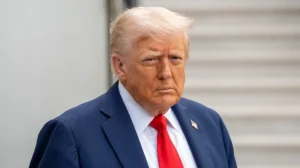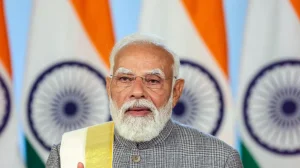
If you want to know what was behind Donald Trump’s tariff wars, this new tell-all from Maggie Haberman and Jonathan Swan gives you an unvarnished view. In Regime Change, they show you how he would wave off his own people’s ‘bullshit numbers’ to make good on a 50 per cent levy for India, with China right in the crosshairs as well.
The political calculus behind the tariffs
You had to have a certain kind of conviction to do what the book says Trump did: go for the kind of penalties that make the headlines, even if your economic team’s figures don’t add up. He was under the impression that what India was charging on US products was 175 per cent or more – not what the USTR has in its files.
Haberman and Swan lay out how it happened in stages. First came a 25 per cent hit on what they called ‘liberation day’. Then in August 2025, another 25 per cent was tacked on, which Trump made a point of tying to New Delhi buying in on Russian oil, for a 50 per cent total.
It put India in the same boat as Brazil and China when it comes to the harshest US levies. You could feel the temperature drop in diplomacy; trade talks ground to a halt and delegations were called off as both sides dug in.
Inside the confrontation, as described
There was a White House session that got testy, the book has it. Trump was having none of the stats his people put in front of him. ‘Nobody has fucking given me any numbers. Hard facts of how much China tariffs us, how much India tariffs us. You give me bullshit numbers,’ he put it.
Howard Lutnick, the Commerce Secretary, didn’t back down. He put the USTR’s figures on the table and told them to get with Jamieson Greer. The book notes that Greer said nothing. On the other side of the room, Peter Navarro was against any exceptions, while Mike Johnson of the House was with Lutnick on the auto question.
‘Okay, fine, I’ll own it,’ was how Trump let the matter rest. Lutnick had been at him about the danger to the market if he went in with a sledgehammer, and for some leeway for the auto industry and the USMCA, but by then the ship had turned.
Data versus instincts
What the USTR put in the data was clear: neither India nor China was racking up duties anywhere near what would make sense for the kind of rates Trump was after. But he wouldn’t have it. ‘No, these are bullshit numbers. These are fucking bullshit.’
Then there was a White House fact sheet on a subsequent trade deal that put a fine point on the numbers: India’s average tariffs were “as high as 37% for farm products and over 100% for some cars.” It was the kind of data that would have you rethinking your position in a closed room, but it didn’t do much to cool the president’s desire for more tariffs.
Why this was a big deal for markets and rivals
The ripples went further than what made the front page. The book has an interesting take on China, calling Trump’s trade war a misstep and crediting Beijing with using its hold on rare earths to make the US back down. With India, things got worse; relations bottomed out at levels not seen since the Cold War.
You had top brass fretting over the fallout. Johnson, for one, put in a word about how steeper duties would be hard on carmakers. Lutnick was on the case about how the market would respond and lobbied for some exceptions. In the end, they were no match for the president’s tariff-first approach.
The book makes a point of these flashpoints:
– Tariffs moved ahead of the staff’s own analysis
– USTR figures had a hard time being heard
– The auto industry was in the crosshairs
– The politics of it all won out over any plea for a carve-out
Making a course correction
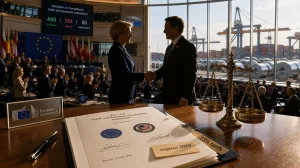
All the same, a way forward did emerge. By Feb. 2, 2026, New Delhi and Washington were putting a framework in place for a bilateral accord. Not a lot of specifics were on the table, but the upshot would be to bring the tariff on India down to 18 per cent.
According to the White House, India was to lower barriers on a host of items: from dried distillers’ grains and red sorghum to tree nuts, fruit, soybean oil and even wine and spirits. There was also a condition on where India was getting its energy.
“President Trump has agreed to lift the extra 25% on Indian imports in light of their promise to stop buying Russian oil,” the fact sheet put it. “He signed an order to that effect last Friday.”
USTR’s Jamieson Greer was in town this week to see off Commerce Minister Piyush Goyal for some last talks. They didn’t put a date on when it would happen, but both sides are keen to put some stability back in the relationship after the rough patch.
What’s in store
It will be in the doing. Will this framework put a stop to the deterioration in ties or just put it on ice? If they can get that 18 per cent number in place, it will change the math for the sectors that were clobbered by the 50 per cent peak.
Firms with a foot in both India and China have been shown a thing or two here. The book lays out how, when a hunch from the top trumps the numbers in your office, the whole plan can turn on a dime. And that is why we’re seeing a recalculation now.