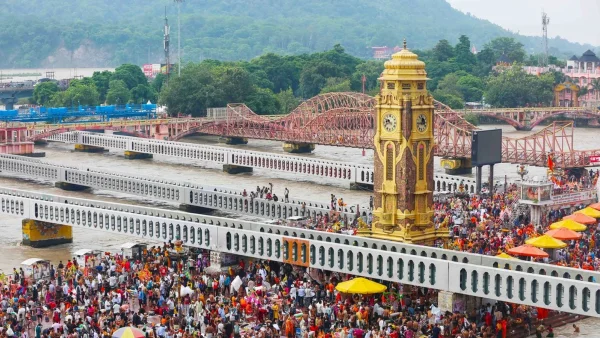
Fresh concerns over road safety have reignited the debate over whether India needs dedicated Kanwar paths after visuals of pilgrims carrying large Kanwars on busy National Highways circulated widely on social media.
Many commuters and road safety observers argue that carrying oversized Kanwars on high-speed highways poses risks not only to the pilgrims but also to motorists, truck drivers, and emergency services.
The discussion has gained momentum as the annual Kanwar Yatra brings lakhs of devotees onto roads across northern India.
Why Are People Demanding Dedicated Kanwar Paths?
The central argument made by many road users is straightforward: National Highways are designed for fast-moving traffic, not large pedestrian processions.
Supporters of dedicated Kanwar corridors believe that separate routes could:
Improve pilgrim safety.
Reduce highway accidents.
Prevent massive traffic congestion.
Allow emergency vehicles to move more efficiently.
Minimize conflicts between devotees and commuters.
Urban planners say separating pedestrian and vehicular traffic is a common road safety principle followed in many countries during large public events.
National Highways Become a Challenge During the Yatra
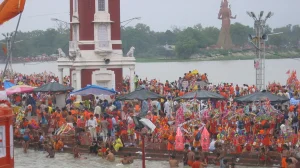
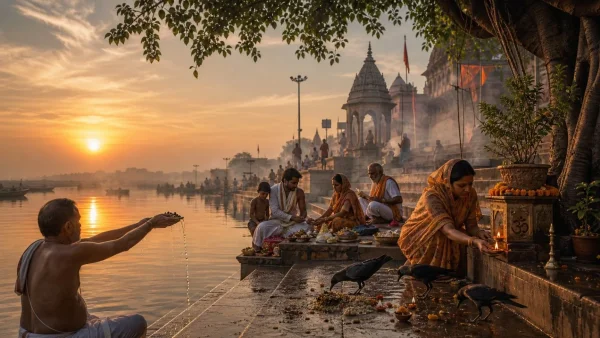
Every year, several highways witness heavy congestion as Kanwariyas walk long distances carrying holy water to Shiva temples.
In many places, traffic diversions are imposed, speed limits are reduced, and additional police personnel are deployed to manage both pilgrims and vehicles.
Despite these arrangements, concerns continue over the risks created when thousands of pedestrians occupy roads intended for high-speed traffic.
A Question of Safety, Not Faith
Road safety experts stress that the debate is not about the Kanwar Yatra itself but about how it is managed.
They argue that improving infrastructure for pilgrims would protect lives while also reducing inconvenience for the general public.
Mixed Reactions From Citizens
The discussion has generated diverse opinions online.
One commuter commented:
“Faith deserves respect, but highways are meant for vehicles travelling at high speeds. Separate lanes would make everyone safer.”
Another social media user wrote:
“We build expressways for faster travel. Turning them into walking routes every year defeats the purpose.”
Some users supported dedicated Kanwar corridors, saying they would provide devotees with a safer and more comfortable journey.
Others argued that existing arrangements are sufficient and that better traffic management, rather than new infrastructure, is the answer.
The Infrastructure Debate
Several transport experts believe India may eventually need dedicated pilgrimage infrastructure in regions that witness recurring large religious gatherings.
Such projects could include:
Dedicated pedestrian corridors.
Temporary protected walking lanes.
Resting and medical facilities.
Drinking water stations.
Emergency response points.
Supporters argue that these investments would improve safety without affecting the religious significance of the pilgrimage.
A Touch of Public Humour
As the debate unfolded online, social media users also responded with sarcasm.
One widely shared comment read:
“We have expressways for cars, metro lines for commuters, freight corridors for goods—perhaps it’s time to plan dedicated pilgrimage corridors too.”
Another user joked:
“Google Maps has routes for driving, cycling, and walking. Maybe the next update will include ‘Kanwar Mode.'”
While humorous, such comments reflect a growing public conversation about balancing religious processions with modern transport infrastructure.
The Larger Question
The recurring debate raises a broader policy question: Can religious traditions and road safety be better balanced through improved infrastructure?
As India’s highways become busier and vehicle speeds increase, experts believe that long-term planning may be necessary to ensure both the safety of pilgrims and the smooth movement of traffic.
For many observers, the issue is no longer whether the Kanwar Yatra should take place—it is how it can be conducted in a way that minimizes risks for everyone sharing the road.