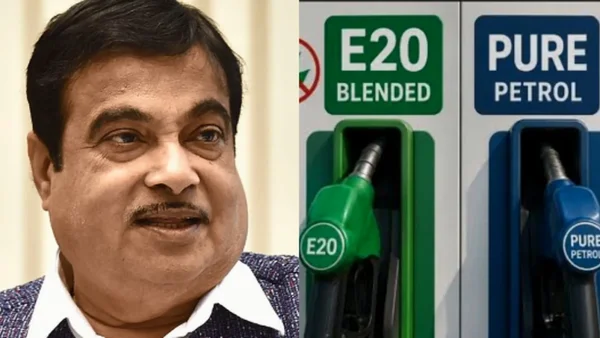
The registration of an FIR against YouTuber-turned-politician Manish Kashyap and three other social media influencers over posts related to Union Minister Nitin Gadkari and India’s E20 fuel policy has reignited a familiar debate. Once again, the spotlight has shifted from the policy itself to the people questioning it.
The larger issue is no longer whether the influencers were right or wrong. It is whether criticism of government policies is increasingly being met with legal action instead of public explanation.
In any democracy, misinformation deserves to be corrected. False claims can mislead the public and create unnecessary panic. Governments have both the authority and the responsibility to respond when deliberately fabricated information causes harm.
However, an equally important question remains: Should an FIR become the government’s first response, or should facts and transparency come first?
The Real Debate Isn’t About YouTubers
The controversy surrounding E20 fuel did not emerge because of influencers alone. Many ordinary vehicle owners have genuine questions.
Will older vehicles perform efficiently on E20 fuel?
Will fuel efficiency decrease?
Will maintenance costs increase?
Will consumers ultimately pay more because of lower mileage?
These questions deserve scientific explanations backed by independent studies—not merely assurances.
If the policy is technically sound, transparent communication should strengthen public confidence far more effectively than police action against critics.
From Press Conferences to Police Complaints?
There was a time when governments responded to criticism through detailed press briefings, parliamentary debates, and expert consultations.
Today, critics argue that the response often appears different.
Instead of:
Question → Explanation
many people feel the sequence has become:
Question → FIR
Whether that perception is accurate or exaggerated, it reflects a growing concern among digital creators, journalists, and ordinary citizens about the shrinking space for dissent.
Perception itself matters because public trust depends not only on what governments do but also on how citizens experience those actions.
The Chilling Effect
Every FIR filed against a public commentator sends a message beyond the individual case.
For one creator, it is a legal battle.
For thousands of others, it becomes a warning.
Many independent creators now admit that before uploading a political video, they spend almost as much time consulting lawyers as researching facts.
That may not be healthy for a democracy built on open debate.
The E20 Policy Deserves Discussion
The government’s objective behind promoting ethanol-blended fuel is understandable.
Reducing crude oil imports.
Supporting domestic ethanol production.
Providing additional income opportunities for farmers.
Reducing carbon emissions.
These are legitimate policy goals.
But every major reform also deserves scrutiny.
Consumers have every right to ask:
How will E20 affect older vehicles?What independent testing has been conducted?Will mileage change?Are automobile manufacturers fully prepared?Is India’s ethanol supply chain mature enough?Questioning implementation is not necessarily questioning the intention.
Public Trust Cannot Be Legislated
Governments often ask citizens to trust official statements.
But trust grows from transparency, not authority.
Publishing detailed technical reports, inviting independent experts, and engaging openly with criticism are far more persuasive than criminal proceedings.
An FIR may discourage one video.
It rarely settles the underlying debate.
The Politics of Narrative
Supporters of the government argue that misinformation spreads rapidly through social media and that authorities must intervene before false narratives mislead millions.
Critics counter that governments should distinguish clearly between deliberate misinformation and criticism, satire, or opinion.
The line between the two must remain carefully protected because once criticism itself begins to appear risky, democratic conversation inevitably becomes poorer.
What People Are Saying
Social media, as always, responded with humour.
“Petrol pumps now have fuel ratings. Social media has legal ratings.”
“Earlier people checked tyre pressure before travelling. Now they check the legal pressure before tweeting.”
“The engine may survive E20. Your YouTube channel might not.”
“Apparently the fastest vehicle in India isn’t an SUV—it’s an FIR.”
“Fuel is blended with ethanol. Public debate seems blended with legal notices.”
Humour often reflects public anxiety more honestly than official statements.
The Bigger Question
The controversy is no longer about one YouTuber or one government notification.
It is about how democracies respond to uncomfortable questions.
Strong governments should be confident enough to answer criticism with facts, data, and evidence. Resorting too quickly to criminal law risks creating the impression that managing the narrative has become more important than winning the argument.
In the long run, governments do not strengthen democracy by reducing the number of critics. They strengthen it by increasing the number of citizens who trust their explanations.
If the E20 policy is scientifically and economically sound, it should be able to withstand public scrutiny without requiring police intervention.
After all, engines run better with the right fuel.
Democracies run better with the right questions.