A familiar scene is unfolding on social media.
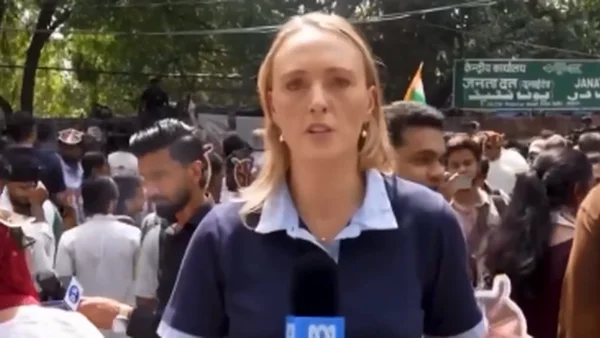
International news outlets are reporting on a developing issue, timelines are buzzing with discussions, and hashtags are gaining momentum. Meanwhile, many users are asking the same question:
“Why does it feel like foreign media is talking louder than Indian prime-time television?”
The internet, as always, wasted no time.
Memes started rolling in faster than official statements, with users joking that Indian news channels were “busy finding a Bollywood controversy to debate for three hours” while the rest of the world had moved on to the actual story.
The Great Indian Silence?
Social media users have begun asking uncomfortable—but fair—questions.
Why are international publications covering this story?
Why is there comparatively less discussion on some mainstream Indian TV channels?
Where are the official clarifications?
Why haven’t key ministers publicly addressed the issue?
So far, there has been no single answer that explains the differences in coverage.
Breaking News… About Everything Except That
If social media is to be believed, Indian television has mastered a unique superpower.
Some users joked that news channels can locate a celebrity’s airport outfit within minutes but somehow require “additional verification” when a politically sensitive story appears.
Another meme read:
“Foreign media: Here’s the story.
Indian TV: But first… let’s discuss who insulted whom on reality television.”
Harsh? Maybe.
Funny? The internet certainly thought so.
Silence Is a Terrible PR Strategy
When officials don’t communicate promptly, people naturally begin asking questions.
And when answers don’t arrive…
Memes do.
The longer the silence continues, the louder the speculation becomes—not because speculation is necessarily correct, but because unanswered questions create room for it.
Public trust is often strengthened by timely facts, not by leaving a vacuum for social media to fill.
The Internet’s Favourite Conspiracy?
As expected, theories have spread across social media, with users debating everything from editorial priorities to political influence.
However, there is no verified evidence that the government has instructed news organizations not to cover a particular story. Newsrooms make editorial decisions for a variety of reasons, and without evidence, claims of censorship should be treated as speculation rather than fact.
That hasn’t stopped the memes, though.
Because on the internet, every unanswered question comes with free conspiracy theories in the comments section.
Democracy Loves Questions
Questioning those in power is part of every healthy democracy.
Equally important is answering those questions with facts.
Whether it’s the government, opposition, media houses, or public institutions, transparency helps reduce rumours and build confidence. Silence, on the other hand, rarely wins the news cycle.
The Bottom Line
The real story may not just be the issue itself.
It may also be the growing public conversation about who is covering it, who isn’t, and why.
Until clearer answers emerge, social media will continue doing what it does best:
Turning every information gap into a meme, every silence into a trending topic, and every unanswered question into tomorrow’s viral post.