Is hydrogen the fuel of the future or an expensive gamble? Discover its science, controversies, storage challenges, India’s hydrogen train, budget, and global future.
“The Universe Runs on Hydrogen… But Your Car Doesn’t.”
Hydrogen is the universe’s favourite element. About 75% of the visible universe is made of hydrogen. The Sun burns hydrogen every second to produce the energy that makes life possible on Earth.
Yet if your motorcycle runs out of fuel, you can’t simply point it at the sky and say,
“Fill her up with universe.”
That’s hydrogen’s biggest irony.
It’s everywhere.
Yet usable hydrogen is surprisingly difficult—and expensive—to obtain.
Hydrogen: The Smallest Element With the Biggest Ambitions
Hydrogen is the lightest element in the periodic table.
It contains:
One proton
One electron
That’s it.
Simple?
Not really.
Pure hydrogen rarely exists naturally on Earth.
Instead, it’s trapped inside:
Water (H₂O)Natural gas (CH₄)BiomassIndustrial chemicalsExtracting hydrogen requires energy.
And that is where the entire debate begins.
Green, Blue, Grey… Is Hydrogen a Fuel or a Rainbow?
Hydrogen comes in more colours than a paint catalogue—not because the gas changes colour, but because the colours describe how it’s produced.
Green Hydrogen
Produced by splitting water using renewable electricity.
Pros:
Very low carbon emissions.Supports renewable energy integration.Cons:
Currently the most expensive option.Blue Hydrogen
Made from natural gas with carbon capture and storage.
Supporters call it a transition fuel.
Critics question whether carbon capture is effective enough to justify the label “low carbon.”
Grey Hydrogen
Produced from natural gas without carbon capture.
It is currently the most common form of hydrogen production worldwide but has a significant carbon footprint.
Hydrogen’s Biggest Problem: It Loves Freedom
Hydrogen is tiny.
Very tiny.
So tiny that engineers joke:
“If there’s a hole, hydrogen will find it.”
Because hydrogen molecules are so small, storing and transporting them safely is one of the biggest engineering challenges.
Current storage methods include:
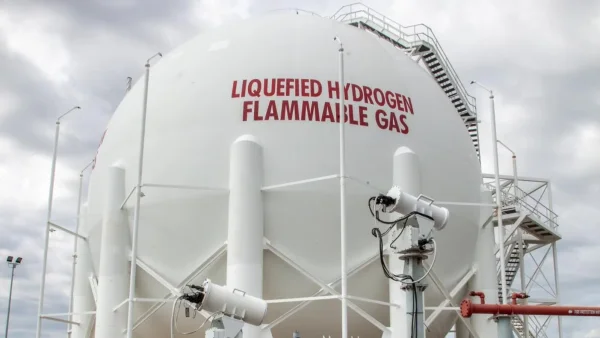
High-pressure cylinders (up to 700 bar for some applications).Cryogenic liquid hydrogen stored at around -253°C.Metal hydrides that absorb hydrogen.Chemical carriers such as ammonia, which can transport hydrogen in another form.Each method involves trade-offs between cost, complexity, energy use, and practicality.
Hydrogen Has Commitment Issues
Imagine inviting a guest to dinner.
They arrive late.
Need special food.
Require an expensive chair.
Then leave halfway through dessert.
That’s hydrogen.
It burns beautifully.
But getting it from the production plant to your car, train, or factory requires expensive infrastructure.
Hydrogen isn’t difficult because it won’t work.
It’s difficult because it wants VIP treatment.
Fuel of the Future… Since the 1970s
Hydrogen has been called “the fuel of the future” for decades.
Ironically…
It’s always the fuel of the future.
Never quite the fuel of the present.
Yet that may finally be changing.
Governments are investing billions because hydrogen could play a valuable role in sectors where batteries are less practical, such as steelmaking, fertilizer production, shipping, aviation, and some heavy transport.
India has ambitious clean-energy goals, including the National Green Hydrogen Mission, which aims to expand domestic production, encourage industrial use, and position the country as a future exporter of green hydrogen. The strategy is tied to India’s broader target of reaching net-zero emissions by 2070.
The country benefits from abundant solar and wind resources, which could help lower the cost of producing green hydrogen over time.
But ambition alone won’t make hydrogen affordable.
The economics must improve.
India’s First Hydrogen Train: Green Revolution or Costly Experiment?
One of India’s most talked-about hydrogen projects arrived in July 2026, when Indian Railways launched its first hydrogen-powered train on the Jind–Sonipat route in Haryana, placing India among a select group of countries operating hydrogen trains.
The train generates electricity onboard through hydrogen fuel cells, producing water vapour at the point of use instead of diesel exhaust. The project includes dedicated hydrogen production, storage, and refuelling infrastructure.
Why Not Just Electrify Every Railway?
Critics immediately asked:
“India already has one of the world’s largest electrification programs. Why hydrogen?”
It’s a fair question.
Hydrogen trains are generally viewed as an option for routes where electrification is difficult, uneconomical, or where diesel still dominates. They are not expected to replace conventional electric trains across the network. Their success will depend on performance, reliability, and long-term costs.
The Budget Question: Who Pays?
Here’s the uncomfortable truth.
Hydrogen isn’t cheap.
Every hydrogen economy needs investment in:
Electrolysers.Renewable electricity.Pipelines or transport systems.Storage facilities.Refuelling stations.Safety systems.Skilled workers.Supporters argue:
Every revolutionary technology begins expensive.
Critics respond:
Taxpayers shouldn’t fund technologies that may never become commercially competitive.
History offers examples of both outcomes. Solar panels were once prohibitively expensive before costs fell dramatically. On the other hand, some highly anticipated technologies have struggled to achieve widespread adoption.
Fuel or Fool?
This is hydrogen’s billion-dollar question.
Supporters say:
It could decarbonize heavy industry.It may power long-distance trucks, ships, and some rail routes.It can store renewable energy for later use.Critics say:
Batteries are more energy-efficient for many road vehicles.Producing hydrogen wastes energy compared with using electricity directly.Infrastructure costs are enormous.The reality may be that hydrogen is not an all-purpose solution, but one tool among many in the clean-energy transition.
The Great Storage Headache
Hydrogen has excellent energy per kilogram but much lower energy per unit of volume than conventional fuels. That means storing enough usable hydrogen often requires compression, liquefaction, or chemical conversion—all of which consume energy.
Engineers continue to develop improved storage materials and transport methods, but this remains one of the biggest technical hurdles.
Hydrogen Around the World
Countries investing in hydrogen include:
GermanyJapanSouth KoreaAustraliaSaudi ArabiaUnited Arab EmiratesIndiaEuropean Union membersEach has different priorities:
Energy security.Industrial competitiveness.Export opportunities.Climate goals.No single country has yet demonstrated a complete hydrogen economy at scale.
The Funny Side of Hydrogen
Hydrogen is the smallest element.
Yet somehow…
It creates some of the biggest engineering headaches.
Hydrogen engineers probably spend more time figuring out how to store hydrogen than actually using it.
If hydrogen had a personality, it would be:
“Brilliant in theory…
Complicated in practice.”
The Future: Miracle Fuel or Supporting Actor?
Hydrogen is unlikely to replace every petrol pump or every battery.
Instead, many experts see it complementing other technologies.
Possible future applications include:
Green steel production.
Fertilizer manufacturing.
Long-distance shipping.
Aviation fuels derived from hydrogen.
Backup power systems.
Seasonal energy storage.
Some rail and heavy transport applications.
Its future depends not only on scientific breakthroughs but also on whether costs fall, infrastructure expands, and policies remain supportive.
Final Verdict: Hydrogen Isn’t Magic—But It Isn’t a Myth Either
Hydrogen has become one of the most debated energy technologies of the 21st century.
Supporters see a cleaner future powered by green molecules.
Critics see a technology that is too expensive, too inefficient, and too dependent on subsidies.
The truth probably lies somewhere in between.
Hydrogen will not solve every energy problem. Nor is it likely to disappear.
Like electricity, solar power, batteries, and nuclear energy, it has strengths, weaknesses, and applications where it makes more—or less—sense.
Perhaps the best way to think about hydrogen is not as the fuel of the future, but as one of the fuels that could help build a lower-carbon future—provided science, economics, and engineering continue to move in the same direction.