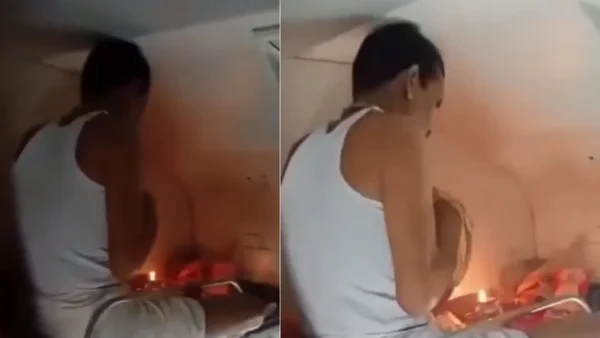
A video circulating on social media has sparked a wider conversation about safety on public transport after it appeared to show a passenger offering prayers on the upper berth of an AC train coach while lighting incense sticks and an oil lamp.
The footage shows another passenger calmly intervening, reportedly explaining that while everyone is free to practice their faith, using an open flame inside a moving train can create a serious safety hazard. The exchange has since prompted discussions online about balancing religious practices with the responsibility of ensuring the safety of fellow passengers.
Public Safety Must Come First
The issue is not about religion or the act of praying. People of all faiths have the right to worship and observe their beliefs. However, public transport is a shared space where individual actions can affect the safety of everyone onboard.
Incense sticks produce smoke that may trigger fire detection systems in air-conditioned coaches, potentially causing unnecessary alarms and disruptions. More importantly, an oil lamp or any open flame poses a fire risk, especially inside a confined, moving train carrying hundreds of passengers.
Even a small flame can become dangerous if the train suddenly brakes, jolts, or experiences unexpected movement. In such situations, a lit lamp can spill, ignite nearby belongings, or lead to an emergency that puts passengers and railway staff at risk.
Shared Spaces Require Shared Responsibility
Railway safety regulations are designed to protect everyone, regardless of their religion, language, or background. Restrictions on open flames, inflammable materials, and activities that could endanger passengers are based solely on safety considerations.
Just as smoking is prohibited inside trains because it poses health and fire risks, lighting incense sticks, candles, or oil lamps in coaches can also compromise passenger safety.
Respecting these rules is part of being a responsible traveler.
Faith Can Be Practiced Safely
Many passengers choose to pray silently, meditate, read religious texts, or offer prayers without using fire or smoke-producing items while travelling. Such practices allow individuals to observe their faith without creating risks for others.
Faith and public safety are not competing values—they can coexist when religious observance is adapted to the environment.
A Lesson Beyond the Viral Video
The viral video serves as an important reminder that safety in public spaces is a shared responsibility. The concern raised by the fellow passenger was not directed at a particular religion but at the potential danger posed by an open flame inside a moving train.
In shared spaces such as trains, buses, and aircraft, every passenger has a role in ensuring the well-being of those around them. Personal beliefs deserve respect, but they should never compromise the safety of others.
Ultimately, the strongest message from this incident is simple: faith should be respected, and so should the safety of every passenger.