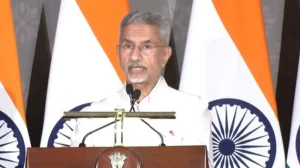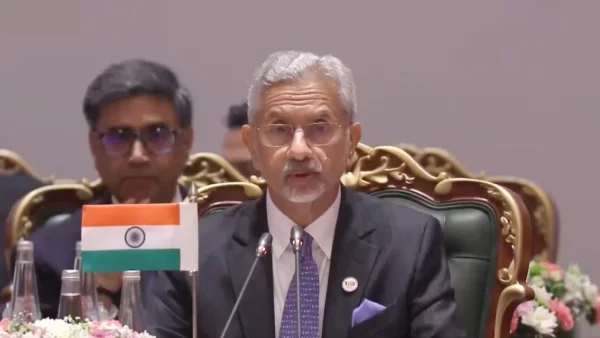
Jaishankar sees a world that is far more complex and multipolar than before, and one where the old institutions are creaking under the strain. He pointed to a lack of trust and slow-moving decisions as proof that we can’t run 21st-century problems with 20th-century tools. “If we want global cooperation to hold up in the face of what we’re seeing now, reform is not optional,” he said.
Security Council at the core of reform
His most pointed remarks were reserved for the UN Security Council. For all the UN’s expanded membership, some of its make-up is still of another era. “Unless we have some real reform – and I mean in both the permanent and non-permanent seats – you will see the UN’s credibility and effectiveness held back,” he was clear.
What India is signalling
That means opening the door to Asia, Africa and Latin America. India has been in the vanguard of the push for a permanent seat, and for good reason: it is about legitimacy. The talk has been getting more specific of late, and Jaishankar is ready for it. “It is time to move to text-based negotiations,” he said. You can see a consensus forming in the outcome papers from the Johannesburg Summit.
The core points he advanced were blunt and time-bound:
– Expand both permanent and non-permanent seats
– Ensure Asia, Africa, Latin America representation
– Shift to text-based Security Council negotiations
– Build on BRICS consensus for momentum
Financial and trade systems under pressure
But the UN is only part of the story. Jaishankar also made the case for a stronger international financial system. With supply chains in tatters and food and energy security in question, the multilateral development banks have to be more than they are. “We have to meet countries where they are,” he put it. “Development and climate finance has to be in line with what their national priorities are.”
Then there is the matter of trade. He has some concerns over non-market behaviour and the way supply chains are set up, which he says are creating new risks. “A rules-based, fair, open and inclusive trading system, with the WTO at the centre, is a must,” he said. But it also has to be fair to the developing world and deal with the imbalances that exist.
In the end, this is how Jaishankar puts it: "Cooperation is essential. Dialogue is necessary. Reform is overdue.”
He sees BRICS as a way to turn like-mindedness into something tangible. And as the debate on the Security Council gets down to brass tacks and the economy is put to the test, India’s message is plain: let’s get on with it.