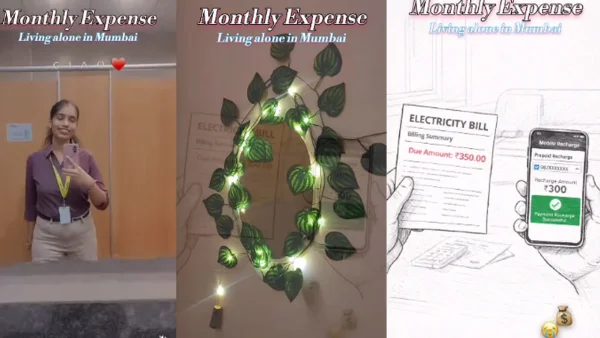
Shreya Gan, as she’s known on Instagram, made a short video listing how much she spends each month on her 1RK (one room and kitchen) rental. She called the video ‘Monthly expenses while living alone in Mumbai‘ and went through each item. It very quickly got a lot of attention and lots of comments from people wondering if it’s really possible.
Monthly expense line items
People immediately looked at the rent, which she says is 11,500 rupees a month for the 1RK. She also includes in her budget money for electricity, recharging her mobile phone, transport, food, shopping online, and other little things. Her total is approximately 17,500 to 18,000 rupees per month.
According to her list, 11,500 rupees goes to rent – and this is the biggest part of her spending. Electricity is around 300 to 400 rupees, and she spends 300 rupees on her phone.
She gets around using local trains and sometimes uses auto-rickshaws or taxis, for about 500 rupees a month. She spends between 1,500 and 1,800 rupees on groceries and roughly 2,000 rupees on online shopping. She says she has other expenses that add up to about 1,000 rupees.
Adding all of this together gives her a monthly spend of 17,500 to 18,000 rupees for living alone in the city.
Public reaction and skepticism
A lot of people commenting don’t believe the rent is so low. Many are asking which area of Mumbai has a 1RK for 11,500 rupees, as typical rents in the more central parts of the city are much more. Some think she must live in the suburbs, outside the main city.
Other viewers question how low her electricity and grocery bills are, saying they don’t seem realistic. The general feeling is that you’d have to be very careful with your money, get help from family, or live in a surprisingly cheap part of the city to manage on that budget.
Some people actually asked for more details, like the exact location of her apartment, advice on finding cheap places to live, and if she’s had to sacrifice her safety, how long it takes to get around, or her quality of life.
Context on Mumbai housing and budgets
Rent in Mumbai varies hugely depending on the neighborhood, how close it is to where businesses are, and how easy it is to get to local trains and shops. Areas in the center and well-connected suburbs are more expensive, whereas the areas on the edge of the city and satellite towns have cheaper rents. This difference explains why people have very different ideas about what’s affordable.
People living alone can often get by on a small budget by focusing on the things they need, not spending much on things they want, and using cheap transport. However, under 18,000 rupees a month is still unusual for many people who live near the center of the business areas or have a long journey to work.
How much you pay for things like electricity and how you live also affect how much you spend each month. If you don’t use much electricity and don’t use many appliances, your electricity bill will be lower. And how much you spend on food depends on where you shop, what brands you buy, and if you cook for yourself.
Practical takeaways for budget-conscious city dwellers
If you’re trying to live on a tight budget in a city, the first thing to do is write down everything you spend for a month so you can easily see where you can save. Think about living further away from the city center where the rent is lower, but remember to include the time and cost of travelling. If possible, share a place or try to negotiate the rent and deposit with the landlord.
Use local public transport, cook your own food, don’t shop online too much, and reduce the number of subscriptions you have. Simple things like using energy saving lightbulbs and planning your shopping can lower your electricity and food bills. And before you sign a rental agreement, ask people who live in the area you’re thinking of moving to how much things actually cost.
Living in a large city with very little money creates a lot of discussion because it makes us think about how much things cost and what we have to give up to be able to afford a certain lifestyle. Whether the numbers in this video are correct for everyone, the discussion shows that many people in cities are reconsidering their spending and what’s important to them in a place where everything is expensive.