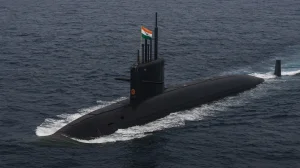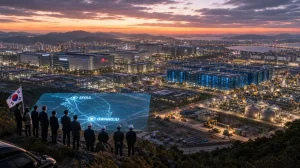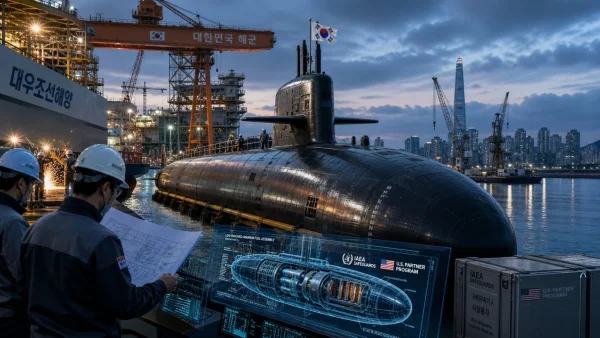
There’s a new dynamic at play as Seoul moves to field a nuke-powered sub in the mid-2030s, putting it in a rather exclusive group of operators. It’s being put forward as a straight response to the kind of sub and missile threats coming out of the North, all while standing on solid non-proliferation ground.
You have to see the government’s way of doing things as a mix of what’s needed and making do with your own resources. By vowing to construct the vessel at home and run it on low-enriched fuel, they are making it known they want to hold the reins on key tech without any treaty issues.
Why this is significant
With a nuclear plant you get more time and room to manoeuvre underwater. That’s what makes a sub as hard to spot and as far-reaching as it can be. For the kinds of systems Pyongyang has been working on, that is the difference between tracking them and not, according to those in the know.
In going after this, South Korea wants to be part of the few nations with such subs. It’s a position that comes with its share of military and political heft.
What we know for sure from Seoul
‘We will make and build our own nuclear-powered subs and have the first one in the water in the mid-2030s,’ was how Defence Minister Ahn Gyu-back put it at a strategy session with President Lee Jae Myung. He made it clear the sub would be in service ‘in the latter half of the 2030s’.
Ahn’s plan is to put it in the hands of local industry – the shipbuilders, the defence and nuclear sectors. The sub will be on low-enriched uranium, and officials were quick to say there is no question of Seoul getting or making nukes.
Ahn said they will be in close touch with the U.S. to get the fuel and keep to non-proliferation, as well as with the IAEA. Word is Washington has given the green light for the restricted fuel, so that obstacle is out of the way.
The ins and outs of fuel and partners
Seoul is saying this will be done with proper oversight. They point to their work with the IAEA and the U.S. when it comes to handling the fuel. Back in November, Lee noted that the U.S. sign-off even covered for reprocessing spent fuel and enrichment.
When you’re talking about U.S. sub tech, it’s some of the most guarded in the business, which is why the nod from them is so important. There was some talk before about where they might be made, with someone even quipping ‘right here in the good ol’ U.S.A.’, but let’s be clear: they’ll be built in South Korea.
What it says, politically and industrially
Ahn sees it as an effort that puts the whole of the industry to work, from the shipyards to the reactor side. It’s a way to keep the economic upside in the country and have the skills in place to support a fleet down the line.
Then there is the message. Lee has called the subs ‘a symbol of our resolve to be responsible for peace and security on the Peninsula’. And they’ve been unambiguous about it: ‘The ROK does not have nuclear weapons and we are not going to develop them.’
Where things stand and what’s next
Here is the bottom line from officials:
– We’ll be launching the first one in the mid-2030s
– It goes into service in the second half of the 2030s
– It’s a South Korean build, with our own technology
– Low-enriched uranium will be the power source
– We are co-operating with the U.S. and IAEA
– No nukes
Put simply, you have to get through the design, the fuel, and the supply chains before you can deploy. The idea is to have a deterrent that can hang in there at sea without flouting non-proliferation.
Assuming they stick to the plan, you can expect to see the sub in the mid-2030s, with it fully operational later in the decade. For Seoul, it means a platform with more staying power and a better way to deal with what the North is up to.
It’s a matter of having a firmer deterrence and a stronger industry at home, all while being in lock-step with allies on the rules. The test in the years ahead is whether they can make that work in metal and motion.