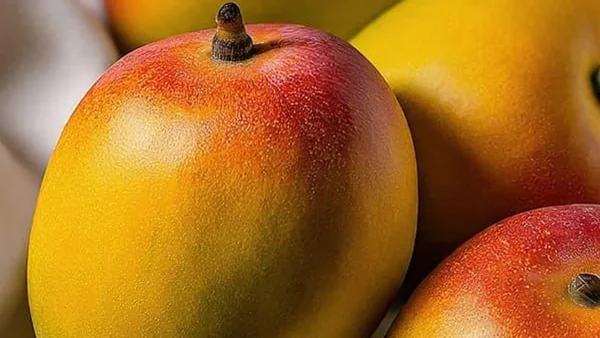
It’s a crisis for India’s top-tier Alphonso. The orchards in Maharashtra have seen some heavy damage after unseasonal heat and El Nino put a crimp in the flowering and the quality of the fruit. A survey from the government puts the tab for Devgad at 85% to 90% in the red, and it’s changing the rules of the game for prices and livelihoods right in the middle of the season.
By CRISIL’s numbers, India is still the biggest name in mangoes, with 28 million metric tons coming out of the ground in 2024-25. But ask Komal Walke, a 26-year-old from Devgad, and she’ll tell you her three acres have been all but a wash this year. She has to go to the big farms to put together what she needs to honour a contract.
What changed for Alphonso growers this season
You could see the trouble with the ‘King of Mangoes’ before the fruit even put in an appearance. In Devgad, they say the kind of temperature whiplash you get between day and night in the winter months was hard on the orchards.
And then April and May were hotter than they ought to be. Bapusaheb Manikrao Lambade, with the agriculture department, says the heat – you can put that down to El Nino – did in the fruit. It made for a meagre yield on top of the early damage.
Holding on to your best customers means making some tough calls. “If we don’t put in the work on our orders, the big ones won’t be back,” Walke said. It’s a matter of being there for them, even if it means you’re not making as much on the side.
Export shock compounds the pain
Now you add in some world events. People in the industry are talking about a lull in exports on account of the situation in Iran. India has to stand up to Mexico, Thailand and Vietnam for global business, and we count on the UAE, the U.S., UK and the like to be steady.
Freight has more than doubled, according to Shridhar Pathak of Shreevali Agro. He’s had to call off or put off a lot of the work for the Gulf – we’re talking Dubai, Oman – and he’s down 40% on shipments. Some of what was meant to go out has been left for the home market, which has the odd effect of lowering the price when you’d think it should be the other way around.
It’s a case of the supply chain turning things on their head. The moment the export route gets shaky, you have a pile-up in the city mandis while the farm is in the red. The grower takes the hit and the retail price softens.
Ripple effects across the mango economy
You can see the impact outside the groves. Over in Malvan, Sanjay Nare has 100,000 cartons he can’t move. “We live on mangoes and fish here,” he says. “Take away the seasonal mango and there isn’t much else.”
Mordor Intelligence has the whole of India’s crop at $2.3 billion for last year, and they figure it will be $3.4 billion by 2031. This year alone, fresh and pulp exports ran to $136 million. So when trade is interrupted, it’s felt in the packing house too.
Devgad is not the only one. Word is that other parts of Maharashtra are in the same boat. It’s a sign of some wider strain in a state that is supposed to be the source for the good stuff, both here and abroad.
Why this year is different, and what to watch
El Nino is in the mix. It’s a pattern that can turn the weather on its head and is looking to be a force this year. We’re likely to see some of the same issues with crops in Asia, South America and Africa.
If you are in the trade, there are a few things to note from this rough patch:
– You may see lower prices in the mandi but not much to have
– What happens with exports can make a local shortage seem like nothing
– Being able to deliver is what will win you the next round
The road ahead for Alphonso
The fine growers in Maharashtra are having to readjust. When you have a name like Alphonso, you can’t let a bad year with the trees mean you let your clients go.
So for the time being, you make sure the anchor buyers are taken care of, even if you have to source from elsewhere. You do what you have to to get by. Down the line, it will be about whether you can find ways to make the orchard hold up when the seasons are anything but normal.
India’s mango output is still on a grand scale, but this year has been a reminder of how climate, freight and conflict can come to a head. The 'King of Mangoes‘ is thin on the tree, and when you find one on the shelf, the price is a question mark.