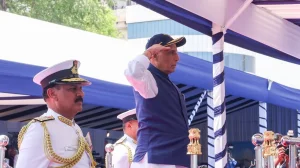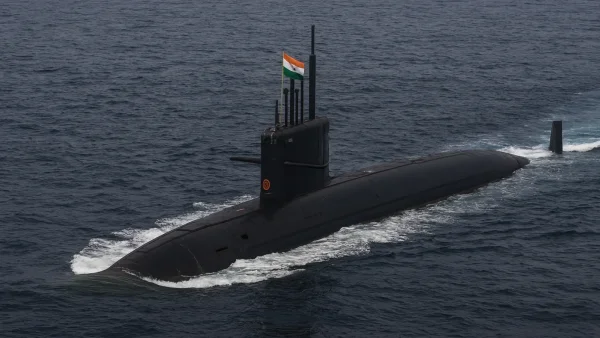
It testifies the sea-based nuclear deterrent of India and the new submarine is expected to add a strong boost to it. The statement was given by the Chief of Naval Staff Admiral Dinesh Tripathi where he also informed that the SSBN of Arihant class was in the last stages of testing and would be established in the navy at the appropriate time.
The head of the Navy Day earlier the same day declared that the entrance of the Aridaman into the navy would not just link the nuclear submarine fleet with the navy’s strategic bombers and ballistic missile inventory but also create a common cause of the three services being part of the country’s nuclear triad. The Indian Navy is closer to having a continuous nuclear deterrent in-theatre as the three submarines INS Arihant, INS Arighaat and now INS Aridaman are part of the deterrent patrolling.
India’s Nuclear Triad Building with INS Aridaman
Being able to maintain a deterrent at sea can save the country from many problems. It is also a way to keep the country’s second-strike capability and strategic stability well. Aridaman, the second upgraded SSBN of the class, recognizes “operating alone ” tactics to some extent, but persists in keeping the deterrent power of India even in the face of the most radical regional power shifts and threats.
The Submarine is intended to be armed with longer-range K-4 submarine-launched ballistic missiles. The variety of this vessel shows India is moving in the direction of near-continuous deterrent patrols, which is one of the indicators of a mature nuclear posture and strategic assurance.
Fleet Modernisation: Submarines, Carriers, and Fighters
The closing-of-75-India program for the construction of six stealth submarines nearly enters completion, Admiral Tripathi mentioned. It will equip the SSBN fleet with modern convential capabilities, thus, enlarging the undersea domination.
The Navy is likely to get the first four Rafale-M carrier-based fighters in 2028 as part of a ₹64,000 crore deal. These aircraft which will enhance maritime strike, air defense, and carrier operations will eventually be used in the Arabian Sea and the Bay of Bengal area.
India is also working on the nuclear-powered attack submarine (SSN) program. The Indian local SSNs event is two planning, and it is expected to be ready around the middle of the next decade.
To cover the capability gap, one SSN from Russia could be the more probable way and by the year 2027-28, it is said Russia is likely to deliver, said senior naval officers.
The Chief of the Navy once again brought the matter of the third aircraft carrier in front of everyone. INS Vikramaditya and INS Vikrant are two carriers under the Indian flag now and the induction of the new one would coincide with the retirement of Vikramaditya, thus effectively keeping the force with two carriers. The long-term objective of the Indian Navy remains the establishment of a three-carrier force which would provide year-round presence along both the eastern and western coasts.
Operational Posture and Regional Signaling
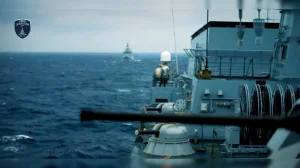
To counter the high operational readiness in the Western Arabian Sea, the Navy has been
maintaining a very high alert for the last seven to eight months. During the Operation Sindoor, the sudden moving in of a carrier battle group had the effect of keeping the Pakistan Navy near its ports and the Makran coast was inaccessible.
The body posture created a chain of economic effects. There was a decrease in the number of merchant vessels calling at Pakistani ports, and likewise, the costs for the vessels were insured on the rise. The Admiral stated that the operation was still going on with more ships being deployed and consequently, the lack of a downtime.
India, at the same time, has forged stronger maritime ties. From the prior Navy Day, The Navy was a part of 21 bilateral and 9 multilateral maritime exercises as well as conducted 34 partnership exercises. They also maintained a corvette task force at sea and have carried out 13 joint EZT approaches.
Regional Security Context
On the subject of Pakistan’s missile tests, Vice Admiral K Swaminathan pointed out that the Navy was already informed about the launch. He further mentioned that the Navy was somewhat doubtful about the test’s domestic origin but they saw the entire launch and its performance closely nonetheless.
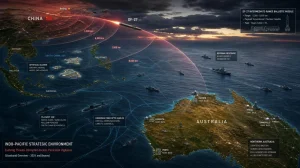
When asked about China, the Chief of the Navy admitted that the PLA Navy poses a threat, while India’s strategy aims at achieving its naval interests and not targeting any country in particular. Indian warships were present from Guam to the Mediterranean, Mauritius, and Fiji. The South China Sea is crossed as a matter of course as part of a larger engagement scheme
Scale Indigenous industry
Arighat’s construction was stated by the Defense Minister Rajnath Singh to be a result of advanced design, special materials, complex engineering, and high-skill workmanship. The Indian scientists, industry, and naval personnel were behind the conception, design, manufacture, and integration of the indigenous systems. The transiting of Aridaman, thus, mirrors the course of this striving towards self-reliance in strategic platforms.
Western Pacific Strategy
India advocates the elimination of nuclear weapons all over the world, but at the same time seeks to sustain a dependable low deterrent. Since 2003, its nuclear strategy has been based on the “no first use” concept. Along with Arihant, Arighaat, and soon Aridaman, India solidifies its position as one of the few countries with SSBNs: USA, Russia, UK, France, and China.
What to Watch Next
The entering of Aridaman into service, which is on the verge of becoming a reality, will even more boldly back the sea deterrent and even out the security situation in the region. Besides, the Navy is fostering the idea of accepting women in the submarine branch which coincides with its positioning of the organization as gender-neutral force.
The simultaneous SSBN increase, the SSN plan, the aircraft carrier force buildup, and the more frequent and intensified operation acts make it clear that the Navy is gearing up to carry out its implacable blue-water duties across the Indian Ocean Region and the vast Indo-Pacific as well.