With the knockout stages here and the stakes higher than ever, you have a mix of politics, bad calls and exorbitant prices making for a long-running story. Be it a red card retracted after some high-level phone work or a VAR call that changes the course of a game, what is happening on the field is only part of the picture.
Power, politics, and a crisis of neutrality
You had the United States and Folarin Balogun as an example of where sport and statecraft met. After a tussle with Tarik Muharemovic in the Bosnia and Herzegovina match, a VAR look-in saw him sent off and handed a one-game ban. Then FIFA put a hold on it under Article 27, and he was good to go for the Belgium fixture.
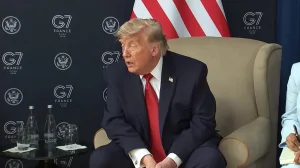
That set things off. U.S. President Donald Trump made it known he had put in a word with Gianni Infantino over what he called a ‘horrible’ ruling. UEFA didn’t mince words, saying FIFA had gone too far by caving to pressure on a routine sanction – a matter of principle for the game’s independence.
It is perhaps the steepest test of his tenure for Infantino. He has to stand by ‘market rate’ for tickets and not ruffle host-nation rules on travel, all while the Balogun affair has brought in its share of formal grievances and even some who want him out. You have 70-odd European politicians and names like Jurgen Klopp and Gary Lineker putting his impartiality to the question.
The unease has bled into other areas. Human rights advocates have been to the IOC Ethics Commission with their issues, claiming the head of the federation has chipped away at the idea of a level playing field. The same office that put together this record-sized event is having to weather a storm of its own making.
Flashpoints that swayed matches
Take Argentina’s 3-2 escape from Egypt. It was a hard-fought win but one that left some rancor. Ziko Mostafa of Egypt was in no mood to be nice, calling the whole thing ‘fixed’ when a 3-0 goal was taken back by VAR for a prior infraction and a late penalty appeal was waved aside.
Then there was the matter of Alexis Mac Allister and what looked like a trip on Hamdy Fathy in the dying minutes before Enzo Fernandez put the ball in the net. The Egyptian FA has made its case to FIFA, and Hossam Hassan has spoken of an ‘injustice’ so profound he has no intention of watching any more of it.
Technology under the microscope
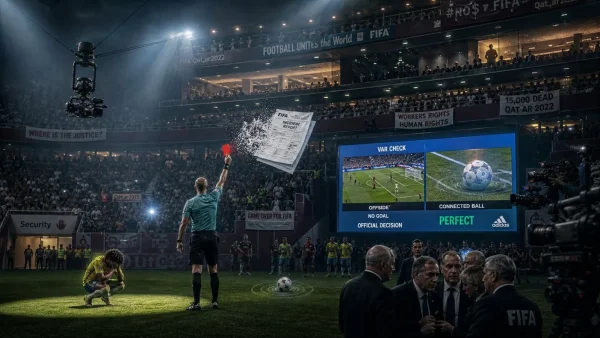
Not even the tech is immune to the spotlight. In the England-Norway quarter-final, there was an argument that a spider-cam line had come down on the ball right before Bellingham’s second-half leveller. The rulebook says the play should have been called. FIFA said their Connected Ball data told a different story: no contact, no problem.
New rules have also made for some headlines. Miguel Almiron of Paraguay was shown straight red for covering his mouth in a row with Mert Muldur of Turkey. A VAR check confirmed it, and the call was a point of contention in the 1-0 result.
Commercial choices and stoppages test fan patience
Tickets for the World Cup are as much of a talking point as the football. With dynamic pricing, you could see a seat for the final at MetLife going for $11,000 on the official site, which has caught the attention of some U.S. Attorneys General. For the supporters in the stands, the empty seats around them are a sign of how out of reach it has become.
And there are whispers from behind the scenes that volunteers have been put in the good seats to make the hospitality areas look full for the cameras.
FIFA has put up a fight, pointing to the demand and the fact that the stands are nearly full. It is a point of contention, one that has been making noise well beyond the pitch as to who the World Cup is for in the end.
Then there is the matter of the game’s flow. FIFA has made it a rule: three-minute hydration breaks 22 minutes into each half, come rain or shine, even if you are under an air-conditioned roof. The idea was to look after the players, but the interruptions have not been well received. They have earned boos from the crowd and some hard words from managers for breaking up the momentum and giving sides a chance to huddle over tactics in the middle of a half.
The way it looks doesn’t help. U.S. television will go to ad during those lulls. Infantino has put to rest any notion of a money-making motive, but for the old-school fans who value the unbroken nature of the sport, the feeling of an “Americanised” stoppage is one that lingers.
For the most part, the official word on these matters has been consistent:
– Hydration is for the good of the player, per FIFA.
– There is no financial angle to it, says Infantino.
– As for the Connected Ball, there is “no evidence” of any cable interference.
– And on the question of price, strong demand is the answer.
Security, access and the politics of it all
Logistics in the host countries were bound to be tricky, but with the USA and Iran at odds, the situation was primed to be volatile. Iran’s time in the U.S. has been anything but easy. The squad set up in Mexico and made their way across the border in short, controlled trips.
There have been stories of visa snags to complicate things, and coach Amir Ghalenoei has not minced words, calling his group the "most oppressed team in the whole World Cup.” In a way, their story has come to stand for what happens when the beautiful game runs headfirst into reality.
England had trouble of another sort to start with. A few thousand dollars’ worth of kit and boots went missing before they could even train, and later in Kansas City a man with a wrench made his way into the media room, putting a spotlight on how the venue is being policed.
Even the tournament’s welcome mat has been put to the test. Omar Abdulkadir Artan, the Somali referee FIFA had in mind for a historic first, was turned away at Miami. Some put it down to the kind of vetting the U.S. does, and a potential milestone was put on hold.
Where passion ends and prejudice begins
You had the case of Kylian Mbappe, who found himself in the crosshairs of a racism row after some comments from a Paraguayan senator. The UN had something to say about it, and while Mbappe made his feelings known online, the senator stood his ground.
It has led to more talk of holding people to account. For the athletes at the top of the world’s most popular sport, it is a reminder of how fast the mood can sour when there is bad blood off the field.
Whether it is the refereeing in Egypt’s defeat, the do-over on Balogun’s red, or the row over tickets, it all comes back to the same thing: a World Cup trying to hold its ground in a time when nothing goes unchallenged.
There is an expectation of some order. When a ban is put on ice by the president of a country, the kind of warning UEFA gives about autonomy is heeded. But let a penalty be disallowed and a goal wiped out in the last 16, and trust in the officials can erode in an instant.
As we get to the knockout stages, where everything is fine as a razor, the onus is on FIFA to be above board and keep the commercial side from overtaking the community. The co-hosts have put on a show. Now it is a matter of making sure the football is what matters.