There is a raspberry-type of sugar making its way through the Milky Way, and the find has some saying it puts a finer point on the hunt for raw materials – not to mention it makes for a good talking point on Google Discover. Erythrulose, as it is known, was made out in a gas cloud where new stars are born, and to the researchers, it is further proof that the ingredients for life are not hard to come by in space.
There is more to it than just a new molecule. Sugars are what run cells and make up some of our DNA and RNA. To see one this involved in the interstellar medium is to think that the kind of chemistry we need might be in progress long before a planet even coalesces, and that is a good omen for worlds that can support life.
A familiar sugar in an unlikely neighbourhood
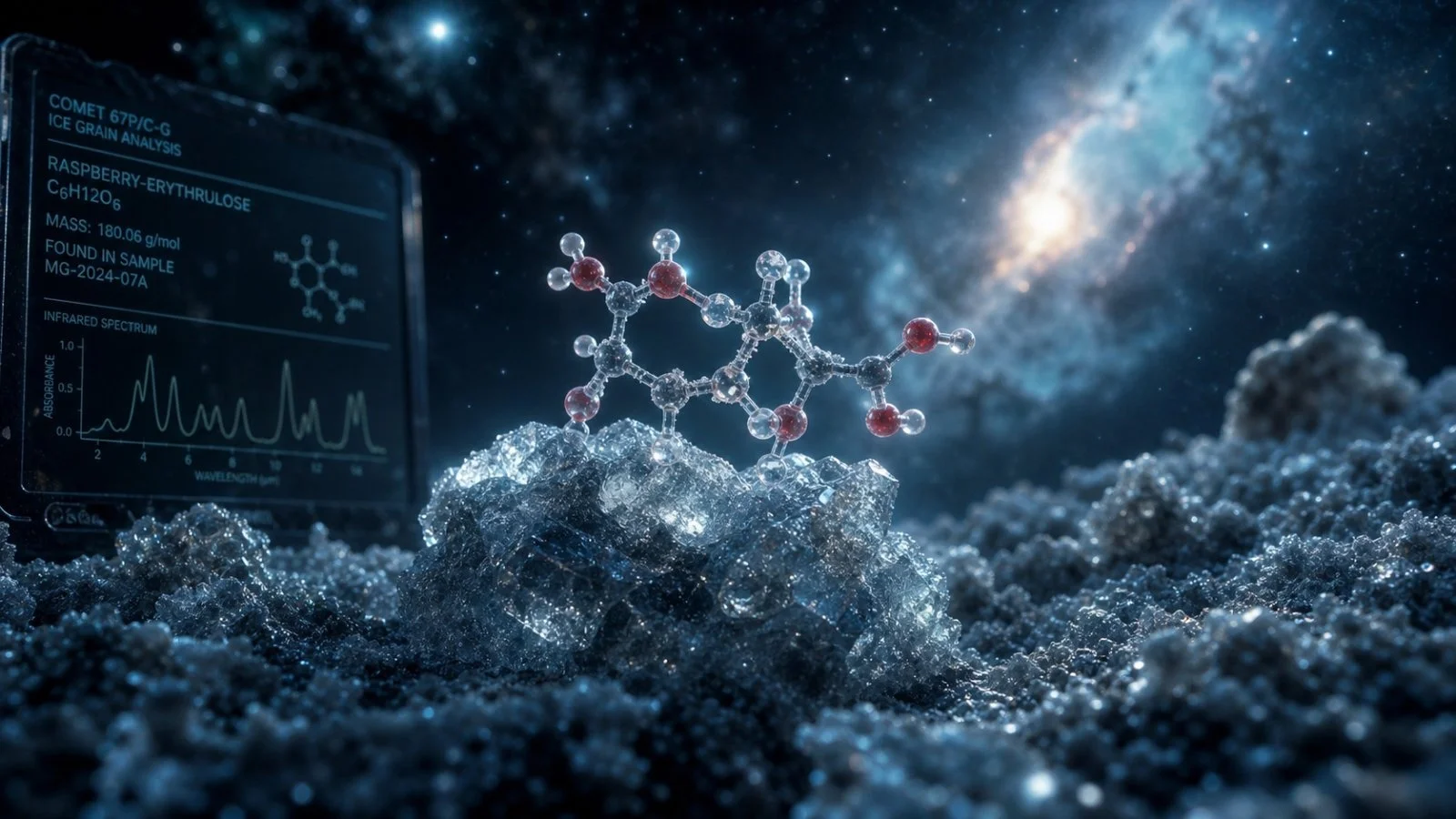
You will find erythrulose in a raspberry or in your self-tanner back on Earth. Out here, it is a gas in G+0.693-0.027, a large molecular cloud 26,700 light-years from us in the direction of the galactic centre.
The Milky Way is not exactly a confection. But then again, it is the complexity that is the story. Molecules like this were once off-limits, too fussy to put together in such cold and empty conditions. Now they are here, in the very cradles of stars and planets, and it means the chemistry at play is more robust than we had put down on paper.
Why this matters for origins of life
Life’s machinery, right down to the genetic code, is put together with the help of various sugars. This particular one is not a must-have, but according to the scientists, it is only a step away from something you would need to get things going on a young Earth.
Then there is the fact that it is one of the most elaborate sugars we have seen in the cosmos. “A pristine example of the stuff that’s just floating out in the galaxy,” says astrophysicist Erika Hamden, who has no part in the study, and she sees the value in it for anyone trying to follow the chemical trail of life.
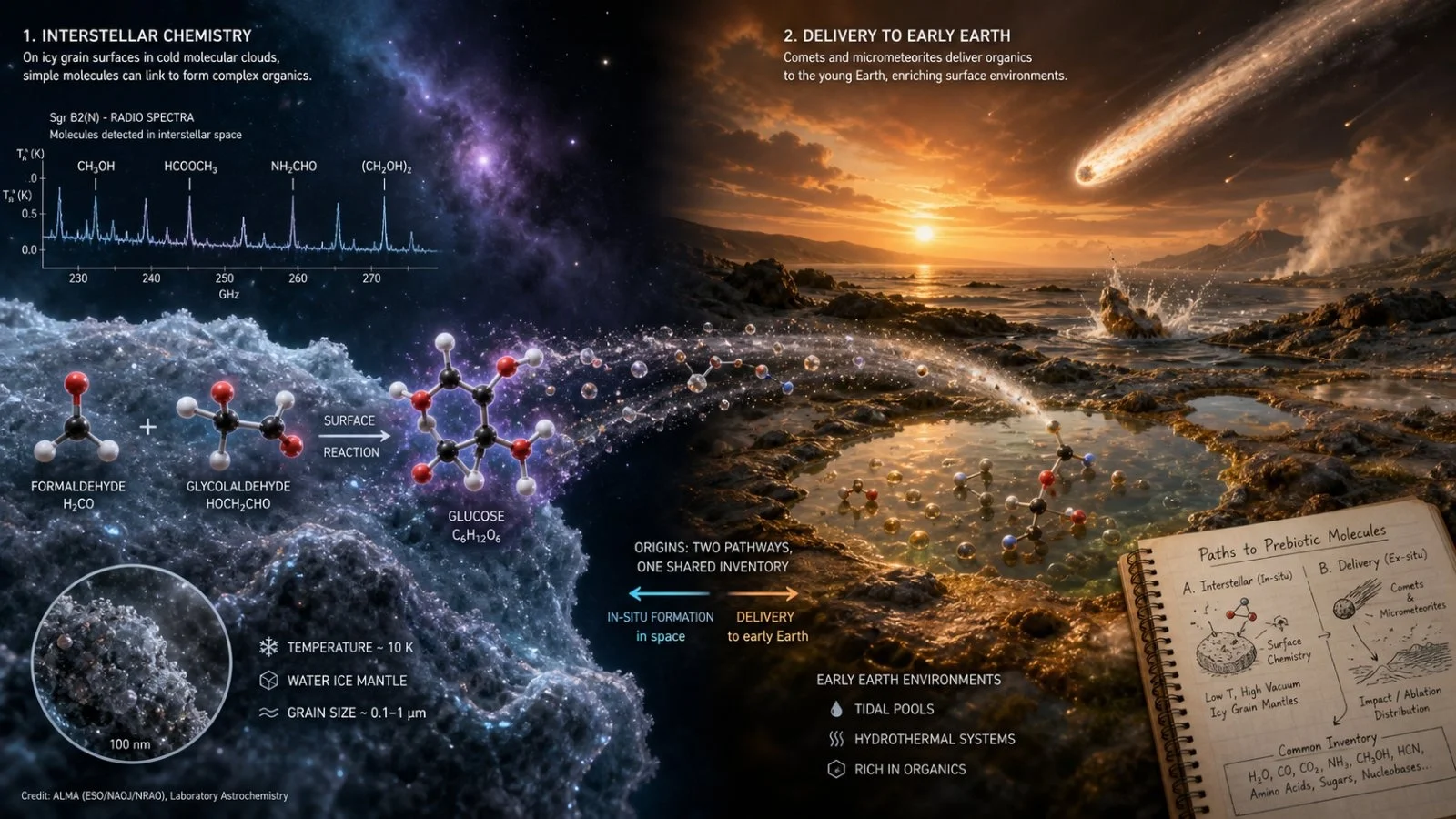
It has been an old argument for a while: did comets and asteroids bring the building blocks to us, or were they in the cloud that made the Solar System to begin with? This latest finding gives some heft to the latter view, and it is a case of pre-planetary chemistry on a galactic level.
The study team says the discovery makes a few things plain:
– Deep space is where complex sugars put themselves together
– Pre-planetary chemistry is more of a force than we thought
– The building blocks of life could be out there in abundance
How they found it
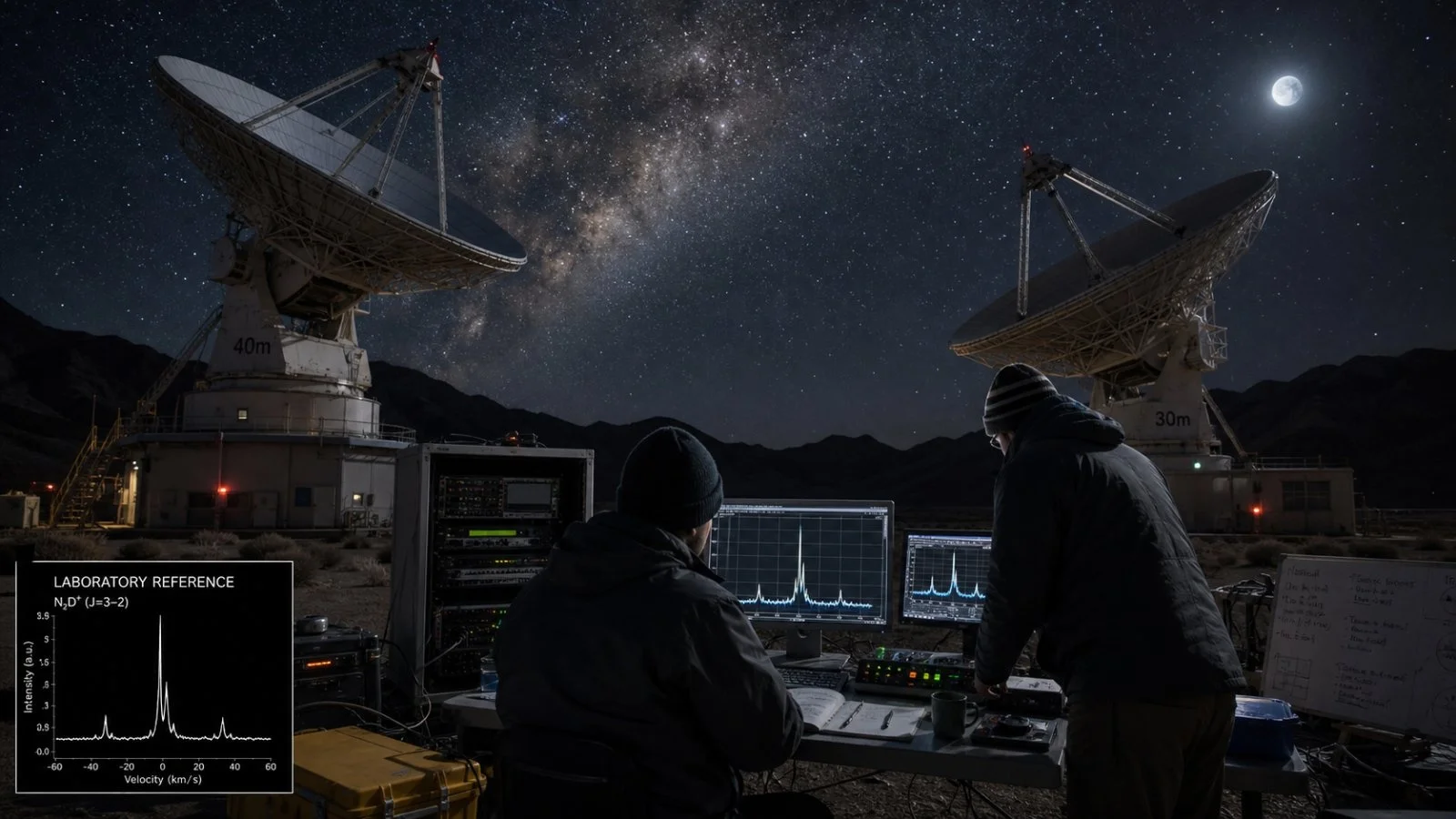
To get at the cloud’s faint signal, researchers turned to two radio telescopes in Spain: the 40-meter Yebes and the 30-meter IRAM. Erythrulose was put on the table by way of a standard procedure for the distances involved-comparing the cloud’s radio profile to what is seen in the lab.
It is all in Monday’s issue of Nature Astronomy. The sugar is part of the interstellar medium, that tenuous blend of gas and dust between the stars which is now home to NASA’s Voyager probes, the most distant of our spacecraft.
*
Space sugar, how it works
In a sense, an interstellar cloud is a laboratory of its own. You have dust with a rind of ice from water and carbon. Down at minus 250C, the action is slow, but over a long enough time, reactions will happen.
The working theory is that erythrulose came about when glycolaldehyde and ethylene glycol made a connection on those grains. From there, the sugar can make its way back into the gas for a telescope to spot.
A trend
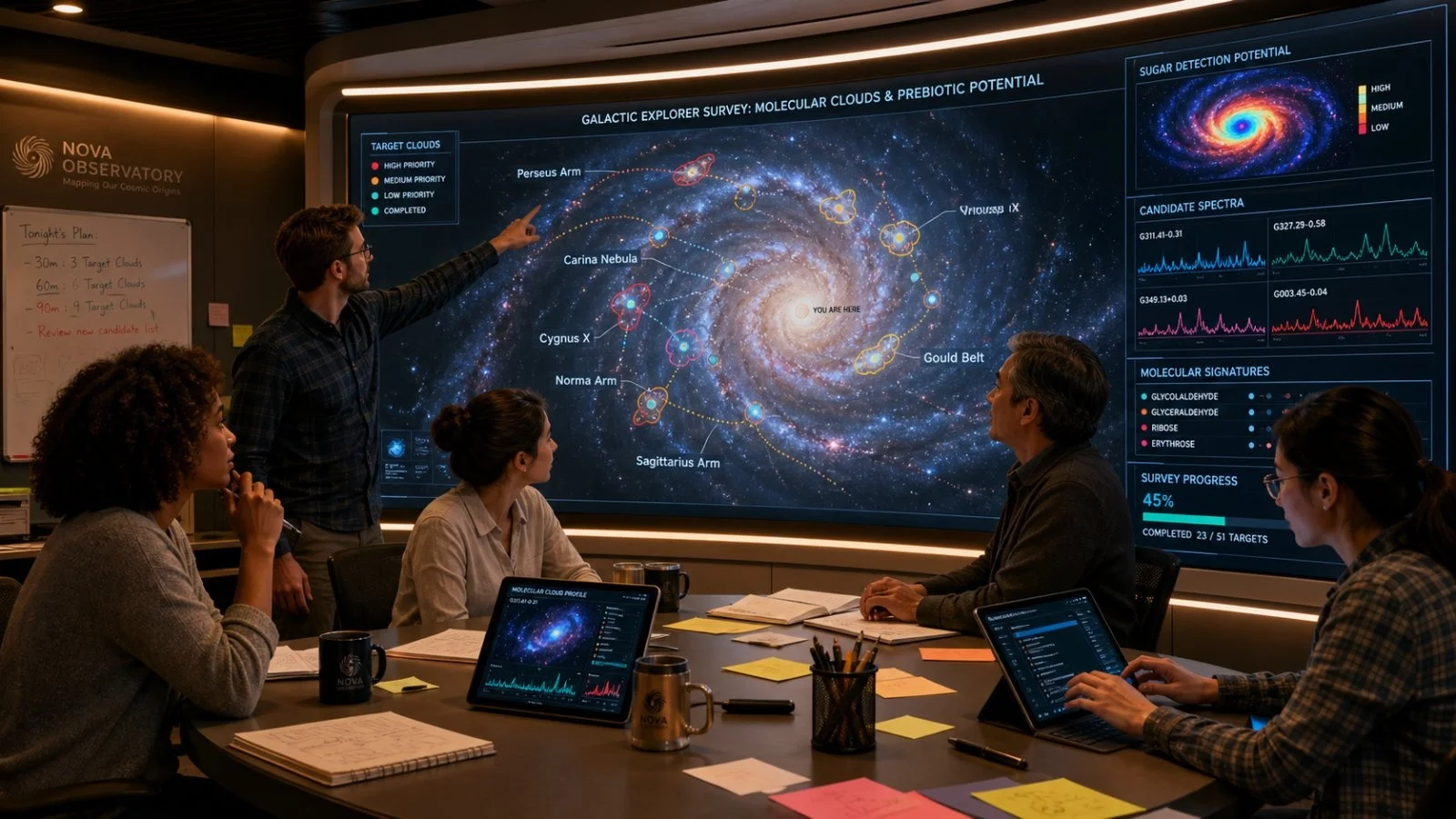
Chemistry has had its moments in the cosmos before. A relative of common sugar was put forward by astronomers some 25 years back, close to the heart of the Milky Way. And the black material from asteroid Bennu, put in hand by Osiris-Rex, has been shown to have a number of sugars, one of them essential to DNA.
Then there are the alcohols and amino acids in star-forming regions. This particular area is no stranger to chemical variety, and the new find is the most intricate of the lot.
It puts a different spin on when life’s tools come into play. If you have organics forming in the void, then a planet may be born with a larder already in place. Comets and asteroids still have a role to play, but the supply line might be from the stars.
Looking ahead**
The plan is to go after other sugars and see how they turn into something of biological interest. One in this cloud means there are likely others in the spiral arms and past the bulge.
“Life could be in the offing in other parts of the universe,” says co-author Izaskun Jimenez-Serra of the Center for Astrobiology in Spain. “The ingredients for its origin are probably there.”
The point is not so much a treat for the palate as it is for the mind. Every molecule chisels away at the divide between a nebula and the chemistry of life. With erythrulose in the mix, the universe’s recipe is a bit less of a closed book, and a touch sweeter.