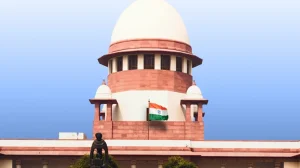
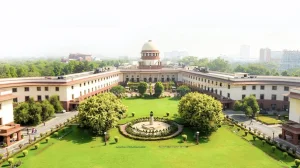
On May 11, 2026, the Supreme Court ended the challenge to this part of the Hindu Marriage Act, specifically the rule about a wife being able to divorce after not living with her husband for a year or more after a court said he had to pay for her support. The court also cautioned against turning to PILs to resolve personal arguments. This decision shows the Court will respect Parliament’s decisions about marriage laws and differences in how they apply to each gender.
What the bench decided and why
A two-judge panel consisting of the Chief Justice of India, Surya Kant, and Justice Joymalya Bagchi refused to even hear the PIL and dismissed it without asking for a response. The Court explained that Article 32 of the Constitution (which allows people to go directly to the Supreme Court for certain issues) isn’t meant to be a way to solve individual complaints that are disguised as being about the public good.
The judges asked why the person bringing the case had the right to do so and whether the issue really affected the public. They indicated the lawsuit was based on one person’s situation. They also said they could charge the person a significant amount of money because misusing PILs gives the wrong impression, and this is especially true for someone who is studying law.
The provision at the heart of the case
The case had been aimed at Section 13(2)(iii) of the Hindu Marriage Act of 1955. This section says a wife can get a divorce if she and her husband haven’t lived together for at least a year after the husband has been told by a court to give her money. Husbands don’t have the same option.
Petitioner’s stance and the court’s response
Jitender Singh, a law student representing himself, asked the court to interpret the law to apply equally to both men and women, saying that men should have the same ability to divorce in this situation. He said he’d been involved in divorce court cases for seven or eight years.
The judges asked him how he had been harmed by this and if he could say he was speaking for all men. They stated PILs aren’t for getting revenge in personal conflicts and questioned why he was using Article 32 to challenge the law.
What the judges underscored about the law
Justice Bagchi pointed out that Parliament is allowed by the Constitution to create specific rules for women and children. He said Article 15(3) lets the government make protective laws for these groups and that these classifications are a matter of what the legislature decides is policy.
The judges said that asking the court to make these sections completely equal would require an amendment to the Constitution itself, not a decision from the court. The Chief Justice also told the student that the point of law school shouldn’t just be to help with arguments about financial support.
Implications and next steps
Because of this ruling, the current laws stay the same and the Court seems unwilling to change divorce laws based on gender using PILs. If the rights in the Hindu Marriage Act are to be changed, it will have to be Parliament, not a court, doing it.
Key takeaways from the order are clear:
– PILs cannot substitute individual matrimonial remedies
– Section 13(2)(iii) remains in force as drafted
– Article 15(3) supports women-centric legal protections
– Legislative or constitutional routes are required for parity
The message for people going through a divorce is very clear: you can’t use a constitutional writ as a quick way to avoid going through the normal divorce process. For those making laws, it shows that discussions about whether family law should be the same for both genders must happen in Parliament.
The Court’s decision not to hear this case also makes it harder for future PILs that try to change marriage laws to be neutral on gender. While the judges understood the person bringing the case’s personal issues, they said they have just as much sympathy for the other spouse and that it’s important to protect the proper use of PILs.
By ending the case right at the beginning, the Supreme Court has said that challenges to protections specifically for women in family law will have to deal with the fact that the Constitution specifically allows for these protections. Section 13(2)(iii) of the Hindu Marriage Act, as it was written in 1955, will remain in effect until Parliament decides to change it.