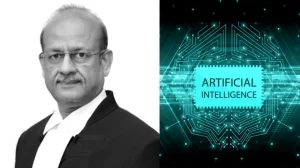
India’s highest court is working to connect all of the country’s court information into one main system. On Monday, Chief Justice of India Surya Kant started ‘One Case One Data’ and introduced ‘Su Sahay’ an AI (artificial intelligence) chatbot on the Supreme Court’s website. This signals a major change to how people use the courts and how cases are handled digitally.
This announcement at the beginning of the day’s work shows the court’s plan for combining things and providing help to people right away. Instead of small changes over time, the court is doing a complete overhaul of its data system along with a tool for the public, and intends the Supreme Court to be an example for all courts of how to interact with people online.
What was launched and why it matters
The court’s new data plan will bring together information from the High Courts, District Courts, and Taluka Courts into a single, unified system. By having all information about a case from all levels of the court in one place, the court is aiming for a complete understanding of a case’s progress, avoiding separate pieces of information and making cooperation easier.
The Chief Justice explained that ‘One Case One Data’ starts with information from all the High Courts, District Courts and Taluka Courts built in, and they hope to create a good case management system. He explained the goal of the program and how it will work.
Here is a quick snapshot of the twin launch announced by the CJI:
– One Case One Data unifies court information
– Su Sahay AI chatbot on the Supreme Court website
– Chatbot built by NIC with the Registry
Su Sahay: AI at the front door
Along with this data system, the Supreme Court is introducing ‘Su Sahay’, an AI chatbot, as the first thing people see when they go to the Supreme Court website. The court says the chatbot is meant to make getting to justice and court services easier.
The Chief Justice said ‘Su Sahay’, created by the National Informatics Centre (NIC) with help from the Registry, will offer people a simple and easy way to find basic advice and help with getting the core services of the Supreme Court.
Designed to lower access friction
‘Su Sahay’ is designed to meet people where they are when they first start, giving them organized help, to reduce confusion and quickly show them the most important services. It’s part of the Supreme Court website and gives clear directions for people involved in lawsuits and the public.
Building a unified data spine for courts
While the chatbot deals with initial questions, ‘One Case One Data’ deals with the core of the system. This project should make case management more efficient by creating a full, connected digital database for all the courts in the country, bringing together details that are currently in many different places.
The Chief Justice connected this combining of information with a more effective case management system, and said that information from all levels will be included from the start. This means consistent and complete data is the key to getting better results.
Institutional collaboration as strategy
Making this happen requires working together. The Chief Justice thanked the NIC and the Supreme Court Registry for making the chatbot, and the lawyers and Registry officials for supporting the wider digital effort. He added that he believes the Registry and the people who did this excellent work will be very successful, and he’s sure these changes will help everyone involved.
The road ahead
The Chief Justice said the next step is to develop a good case management system using the unified data. The court is making it clear that a better way of organizing the data and easy to use digital help will make using the Supreme Court’s services less difficult.
For people with cases, lawyers and court staff, this is very practical. With ‘One Case One Data’ linking all the information, and ‘Su Sahay’ simplifying things at the beginning, the Supreme Court is moving towards fully connected systems and access that is focused on the user, and the Chief Justice thinks all those involved will benefit.