There is a way in which Iranian officials are putting a spin on the latest with Israel and US-backed moves. They see it as a contest for primacy, not just on the battlefield but in the political and economic spheres. It is, they will have you believe, a stand against the kind of order the West has been running.
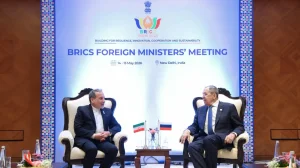
The state media has been on top of this, painting the US-led system as something of a house of cards if you put enough pressure on it. You can see how this fits with Tehran’s overtures to China and Russia, and a closer working relationship with BRICS.
A message crafted for emerging economies
If you listen to the Iranian side, this is a story that has an audience from Latin America to Africa and Asia. These are places where there is a desire to step away from Western rule, which they define by a mix of sanctions, military forays and plain old economic might. For them, what’s happening in Iran is not a one-off; it’s a common cause. The upside, according to their reporting, is a faster path to a world where developing nations have more room to make deals.
What Ghalibaf is arguing
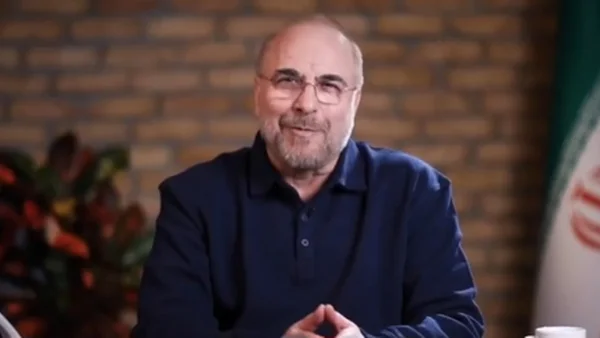
Ghalibaf has been making this case in no uncertain terms, even borrowing from Chinese President Xi on the subject of a global reordering. He was thinking of a high-stakes sit-down in Beijing with Donald Trump, a meeting that was all about the new balance of power.
In a coordinated political message, Speaker Mohammad Bagher Ghalibaf outlined his case for a power realignment. His core assertions include:
– A new world order led by the Global South
– The rapid erosion of Western dominance
– Iran’s 70-day resistance accelerated the shift
– The future belongs to the Global South
– A transformation unseen in a century
Invoking China to widen the frame
Xi put it best: we are in uncharted, turbulent waters and the world is at a crossroads. He asked if the two of them could sidestep the Thucydides trap. To the Iranian press, that was a nod to the kind of friction you get when a rising power and the status quo rub up against each other – like the one in West Asia between the US and Iran. It makes for a good argument that risk goes up when one side tries to hold on to unipolar control.
Online post signals confidence
On X, Ghalibaf made it simple: we are on the verge of a new order and we have helped get there. It was a show of confidence, a way of inserting Iran into the Global South story.
Why it matters now
In their telling, this resistance is what is moving the needle on a reset that was long in coming. The unipolar way of doing things is fraying, and a multipolar one is here to stay.
It is also a matter of building a bloc. Tehran wants to make sure its ties with Beijing and Moscow are solid, and to get more out of its BRICS connections. The idea is to have some real leverage to back up the words.
They are saying the old guard is done for. Developing countries are starting to see that a system built on domination has a shelf life and that there are better options out there.
What comes next
But let’s see what happens next. Are they actually talking to these new powers more? Is the language in Global South circles in line with what Tehran is saying? And does this story of a hasty realignment have any weight in the room when it comes to trade or security? For the time being, Iran has made its mark: the fight is worldwide and the ones they are talking to are in the Global South.