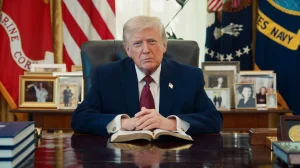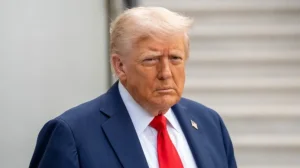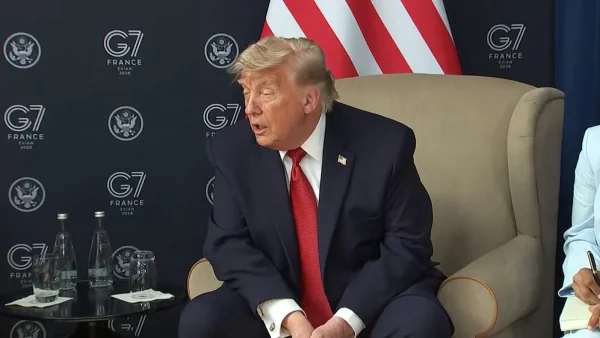
You could say the timing of Trump’s decision to sign in Versailles has put a new spin on both the diplomatic docket and the politics back home. He made it happen just after 1 a.m. on June 18, putting aside a Swiss ceremony he had in mind and putting a hard deadline on a truce that carries some weight on the security and economic front.
Why the rush mattered beyond optics
For some time, his people have been looking for a way out of a protracted fight that was putting a crimp in oil and the US economy. With the midterms on the horizon, the strain on global reserves was becoming a problem you didn’t want to be known for.
Trump put it down to a need to head off any talk of an economic slide or unkind comparisons to the Hoover years. It was all about getting it done, even if that meant calling off the plan to make it official in Lucerne in a couple of days.
Inside the Versailles scramble
It all turned on 17 June during a dinner with French President Emmanuel Macron. Before he even sat down, Trump let him and his staff know he was going to have the agreement in the books that evening. Macron was on it right away.
While the two were making their way through the palace, Secretary of State Marco Rubio was with the French side to get the papers in order. One of them said Rubio got word of it around 11. He and Foreign Affairs Minister Jean-Noel Barrot put in some time to go over the text in both English and Farsi.
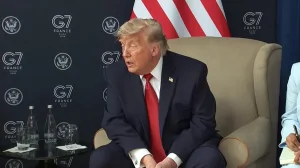
Finance minister Roland Lescure was there for the moment in the dining room when Trump put his name to it. You could hear Macron, not far off, put in a “Good job. Bravo.” As they were walking out, Trump made sure the press knew: We signed in Versailles.
What was to be in Lucerne was no more. Vice President JD Vance put off his visit once Iran bailed, pointing to the latest round of hostilities in Lebanon between Israel and Hezbollah. In a way, the deal was already showing the kind of instability it was put in place to put a lid on.
Talks steered by flashpoints and mediators
Then there was the matter of keeping in touch. According to our side, you can’t always get a hold of the Supreme Leader; he’s on the move for security. That kind of gap in communication does nothing for trust.
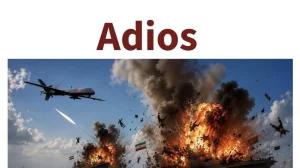
And then in early June, a US chopper and an Iranian drone had a run-in, and the shooting started up again.
When things got heated, it was the Qatari mediators who put in the work to close the gap and leave a way forward for an accord.
Then an Israeli strike on Beirut over Trump’s birthday weekend put the whole thing in jeopardy. US officials were of the mind it could scuttle the talks. Iran was on the verge of lashing out with ballistic missiles until Qatari negotiators spent 17 hours talking down both sides.
Tehran did have one hard line: no making a show of the deal on the president’s birthday. In the end, it was put out in the open just past midnight in Tehran – a small but telling nod in what was a high-stakes schedule.
What the agreement sets in motion
For a few days, the 14-point text was kept under wraps, in part because Iran wanted it that way. There are also some side understandings not in the writing. Vance has been at pains to say the fine print isn’t the issue; it’s about how you can verify it.
Now there is a 60-day period for technical wrangling to put a lid on the nuclear programme. Vance, along with special envoy Steve Witkoff and Jared Kushner, will be running point for the US in the coming weeks.
You won’t find everyone in the administration on board with it. The likes of CIA head John Ratcliffe and Defense Secretary Pete Hegseth are among those with the most reservations about whether Iran will do as they say.
Money, politics, and the backlash
There is some ire from the right wing of Trump’s base. They see the $300 billion set aside for rebuilding in Iran as a handout, even more so than the Obama deal he was against. His retort is that the US made them come to the table with force, not by caving.
The math behind the decision was as much political as anything. With oil reserves waning and the economy feeling the pinch, waiting was not an option. For Trump, putting his name to it early was as much about steadying the markets as it was about non-proliferation.
Key developments to watch
We’re done with the show and on to the proof. The next couple of months will tell if this hasty signing holds up or if we’re back to square one.
Keep an eye on:
– The 60-day technical round
– How verification plays out in practice
– Any spillover in the region
– Pushback from inside Iran
– The homegrown doubts in Washington
What comes next
Inking the papers in Versailles was a way to put a pin in it while the wheels were in motion. But a 1 a.m. deal has to stand up to the light of day. You only have to look at the trouble in Lebanon to see how little room for error there is.
The US side has to make something of this quick win and put real constraints on the nuclear file. It all hinges on being able to check the facts, holding the line on regional truces, and not letting the politics of it all get in the way.