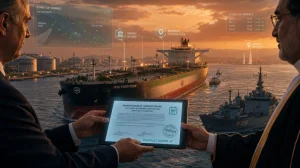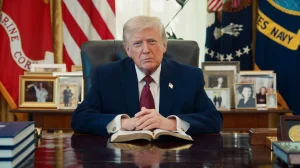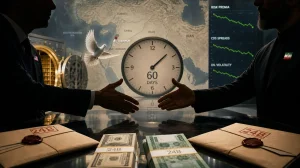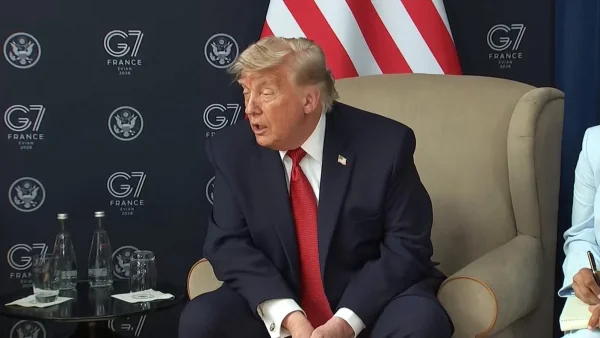
Think of it as a financial lifeline to Iran, but one with conditions. President Donald Trump has been clear: any funds that come off the table when we ease up on sanctions are to be put in an escrow we run, and they can only be used for humanitarian products we provide. On their end, Tehran has made it known they want in on $12 billion in frozen assets as the back-and-forth gets more heated.
It changes the dynamic of who has the upper hand. Sure, Iran might get some quick help with food and medicine, but it’s up to Washington to say what, where and when. And as Trump has pointed out, there’s a plus side for US farmers in the form of steady orders for our Corn, Wheat and Soybeans.
Escrow plan shifts leverage and beneficiaries
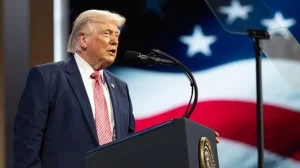
On Truth Social, Trump put it in writing: ‘The released assets goes into escrow, controlled by the USA, and will be used for the purchase of food and medical supplies, exclusively from the United States, including Corn, Wheat, and Soybeans from our great American Farmers’.
He made no bones about the urgency: ‘This is a humanitarian crisis, and I feel it is necessary to help, NOW, before it is too late.’ In so doing, he’s made sure Tehran can’t just spend willy-nilly; the money has to be channeled through us and for approved items only.
Iran has put out word that $12 billion in held-up funds are in line to be let go as part of the current discussions. Put in an escrow, and you have a good-sized conduit for the basics, not so much a free-for-all for the treasury.
What it comes down to:
– We call the shots on disbursement and what can be bought
– No spending beyond food and medicals
– All goods have to be from the US
Talks move alongside temporary oil relief until August 21
You have to see the escrow in the context of what’s happening with the nuclear programme in Iran. After a deal to put an end to the war in the Middle East, both sides are using sanctions and access to assets as part of the haggling.
For now, the Treasury has given a little leeway so that crude and other products can be made and sold up to August 21. It keeps the energy moving while we work on something more comprehensive.
Then there’s Iran, which has been under the thumb of sanctions for years over its nukes, human rights and the like. They want more room to breathe as we talk. Whether we give it to them and for how long is a matter of how well we can verify they’re holding up their end of the bargain.
Layers of sanctions: what can and cannot change quickly
We’ve had sanctions on Iran since 1979, right after they took over the embassy in Tehran. Over time, it’s become quite a thicket.
These are the kinds of things we’re looking at: oil and gas exports, the nuclear file, and backings for the sort of groups Washington has put on its terrorist list.
Then there’s the thorny issue of the IRGC. Having the Islamic Revolutionary Guard Corps labeled a terrorist organisation is a hurdle in itself. You can’t really get around it because of how deep the IRGC is in Iran’s economy; any move to ease up on restrictions is going to have a wide impact.
And not all of these sanctions are created equal. Some, like the ones on an arms embargo or the freeze on billions in Iranian assets, were put in place by the president. Trump has the power to take those back, as well as the curbs on trade, investment and countries buying Iranian oil.
But you also have the ones from Congress, under 1996 and 2017 laws. They run on emergency powers that have to be re-upped every year and don’t come with easy waivers if Tehran changes its tune. You can’t just wave them away without some new law to do it.
On top of the big picture, there are the individual designations – companies, people, government offices. You have to go through each one, put in the legwork and the evidence, and face some legal eyes on it before you can clear or relist them. It’s a process.
The UN is another story. Resolutions from 2006 to 2010 put in place an arms embargo, put a lid on the transfer of nuclear tech and materials, and froze the assets of certain parties. They also made it off-limits to work on ballistic missiles that could carry a nuke.
They didn’t, however, put a stop to Iranian oil. The 2015 deal was supposed to see the Council lift some of this, but after Trump bailed in 2018 and Iran let some of its obligations slide, we saw a snapback of UN sanctions last year.
Europe’s pressure and regional flashpoints
The EU has been on its own path. Since 2012 they’ve had an embargo on Iranian oil, put a hold on the Central Bank’s assets and put a stop to trading in petrochemicals and precious metals. Foreign trade, finance, energy and tech have all been put in their place.
This year the bloc has put fresh measures on the table over the Strait of Hormuz situation, and has sanctioned the IRGC. In the end, it puts Europe in step with U.S. security and non-proliferation goals, even as our diplomats figure out what kind of relief they can back in the course of talks.
What comes next
There’s a clock ticking on crude flows until August 21. The escrow is a way to provide some quick humanitarian aid and show good faith. But don’t expect full economic normalisation while you still have congressional and UN rules to contend with.
It will come down to whether the two sides can make a case to their respective capitals for more room to manoeuvre, without giving up on verification. For the Iranians, being able to put their hands on some money is something. For us, the escrow is a way to keep some leverage and meet a need at the same time.
Here is what to be watching for:
– How the U.S. side of the escrow gets put in place
– Where the nuclear talks are heading
– Whether we see any extension on the oil front past the 21st