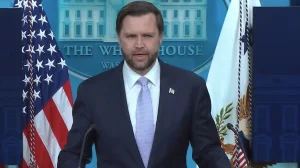
In a move that has only deepened the divide on Iran, Vice President JD Vance has chided some in Israel for their ‘weird panic’ and ‘freakout’ at the Trump administration’s arrangement with Tehran. He put it down to a trust issue, not an argument over the fine print.
US-Israel tensions surface over Iran diplomacy
Vance put it to his critics: you can’t expect Iran to have its cake and eat it too. He dismissed the notion that the deal was put together in a way that would let them have all the perks without any change in how they act.
‘I think that America has earned the trust of that region of the world,’ the vice president said, brushing aside any talk of a broken deal as factless. In his view, the unease in Israel is about Washington, not the substance of the pact.
What Israeli critics fear
You’ll hear from officials on all sides of the aisle in Israel that this doesn’t go far enough to check Iran's nukes or its missiles. There is also a sense it could hamper Israel when it comes to dealing with Hezbollah in Lebanon, which has been a top security concern for any government in Jerusalem.
The Lebanese group has had its run-ins with Israel and is at the heart of their threat picture. That is why there is so much pushback in Israel for some ironclad guarantees before we see any easing of sanctions or a new chapter in diplomacy.
Vance’s defence: sanctions, scope, and intent
Vance is quick to say that if Iran keeps propping up the kind of groups the US has put on its terrorist list, the sanctions will be there. It’s no secret he is talking about Hezbollah.
He was clear that the terms were put in place to make sure Tehran doesn’t get some economic breathing room while the US is left with its disapproval. For him, the bickering is a symptom of a confidence gap that needs more than just talks to fix.
Vance laid out the American side of things like this in the interview:
– Sanctions stay if Iran is funding a terrorist group
– You don’t build a deal on the idea of non-compliance
– We’ve given the region reason to trust us
Trump’s message and the negotiation track
President Donald Trump has also tried to put a lid on the matter, even hinting that Prime Minister Benjamin Netanyahu might be better off with a 'softer touch‘ where Hezbollah is concerned. He was in a defensive mood after the G7 in France, touting the value of talking to the Iranians.
As the story goes, the two sides have a memorandum of understanding that leaves the hard stuff for another day. The big ones – verification, what to do with the nukes, long-term buy-in – are still open, and with them, both the upside and the risk.
Challenge to hardliners and next steps
Vance didn’t mince words with hardline ministers like Itamar Ben-Gvir and Bezalel Smotrich, telling them to come up with something other than denunciations. ‘What is your exact proposal? You’re a country of 9 million people. You can’t just kill your way out of solving every single national security problem that you have,’ he told them.
It shows where the lines are drawn. Washington wants a diplomatic route with some teeth; in Israel, they want to be sure of their safety first. Whose way of thinking wins out is likely to set the tone for the region for a long time.
At the end of the day, it comes down to how the deal is put into practice and whether there is any trust left. If Iran pushes its luck, the US will have to answer for its promises in Israel. If the restrictions hold, those on board will say the plan is working. Either way, we are going to need some way to show that compliance is for real.