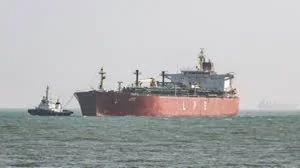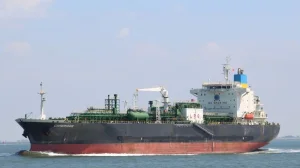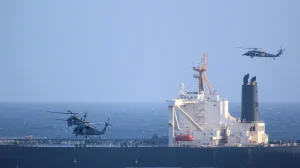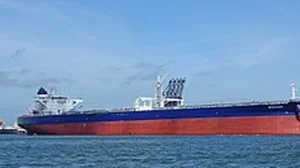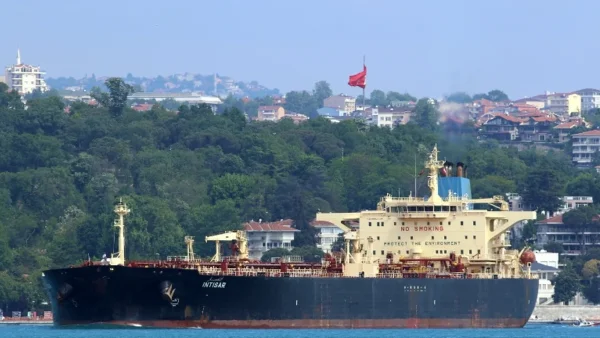
It was a Thursday when the US opened fire on the MT Jalveer, a ship flying the Guinea-Bissau flag. Two Hellfire missiles were put into its engine room. The 20 Indians on board were hurt but have since been pulled to safety, per US Central Command. They put it down to an impartial cordon on any traffic with ties to Iranian ports.
You could call this the third time in as many days an Indian-crewed vessel has been hit in the vicinity of Oman. It has put a fine point on the perils for anyone working in one of the planet’s most active energy thoroughfares. As for the Jalveer, CENTCOM has it that the ship was trying to run some oil out of Iran and would not listen to US forces.
What CENTCOM said
In their telling, a US plane had to put two Hellfires in the Jalveer’s engine because the crew wouldn’t do as they were told. The command has been firm that the blockade is no respecter of flags; if you’re in or out of an Iranian port or coastal zone, you are subject to it.
They were specific: this applies to every port in the Arabian Gulf and the Gulf of Oman. It is, in their words, a case of targeted maritime interdiction to put a stop to the flow of oil from Iran.
Pattern of enforcement since April 13
The hard line from Washington has been in place for some time now. Since the 13th of April, CENTCOM has put six commercial ships out of commission and turned 122 others away.
Just last month on June 2, a Botswana-flagged tanker, the MT Lexie, was hit with a Hellfire in the engine while it was making for an Iranian port. That very day, an F/A-18 off the USS Abraham Lincoln put an end to the Palau-flagged MT Marivex in the Gulf of Oman.
But with the MT Jalveer, we have the first report of Indian nationals being physically harmed. You can see where US activity and ships with Indian crews are coming into contact more and more, and the risk for shipping in the region is up as a result.
Why target the engine room
A Hellfire is a precision piece of work, an air-to-surface missile with roots in anti-armour. On a tanker, you put a shaped-charge in the engine to take out the means of propulsion. The idea is to put the ship in your hands for a boarding or to make it turn around, not to put it on the bottom of the sea.
Here are the numbers on the AGM-114 they are using:
– 100 to 108 pounds, with a 20-pound warhead
– 64 inches long, 7 across
– Can go as fast as Mach 1.3 (about 995 mph)
– 500 metres to 11 kilometres for range
– A CEP of under three feet, give or take 0.91 metres
You can guide it with a semi-active laser or a millimetre-wave radar. They come off the back of an Apache, a Reaper or Predator, an MH-60R/S, or an AC-130.
Impact on Indian crews and shipping lanes
When you have three run-ins in four days and 20 men on the Jalveer in the hospital, it puts a human face on the blockade. They were saved, of course, but it is a stark reminder of what mariners are up against in the water near Iran’s export routes.
The road ahead
If you listen to CENTCOM, expect more of the same. They are intent on being fair in their interdictions of any ship at the door of an Iranian port. The figures they put out since mid-April show no let-up in the operations in the Gulf of Oman.
It is a rough patch for operators and their people at the moment. How you handle orders at sea, which way you plan to go, and the flag you fly will all be under a microscope as long as the blockade is in play.