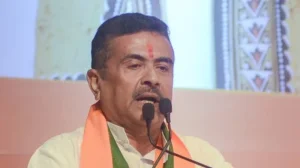
On Monday, West Bengal quickly started improving border security; Chief Minister Adhikari approved the land transfer for the India-Bangladesh border fence within t45 days. This decision, made at the first cabinet meeting of this new government, clearly shows a quick change to prioritizing security and working more closely with the central government.
Why the land decision matters
West Bengal shares a very long international border with Bangladesh, and there have been long-standing concerns about gaps in the fencing. Adhikari stated that giving the BSF the land will allow them to finish work that has been delayed and stop illegal immigration. He says the previous government hadn’t done anything about this because they held up the land transfer.
He accused the previous government of intentionally slowing the process to help illegal immigrants. Now, with the transfer approved, the goal is to remove obstacles and put border control completely in the hands of national security forces.
Timeline and next steps
According to Adhikari, the process of transferring the land has started and will be done in 45 days. The land will go to the Ministry of Home Affairs, and then the BSF will be able to build the fence along the Bangladesh border more quickly.
The Chief Minister said the next cabinet meeting will be next Monday, showing they are moving very fast on their most important goals.
Shift toward central alignment
The cabinet also agreed to start important national programs in the state right away. Adhikari confirmed that Ayushman Bharat, Pradhan Mantri Vishwakarma, and Beti Bachao Beti Padhao will be available; this will make the delivery of social services more in line with programs from the Union (national) government.
Regarding the legal system, he said the government has put into effect the new criminal laws, including the Bharatiya Nyaya Sanhita, and said the previous government didn’t. He also said the cabinet approved putting into effect the circular from the Ministry of Home Affairs about the 2025 Census (national count of people), which was issued in June.
Governance signals from first meeting
Adhikari put the government’s plans into two categories: ‘Susashan’ (good governance) and ‘Suraksha’ (security). He said Prime Minister Narendra Modi’s idea of ‘development for everyone’ will be the basis for the state’s policies from the beginning.
He pointed out that six important decisions were made at the meeting, emphasizing speed, working with national policies, and clear administration.
Implications for jobs and citizens
In a change that will likely mean more people can apply for government jobs, the Chief Minister announced a five-year reduction in the age limit for people seeking government employment. He said this was something Union Home Minister Amit Shah had promised.
For people receiving benefits, using Ayushman Bharat and other national programs will mean more health coverage and more support for getting skills, but this depends on these programs being put in place quickly and effectively at the local level.
Here are the major developments the government highlighted today:
– Land transfer to BSF within 45 days
– Central schemes to be implemented statewide
– New criminal laws implemented immediately
– Five-year age relaxation for government jobs
– June 2025 Census circular implemented
Security, politics and the road ahead
The land transfer and push for border fencing are happening at a time of increased attention to security within West Bengal itself. Adhikari said that once the fence is completed, the problem of illegal immigration will be solved very quickly.
The next few weeks will show if things can actually happen: if the land is handed over on time, if the BSF is prepared to fill the gaps in the fence, and if the state can actually begin using the national programs while continuing to meet the governance and security objectives that were set on the first day.