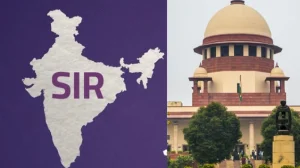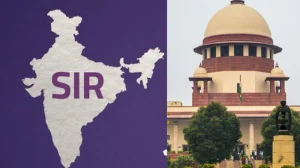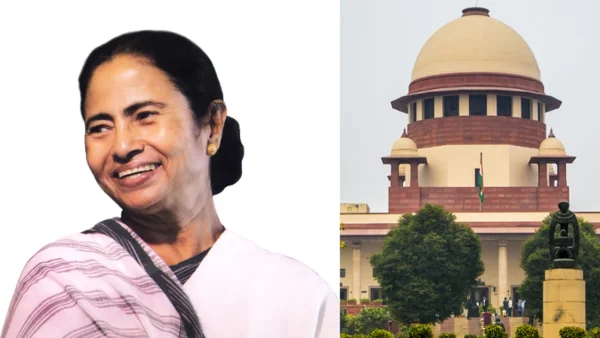
On Monday, the Supreme Court opened a new way to deal with the arguments about the election in West Bengal. They are asking Mamata Banerjee and others who are complaining to file completely new requests for seats where the BJP supposedly won by fewer votes than were removed from the list of eligible voters during the Special Intensive Revision of the voter rolls. This shows the Court will be carefully examining results where these deletions might have changed the outcome.
What the court signalled
Chief Justice Surya Kant and Justice Joymalya Bagchi said the specific complaints about how deletions affected the results need to be in separate, individual requests. They said that once these are filed, the Election Commission will get to give their side of the story, and then the Court will issue instructions.
The judges made it very clear that the old appeals from the process of updating the voter rolls can’t just keep going on and on. They will look at how long it will take to deal with these appeals, and will prioritize doing it fast, so these unresolved issues don’t cast doubt on how legitimate the election was.
Why the margins matter
Kalyan Banerjee, a senior lawyer and MP for the TMC, told the Court that in 31 voting areas, more voters were removed from the rolls than the number of votes the BJP winner actually received. He gave one example of a candidate losing by 862 votes, but 5432 names were taken off the voter list during the review of the rolls.
He also said the TMC got around 3.2 million more votes than the BJP, and almost 3.5 million appeals are still waiting to be decided by the higher appeal courts. He said that if these numbers are proven to be true, they suggest the updating of the rolls changed the outcome of some very close races.
This problem comes from the SIR process which was a big issue before the election took place. Banerjee claimed the election authorities intentionally removed voters, and a lot of real voters were wrongly flagged for removal. The Election Commission said the cleaning of the rolls was to remove duplicate names, people who had moved, or people who weren’t allowed to vote, and that there was a way to appeal these removals.
Positions of key players
The Court’s decision came after a heated discussion about where to challenge the election results. The Election Commission said that once the results are declared, anyone who disagrees has to file a formal election challenge, and not a broad attack on the SIR process itself.
Menaka Guruswamy, a senior lawyer, told the judges that, at the current rate, the appeal courts would take at least four years to get through all the cases they have. The Chief Justice said making these decisions faster is a key priority, so the process of looking at challenges keeps up with the normal timeline of a democracy.
Here are the core positions as placed before the bench:
– TMC alleges SIR deletions skewed results in 31 seats
– Example: 862-vote loss where 5432 deletions occurred
– EC says remedy lies in election petitions
– EC defends SIR as due process with appeals
– Court invites fresh IAs on results impact
– Appeals could take at least 4 years
Political backdrop and turnout
How strongly the people in the courtroom argued with each other shows how important the election outcome is. In the recent state assembly election, the BJP got 207 of the 294 seats, and the TMC won 80. Over 90% of people in the state voted, which shows a lot of people participated, even though there was disagreement.
Before the election, concerns about the SIR process grew steadily, with many reports of large numbers of voters being removed from the rolls in all types of groups. At the height of this disagreement, Banerjee went to the highest court in the country herself and insisted the updating of the rolls removed too many valid names, and didn’t do enough to add people who were missing.
What comes next
Banerjee and other candidates who were affected are now expected to submit new, specific requests focusing on voting areas where more voters were removed than the number of votes by which the winner won. The Election Commission will give their response, and the Court will then decide what to do.
The Court also said they will ask for a report on how many appeals are waiting to be decided and a reasonable timeframe for them to be completed. For voters and candidates in seats that were very close, the Court’s focus on specific requests and quick decisions might mean that some results are reviewed.