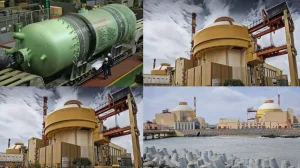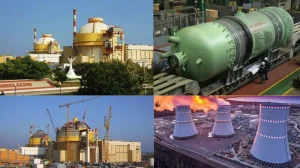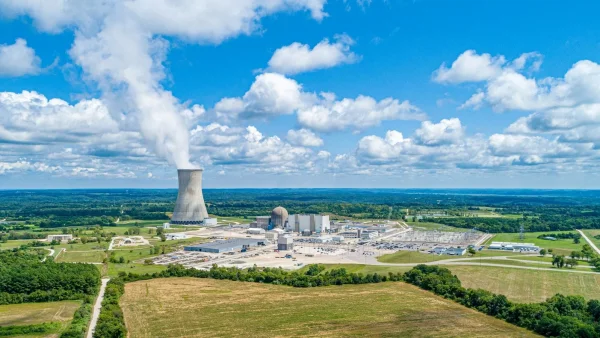
The Atomic Energy Regulator and the Department of Atomic Energy have, in theory, agreed to reduce the size of these restricted areas. We should have the official new rules within the next two months. Currently, there’s a minimum of about a kilometer around each reactor where no one can live or work. Officials say the new rules will be in line with the way things are done in the U.S. and France, and with the newer, safer designs of reactors – those countries don’t have a set distance for the exclusion zone.
How much land and capacity could be unlocked
This change wasn’t in the law passed last year that allowed private and foreign companies to get involved in building nuclear plants. Instead, the details are being worked out in a set of additional rules. An internal presentation that officials have seen shows how much difference this could make: for large reactors, the amount of land needed would be halved, and for smaller ones, nearly two-thirds less land would be required. This could allow two or three times as much power to be generated at the same location.
Here are the key stakes summarised from official materials:
– Land needs could halve for large reactors
– Small units could see nearly two-thirds reduction
– Capacity on existing sites could rise two to three times
– A 10×700 MW complex fits in less than 700 hectares
– Existing plants typically use around 1,000 hectares
To give an example, a complex with ten 700 megawatt reactors could be built on under 700 hectares. India’s current nuclear plants usually need around 1,000 hectares. Furthermore, the reduced exclusion zones would make it easier to add more reactors to existing plants because they could share the existing access and services. Smaller, self-contained reactors could even be located in industrial areas to directly supply power to factories, all while still being safe.
Why the government is pushing now
India wants to increase its nuclear power from roughly 8 gigawatts now to 100 gigawatts by 2047. To do that, plants need to be built faster, in larger groups, and on sites that are easier to get ready – over the next twenty years. Finding land is a major problem. It takes four or five years to get a site, and that delays and increases the cost of building. Reducing the size of the restricted areas should allow for reusing and packing more onto existing sites, reducing the need for new land and making investments more attractive to banks.
Tata Power, Adani Power, and Reliance Industries are among the companies looking at opportunities in nuclear power now that private companies and those from other countries can invest. If the smaller restricted zones are officially made rules, it will significantly affect the financial aspects of projects and how quickly they can get started.
Officials say that the newer, improved designs and safety features of reactors support this change. They also point out that other countries don’t require a specific distance for the restricted area, so India’s rules should also be updated.
Public risk perception and political pushback
However, nuclear power has a bad reputation in India. For many, the current restricted zones are a visible guarantee that the danger from radiation is being kept away. So, making them smaller will undoubtedly be looked at very carefully.
During the discussion in parliament in December about opening up the nuclear industry, opposition politicians said the changes seemed to be valuing investment over safety. They were concerned about being exposed to radiation, how to deal with nuclear waste, and whether the protections and location rules were being weakened. The law passed despite these concerns.
Critics have also said we need more independent checking as private companies get involved. The new rules will be examined closely to see how they balance what investors need to be sure of, and the safety of the public, emergency plans, and long-term management of nuclear waste.
Expert view: data and disclosure
R. Srikanth, who is an engineering dean at the National Institute of Advanced Studies, says this reduction has been discussed for nearly eighteen months and is a significant change. He says the amount of radiation around current plants is much less than the natural level of radiation in parts of coastal Kerala and Tamil Nadu.
Srikanth thinks India’s nuclear program is too secretive, which makes people not trust it. He wants the government to share more information so people can understand what’s happening, especially as the government tries to build more densely and get money from private investors.
What happens next
With the initial approval given, the focus is now on the details. The changes to the restricted zones will likely be in the detailed rules coming out in the next couple of months, which will determine how sites are planned and projects are bid for.
To track the rollout, watch for these formal positions and decisions:
– Publication of the detailed rules
– Site expansion plans at existing plants
– Investment moves by private and foreign players
– Government responses to safety concerns
If the proposals are accepted, companies building plants could look at existing plants to see if they can add more reactors, and design new groups of reactors that fit on smaller areas of land. This would reduce the need to acquire new land, and put more power where the infrastructure is already in place.
At the same time, a political argument is developing. Opposition parties and communities that would be affected are likely to fight the changes that seem to reduce safety margins. The government will have to clearly explain the location rules, emergency plans, and what happens if something goes wrong, to earn public confidence.
India’s nuclear growth can’t just happen because people want it to. The next few months will show if the regulators can balance speed with safety, and if the industry can turn the rule changes into projects that people will accept and that are at the scale required to reach the 2047 goal.