You could say Xiaomi is back to being about value. The Redmi Turbo 5 is a case in point for how they are going up against the rest in the mid-premium ring here in India. We’re talking 35,999 with a launch offer, 37,999 at retail. For that kind of money, you are getting a lot of performance and design in a segment where costs have been on the rise for most of the year.
Why this Redmi is worth your attention
Let’s face it, smartphone prices have been inching up as supply chains get fiddly and competitors make their margins tighter. So Xiaomi’s approach is no-nonsense: give you more for the same. The Turbo 5 comes to India with an 8GB + 256GB model at 35,999 and a 12GB + 256GB at 38,999. And if you have a card from SBI, ICICI or Axis, there is 2,000 off right away.
After the introductory period, you will see 37,999 and 40,999 for those respective variants. You can still put that up against some of the other phones with the same specs and come out on top. You can pick one up on 19th June from Amazon, mi.com or in stores, in any of the three colours: Turbo White, Nitro Blue or Asphalt Black.
Then there is the brand side of things. A ‘Turbo’ has never before been a Redmi in India. The 2024 Turbo 3 was put out as a Poco F6, and the Note 12 Turbo made its way over as the Poco F5. To put the 5 under the Redmi banner is a statement of sorts; they are confident in where this sits in the market.
It’s not just about raw power
The hardware in the Turbo 5 is put where it needs to be. You have the MediaTek Dimensity 8500 Ultra in the middle of it, with LPDDR5X Ultra RAM and UFS 4.1 storage on either side. Xiaomi says it is the swiftest they have put out, and if you look at AnTuTu, you will see numbers in the two millions to prove it.
But the real story is in the handling of that power. Take the Dimensity 8500 Ultra here versus the 8500 Extreme in the Motorola Edge 70 Pro. On paper, there is nothing to separate them in terms of node, architecture or clock speed. It is all in the tuning and how the system behaves.
Xiaomi is after smooth, consistent rendering when you are in the thick of a game. Motorola is using the Extreme to eke out more life per charge and to back up its Pantone Validated camera. Day in, day out, they are in the same ballpark, but the Turbo 5 is made to hold the line on frame rates when the graphics demand it.
The numbers in BGMI tell you as much. We are looking at 120fps support, and in a 30-minute run we saw an average of 116fps with very little in the way of hiccups. There is an Advanced 3D IceLoop Cooling system to manage the heat and stop the kind of performance drop you might see under stress.

A battery that gives you some leeway
Put down the spec sheet and the 7,540mAh cell is what will change how you use the phone. Do a bit of gaming, take some photos, be on the screen for a while and the Turbo 5 will see you through a day and a half. Put the games aside and you are good for another 24 hours without the charger.
And when you do need to, 100W wired charging is the quickest you will find on a Redmi. It is a case of plug in and be on your way, though you may notice some warmth as it tows in the power. They have also tacked on 27W of reverse charging for when you need to top up an accessory or two.
Some heft for the price
Xiaomi has been open about not skimping, and you can see it in the build. This is a dual-sided glass affair – Corning Gorilla Glass 7i up front, something a bit more reinforced in the back – with an aerospace grade metal frame to hold it all in place.
You won’t be weighed down by the big battery; at 8.18mm and 204g, the build is as unobtrusive as it is well-proportioned.
Then there’s the matter of durability. With IP66, IP68, IP69 and even IP69K on the sheet, this phone can take a lot of abuse from dust and high-pressure water. You don’t often see that kind of protection for the asking price, but they haven’t skimped here.
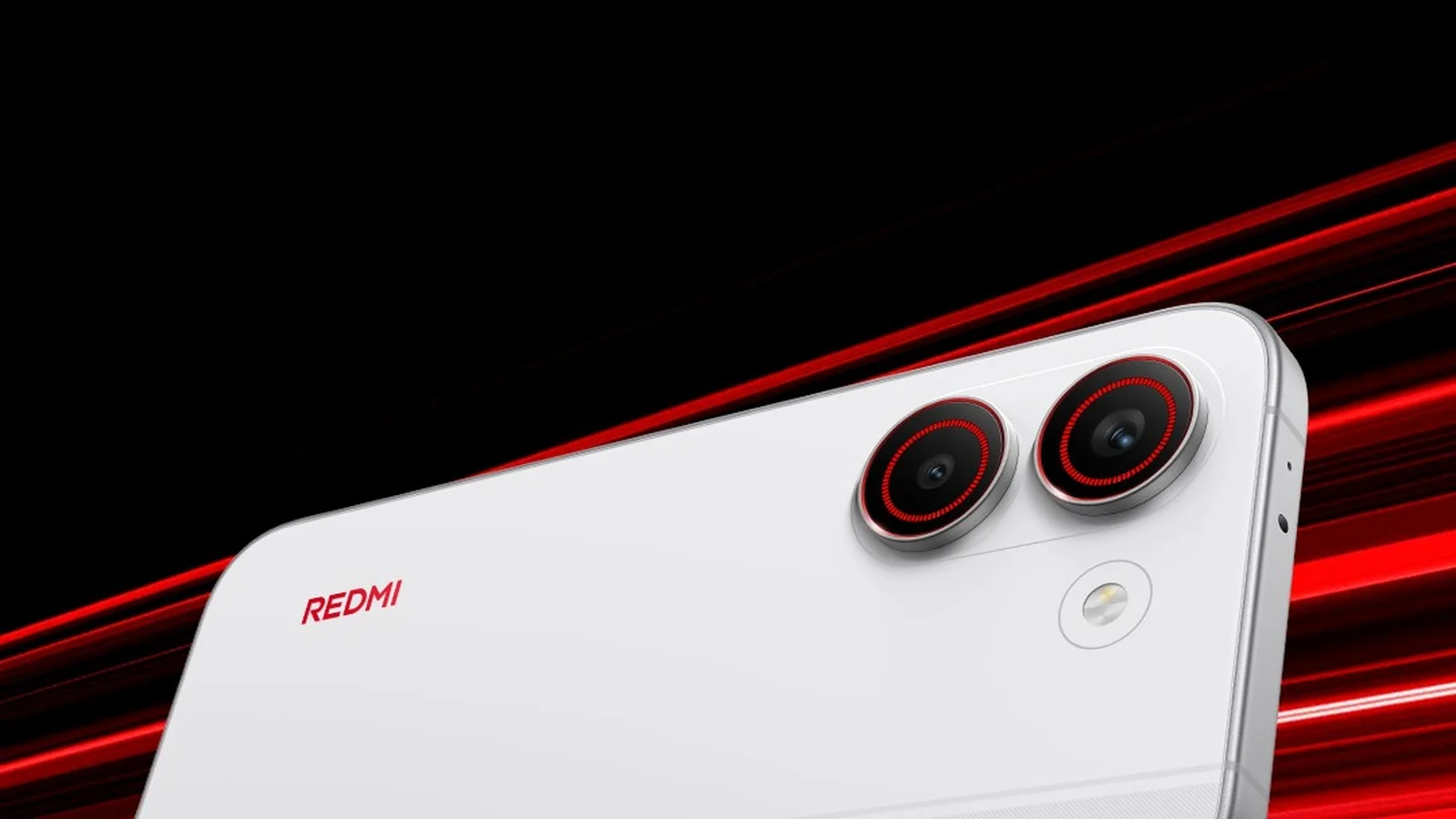
Visually, it has a quiet confidence to it. The Turbo White model in particular has a bit of a motorsport feel thanks to some red detailing on the camera rings and the Redmi logo, but it never overdoes it. A two-tone back keeps things looking put together, and if you like a little show, the Pixel Matrix LEDs will light up with your notifications or when you’re in a game.
Display and audio: where you get lost in it
The 6.59-inch 1.5K AMOLED is the star of the show. We’re talking 120Hz, 12-bit colour and a 3,500-nit peak. Put simply, you get crisp text and good contrast whether you’re out in the midday sun or winding down with some video in the dark.
If you have the right content, Dolby Vision is a treat. The stereo speakers are fine for when you don’t want to put on a pair of cans. And in a move some pricier phones can’t make, you’ll find Hi-Res Audio Wireless support, which is nice to have with the right Bluetooth set.
Cameras: more detail, some room to grow
They’ve stuck with a two-lens setup on the back, and for good reason. The 50MP Sony IMX882 is the one to look at; with OIS and EIS on board, it’s all about how well it renders the fine print in an image.
It’s not without its quirks. The colours don’t always pop, and you might find the dynamic range a bit too soft in the shadows. It’s something you can work around in post, but it does make you notice the difference when you put it side by side with what the Motorola Edge 70 Pro puts out.
The 8MP ultrawide is there when you need it, if you can forgive the loss of some resolution. For anything with movement, the Turbo Snap mode is a handy way to get a burst of shots in.
On the video front, 4K 60fps with HDR10+ is available and has the same natural look as the photos. The 20MP on the other end of the phone is generally good with skin tones for a quick social media post or a clear call.
Software and the long haul
Under the hood is HyperOS 3 on top of Android 16. It’s got plenty of features and AI sprinkled in where it counts. I found the editing tools in the Photos app to be of use, and if you’re into that sort of thing, Gemini is there for you.
Everything feels stable and smooth. There is some bloatware you’ll probably want to deinstall, but then again, Xiaomi is on the record for four OS upgrades and six years of security, so you know it will last.

How it measures up
For 35,000 to 40,000, you have the likes of the Motorola Edge 70 Pro, the OnePlus Nord 6 and the Realme 16 Pro in your sights. The Redmi doesn’t give an inch on the specs or the build.
Motorola has the edge on colour accuracy with its Pantone backing. OnePlus is for the brand loyalists who like a no-fuss experience. Realme’s top-end models are hard to resist until you see the ads in your Calendar app.
Xiaomi’s answer is to be the most well-rounded of the bunch. You have 1.5K 120Hz 12-bit panel, a 7,540mAh cell with 100W charging, and no-nonsense gaming tweaks. Toss in some IP68/69/69K level of toughness and you’ve got a phone that’s hard to beat on price when it first hits the market.
To put it in a nutshell:
– We’re after steady frames, not just a high score for a few seconds.
– The battery and how fast it recharges are a game-changer.
– For the asking price, the build is as hard-wearing as you’ll find.
Pricing and availability in India
Xiaomi is starting at 35,999 for the 8GB + 256GB model and 38,999 if you want 12GB. You can also get 2,000 off right away with certain SBI, ICICI or Axis cards. Once the launch deals are in the rear-view mirror, expect to see them at 37,999 and 40,999.
You can pick one up from 19th June on Amazon, mi.com or in-store. They come in Turbo White, Nitro Blue and Asphalt Black. Even at the higher end of the range, the numbers make sense for what you’re getting.
Display, build, and the little things
There is more to this than meets the eye. A Corning Gorilla Glass 7i and an aerospace metal frame give you some peace of mind. It has a premium heft to it but won’t be a hand-slipper; the back is fairly good at fending off smudges.
The two-tone camera rings don’t create a big hump, so the back is clean. And with the Pixel Matrix LEDs, it’s a bit of a showpiece. I’d say it’s the kind of phone a gearhead would like to have on his desk for the looks of it alone.
Verdict: a step above
Don’t be fooled into thinking the Redmi Turbo 5 is a gimmick. It’s a calculated move to put reliable performance and endurance ahead of the kind of specs that only look good in a press release. The data and the day-to-day use both confirm it.
It’s not without its flaws. The camera could do with a bit of colour correction to be more to everyone’s taste, and there is some bloat in HyperOS to be had. But in the grand scheme of things, they are easy to live with.
What you have here is the most capable Redmi to date, and it’s being sold in a way to ruffle some feathers in a segment where nice-to-haves are getting pricier. While others are trying to upsell you, Xiaomi is holding the line on value.
It’s as close to a no-brainer as you can get without skimping. So if you are on the fence with a Motorola Edge 70 Pro, a OnePlus Nord 6 or a Realme 16 Pro, give the Turbo 5 some consideration. For a first foray into the Indian market, it’s a bold statement.