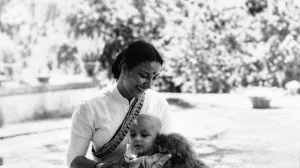
Asha once mentioned in a podcast that her and her sisters liked white saris. That little comment is now a sweet story about their taste, their image, and the personal decisions of two of India’s most famous singers; it says a lot about family and what they showed the public.
A childhood preference for white sarees
When they were younger, Asha and her sisters all felt best in white saris. They thought a single color was simpler, and looked better on them, than colored ones. This choice gave the family a modest and unified look early in their careers.
The white saris were affordable and common in their home because they came from Kolkata, but there were also cultural reasons for wearing them. The combination of simplicity, being economical, and all having the same taste led the Mangeshkar sisters to naturally choose white.
Asha’s podcast revelation about pink sarees
During an interview on the “Couple of Things” podcast, Asha remembered slowly starting to wear pink saris. Lata Mangeshkar, the oldest sister, gave her a look that seemed to ask her when she had begun to like a different color. That brief moment revealed how obvious even a small change in clothing could be to the family.
Asha continued to wear pink saris at home after that look. This little story shows us a more human side to these famous women: trying out a little color, how they reacted privately, and the love that was at the heart of their everyday interactions, despite all the attention they received.
Sisterhood and professional boundaries
Asha and Lata had a strong family connection that began in childhood and continued as they both became successful playback singers, while their other siblings worked on writing music and the music itself. Because of how they were raised, they had a working relationship that lasted their entire careers and was based on both their skill and supporting each other.
But they acted differently in public and at home. Asha said Lata was calm and very professional when she was performing or at work. When she was with the family, Lata became more relaxed and casual; it shows how people change their roles depending on if they are at work or with their family.
They were respectful of each other, even though they were in a business with a lot of competition. They did have a professional rivalry, but it didn’t hide their fondness for each other. Their relationship was a mixture of admiration, reasonable competition, and making sensible choices about life in the music world.
How wardrobe reflected identity and image
The white saris, like many of their clothing decisions, became a part of how the sisters were seen. For artists where how they look is as important as their voice, their clothes helped form how the public thought of them. White represented being straightforward, having dignity, and a quiet elegance that matched their style of music.
However, these choices were also sensible, didn’t cost much, and were affected by the time they were growing up. Clothing is rarely just clothing; it is tied to what society thinks is acceptable, what you are able to get, and the sisters’ desire to show themselves with a calm dignity.
Legacy beyond garments
Asha Bhosle’s memory of the white saris adds a personal touch to their massive artistic achievements. Her choices, just like her songs, showed her individuality and how she changed over time. She and her work were honored with awards for reshaping popular music for many years.
The story of the white and pink saris gently reminds us that even icons have complicated personal lives. Their clothing choices make them seem more like us, and help fans to understand the people behind the music and the lasting effect of the Mangeshkar sisters.