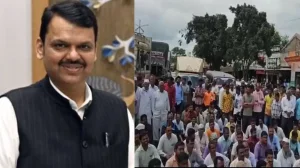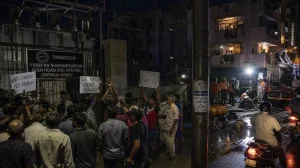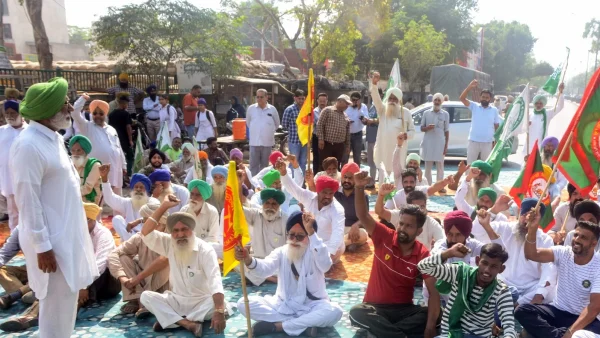
On Saturday, farmers all over Haryana held planned protests against these new Rabi crop buying rules. From noon to 4pm they blocked roads and took over grain markets. The Samyukt Kisan Morcha (SKM) organized protests in many different districts, and said they will have a much bigger protest if the government doesn’t listen to them.
Overview of Protests and Disruptions
The protests happened in Hansi, Hisar, Karnal, Sonipat, Fatehabad, Rohtak, Bhiwani, Panipat, Kaithal, Yamunanagar, and Panchkula. Farmers had sit-ins at toll booths, blocked important roads, and occupied the mandis (markets) which caused traffic jams and stopped services for a short time all over the state.
At the Ramayan toll plaza in Hansi, protesters stopped all cars for almost an hour and there was a fight with the police. In Hisar, when they tried to block a main national highway, the road was blocked for about two hours, and many cars were left stuck with the people inside having to walk.
Emergency vehicles were allowed through at most of the protest locations, although an ambulance had a window broken when it hit a farm trailer. Farmers ended many of the sit-ins after 4pm, but the protest leaders said this action was to show the government they mean business, and isn’t the end of their organizing.
Reasons Behind Farmer Opposition
Farmers are saying OTPs, fingerprint scans, required passes for the gates, and the need to use a digital system are unfair and too difficult. They explain that the new steps add problems to the process and affect small farmers and older farmers the most.
The leaders also say the rules about vehicle registration will prevent farmers without license plates on their tractors from being included. They are also complaining that crops are being turned down because of how much water they contain, and worry that the new system could stop real farmers from selling their crops during an already difficult season.
The protest organizers say their protest is both to get the government’s attention and has a real effect: they want the new buying rules to be removed immediately, and the old way of buying wheat to be brought back, unless the rules are changed.
Government Response and Official Rationale
Haryana’s Chief Minister, Nayab Singh Saini, says the changes are meant to improve openness, make people responsible, and stop dishonesty in the mandis. He says the rules are intended to make the buying system better, not to make life harder for the farmers.
The government has placed specific officials at every mandi and has asked high-level officials and ministers to check on what’s happening. The Chief Minister accuses the opposing political parties of spreading false information and has told the authorities to make sure the farmers aren’t inconvenienced.
Operational Details of the New Procurement Rules
The authorities are now requiring farmers to sign up on the Meri Fasal-Mera Byora website and book a time before going to the mandi. Officials say only farmers who have registered, and whose vehicles are registered, will be allowed in.
The buying process will use OTPs and fingerprint scans to make sure the person is who they say they are. Crops with too much moisture in them may be rejected, and farmers will get the money for their crops in their bank accounts within 72 hours of selling.
Officials say these rules will help identify the real farmers, reduce crowds, and get the money to farmers more quickly. The farmers argue that quickly changing to digital systems without enough protection and teaching can leave a lot of farmers out.
Potential Impact, Next Steps and Policy Considerations
The leaders have warned that they will have a bigger and more serious protest if the government does not change or remove the rules. The farmer organizations are ready to take their protests further than just blocking roads for a short time; they may have longer protests and get more people involved.
Those who make policy have to decide between reducing dishonesty at the mandis and making sure all farmers can still sell their goods. Some things they could do are to slowly bring in the new rules, create exceptions for small farmers, give people help to register at the mandis, and clearly explain how much water is allowed in the crops.
In the end, a good solution will need the government and the farmer unions to talk to each other, give farmers the technical help they need, and watch how the buying process is going to make sure the changes make things more open without stopping farmers who are struggling from being able to sell their crops.