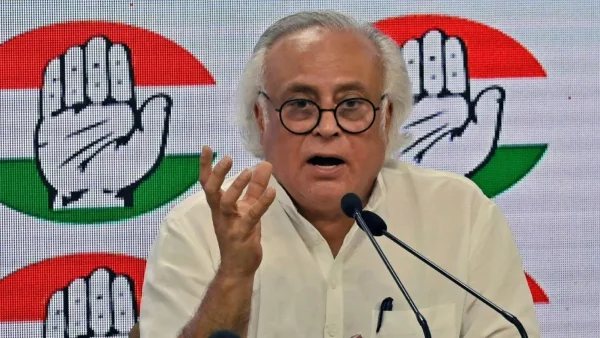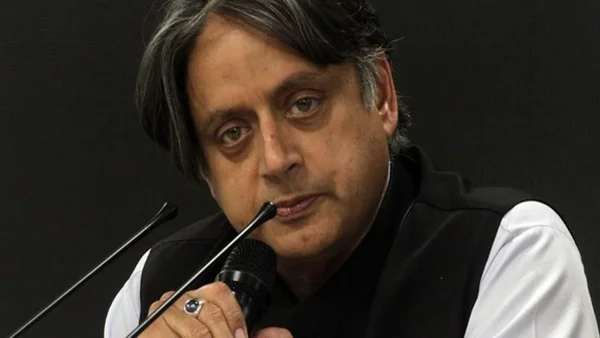
Shashi Tharoor, a leader in the Congress party, said the changes to the women’s reservation law shouldn’t be a way for one party to get ahead. He specifically cautioned against connecting the reservation of seats for women with redrawing districts without talking to a wide variety of people. Doing so could harm the respect for Parliament itself.
Tharoor’s warning on political manipulation
Tharoor believes the amendment to the bill shouldn’t be used to gain a quick political win. He contends that tying the reservation law to the process of determining districts, and not having a broad discussion about it, risks lessening Parliament’s importance.
On X (formerly Twitter), he accused the government of calling a special session of Parliament specifically to look good to voters before the elections in the states. Tharoor repeated that the Congress party supports reserving one-third of positions for women, but he insisted any changes must be done in a way that includes everyone and is fair.
Proposed amendments and implementation timeline
The current idea is to change the 2023 law to hold roughly 33 percent of the seats in Parliament and the state governments for women. The government also wants to increase the number of seats in the Lok Sabha (the lower house of Parliament) from 543 to about 816, and of those, around 273 would be reserved for women.
Government officials hope to have these changes in place by the next general election in 2029. This timeline is the reason they want to pass the amendment and redraw the voting districts at the same time; redrawing determines how many representatives each area gets.
Congress reaction and CWC deliberations
The Congress Working Committee had a meeting to look at the government’s plans and had very strong objections. Leaders in the party said the government’s actions are one-sided and not transparent, and that there hasn’t been a real conversation with opposing parties or the states.
Mallikarjun Kharge, the president of the Congress party, indicated he plans to get together with leading members of the opposition to decide how to respond. The party also pointed out that they have been in favor of 33 percent reservation for women for a long time, and actually proposed similar ideas in 2013.
Constitutional and federal concerns about delimitation
People who disagree with the government say that quickly redrawing the voting districts could upset the balance of power between the states and the national government, especially in the South and Northeast. Changing the boundaries and the number of seats can move political power from one state to another and alter how much say they have, and these changes need to be carefully examined.
Originally, the plan was to wait until after the census (the count of the population) to put the plan in place. Many think that population numbers from the census and open talks with state governments are essential before changing the electoral maps. Without them, it could cause arguments in the courts and in politics.
Political context and likely next steps
Because of this three-day session of Parliament, the political situation is more tense. Opposition leaders are likely to meet and come up with a plan to ask for protections, openness, and potentially a delay until after the state elections or a new census.
Almost all lawmakers want more women in politics. The immediate discussion is about how to do that without breaking constitutional rules, taking away the states’ independence, or messing up the boundaries of voting areas.
Balancing reform with democratic safeguards
Reserving a third of positions for women is a big improvement that would benefit society in many ways. To do it correctly requires clear rules, possibly review by the courts, and open talks with everyone involved in government at all levels.
Going forward, we should have open discussion, make sure everything follows the Constitution, and have a schedule that doesn’t look as though it’s being done to help one political party. This method will help make sure women have a real voice in government and also maintain the democratic relationship between the national government and the states.