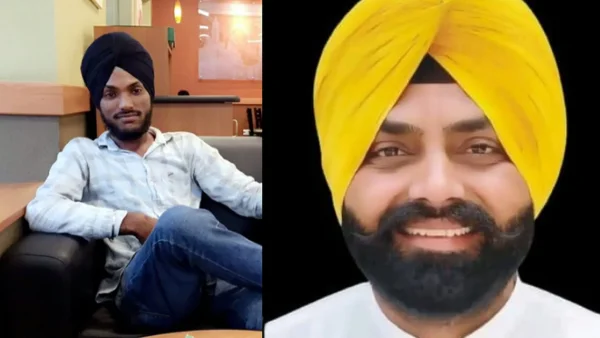
Laljit Bhullar was arrested in relation to Gagandeep Singh Randhawa, who was a manager at the Punjab State Warehousing Corporation. Bhullar was taken into custody in Mandi Gobindgarh after accusations that he harassed Randhawa, who reportedly died after taking poison.
Arrest and immediate developments
Police arrested Bhullar on Monday afternoon because the public was very angry and politicians were putting pressure on them. Bhullar had resigned a few days earlier because of accusations that he continued to harass Randhawa. Police say they are investigating Bhullar for “abetting to suicide” – which is a legal term for encouraging someone to kill themselves – under Indian law.
People within the police force say Bhullar turned himself in and worked with the police. His arrest happened after Randhawa’s family, along with a number of members of Parliament (national politicians), repeatedly asked for the federal government to investigate what led to the warehouse manager’s death.
Evidence, mobile phone, and postmortem status
Investigators have found possible evidence: CCTV (security camera) footage and videos on Randhawa’s phone. They went to Randhawa’s house and got his phone because they think it might have a suicide note or messages that show why he did it or the harassment he faced.
Randhawa’s body is at a hospital in Amritsar, but they haven’t done the postmortem yet. The family won’t allow the postmortem or the cremation (funeral) to go ahead until Bhullar and his family are arrested. This is increasing the tension about keeping evidence safe and how quickly the forensic (scientific) work can be completed.
Family reaction and public pressure
Upinder Kaur, Randhawa’s wife, publicly said Bhullar and his father both need to be arrested before any postmortem or cremation happens. She gave the authorities 24 hours to do this and said she and her children will sit in protest to force them to take action.
Family are very sad and angry. Randhawa’s daughter asked if people with power are treated differently by the law. What the family has said and the videos that have been released have made more and more people call for a fair, thorough investigation.
CCTV footage and recorded statements
CCTV footage that’s going around shows Randhawa in his yard the morning he died, taking sulphas tablets and making a short video. In the video he says he’s taken poison and blames the minister for making him feel this way.
Detectives are looking at these video messages as important clues. Experts in forensics will have to confirm the videos are real, look at when they were made, and compare that with other digital evidence as part of a full investigation into what happened before Randhawa died.
CBI takeover and parliamentary response
Because of pressure from many parliamentarians, the decision to ask for a federal investigation was sped up. Leaders in the federal government said they are ready to give the case to the CBI if MPs from Punjab all officially ask them to. This shows they’re moving toward a more independent investigation.
MPs from Punjab have officially asked for the federal government to take over the investigation, and the family’s political supporters have publicly agreed. If the CBI does the investigation, the case would go to a national agency with a wider reach for collecting evidence and protecting people who have information.
Statements from the accused and state leadership
Before he was arrested, Bhullar used social media to say he trusts the court system and that he will turn himself in. He says he isn’t trying to escape. He said he is confident in the legal system and that he has not run away.
The chief minister (leader) of the state has said the government will not protect anyone, no matter what their position. Officials have promised to take strong action if they find that something wrong has happened, and they say they will follow the law to make sure everyone is held accountable and everything is done openly.
What happens next will be analyzing things with forensics, doing the formal postmortem if the family agrees or the court orders it, and the CBI looking at the case if the national government transfers it. The situation is still developing, but it has already changed politics in the state and brought up important questions about harassment at work, being held responsible, and the rule of law.