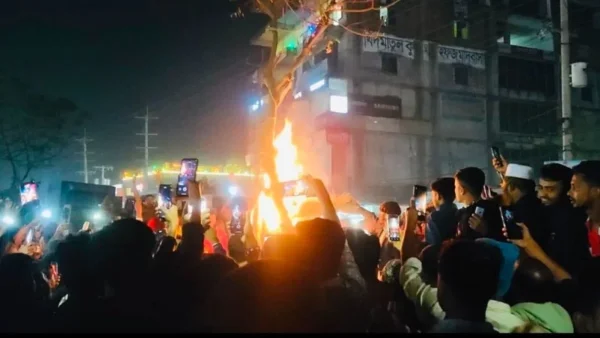
On December 18th, near his job at a factory in Bhaluka, Das was attacked by a group of people, after word went around that he had spoken badly about Islam. He was beaten, then his body was hung from a tree by the Dhaka-Mymensingh highway, and afterwards, it was set alight. Videos of the killing were broadly spread on social media.
Police started a case immediately, and more police were sent to the area to calm things down. The attack has really worried people in the local towns, and has brought up new worries about mob violence being caused by claims of blasphemy that haven’t been checked.
Investigators: no proof of blasphemy
The Rapid Action Battalion – Bangladesh’s top police group – said its work has not found any straight connection between Das and any hurtful statement or posting. According to officials who know about the investigation, checking his activity on social media did not show anything rude.
Md Samsuzzaman, a Company Commander in RAB-14, stated investigators spoke to people he worked with at the factory, and people who live nearby. ‘Now, everyone is saying they didn’t actually hear him say anything like that. No one has been found who says they heard or saw him do anything to hurt religion,’ he said.
How the rumor grew
What people in the area are saying is that trouble began when a rumor spread that Das had insulted the Prophet Muhammad. As things got more tense, some people wanted Das fired, and a crowd gathered outside the factory. During the trouble that followed, he was forced to leave, beaten with sticks and rough weapons, and then killed.
Authorities are looking into how the rumor began, who made it worse, and if there was organized effort to get people to act. Investigators are also looking at digital signs related to the first claims, and the following mobilization.
Arrests and legal steps being taken
Through joint raids, at least ten suspects have been arrested. Police and RAB say they are questioning people to find everyone involved, including those who may have used false claims to start violence. As officials look at video and what people have said, more arrests are likely.
Law enforcement has said the charges will show how serious the crimes were, including murder and setting things on fire. Depending on what the evidence shows, authorities are also thinking about laws related to getting people to cause trouble, and organized violence.
Government’s disapproval of the lynching
Bangladesh’s acting government, led by Chief Advisor Muhammad Yunus, said the killing was a very inhumane act of violence. Officials said there is no room for mob rule in the ‘new Bangladesh’, and promised that everyone who did this will be brought to justice through the proper legal processes.
The statement is meant to give minority groups comfort, as worries about groups being at odds with each other are increasing. Groups that defend rights – like the Bangladesh Hindu Buddhist Christian Unity Council and the Communist Party of Bangladesh – have asked for quick prosecution and a very strong punishment.
India’s response and what it means internationally
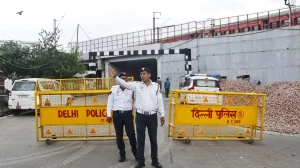
In New Delhi, a small group of young people briefly got together outside the Bangladesh High Commission to protest the killing, and to ask that minorities be protected. India said the protest was peaceful, and didn’t create any safety problems. Police broke up the group in a few minutes.
India’s Ministry of External Affairs said it’s watching what’s happening, is still in contact with Dhaka, and has strongly said it is worried about attacks on minorities. It asked for quick responsibility for the ‘savage’ killing of Das, and again said India is committed to protecting foreign embassies under the Vienna Convention.
A pattern of violence caused by rumor
The lynching in Mymensingh shows how dangerous unconfirmed claims can be in a world where people are very connected. False or unproven claims can turn into violence in hours, particularly when they are spread by word of mouth, and on social media.
Investigators’ finding – ‘no one saw any blasphemy’ – shows how important it is to quickly check facts, to communicate openly, and to step in early when sensitive rumors come up. Leaders in the community, factory managers, and local officials have a very important job in calming things down.
What to look for going forward
Important questions are who started the rumor, if there were organized people behind the trouble, and how authorities will stop similar violence. How arrests go, analysis of digital proof, and court cases will show how seriously Bangladesh deals with mob justice, and protects the safety of minorities.
For now, the official finding is clear: there is no proof that Dipu Chandra Das did anything against religion. What is left is the very urgent job of making sure people are held accountable, building up trust again, and stopping the next tragedy that is driven by rumor, not fact.