US President Donald Trump has again claimed he defused an India-Pakistan conflict that he says was on the brink of going nuclear, reviving a contentious narrative that New Delhi flatly rejects. The renewed assertion ties foreign policy to tariffs, with high-stakes implications for how crises are managed and who gets credit.
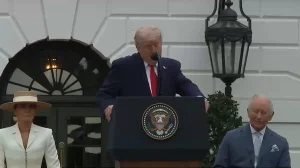
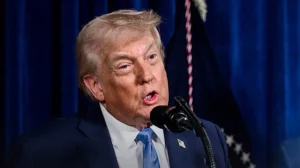
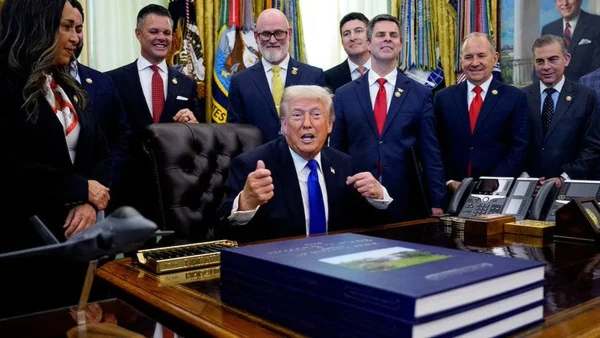
Speaking to reporters aboard Air Force One at RAF Mildenhall in the United Kingdom, Trump described a near-catastrophe. ‘Think of it, India and Pakistan. that war was raging. They were a week into it. Eleven planes were shot down, and that war was going to go nuclear.’
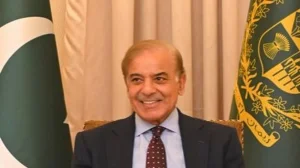
He added that Pakistan's Prime Minister Shehbaz Sharif praised his role in ‘stopping the war.’ ‘The Prime Minister of Pakistan said President Trump saved from 30 to 50 million lives. Well, guess what? Could have been a lot more than that,’ he said.
India’s position and why it matters
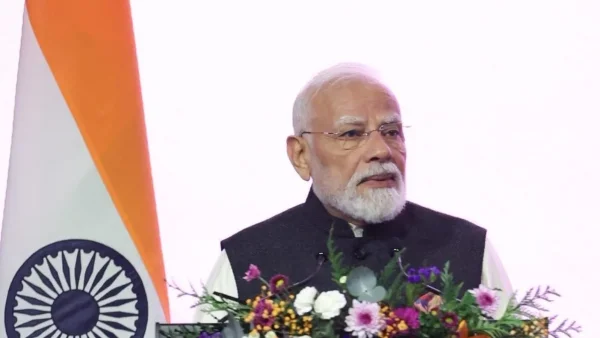
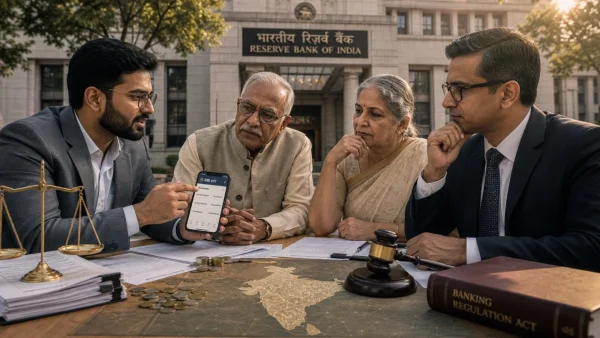
India has consistently denied any third-party role. Officials repeat that the decision to halt military action was achieved through bilateral talks between the Directors General of Military Operations, with no mediation. The stance safeguards India’s long-standing policy that all issues with Pakistan are handled strictly between the two countries.
The strategic subtext is clear: accepting outside intervention could set a precedent New Delhi wants to avoid. By foregrounding DGMOs-led engagement, India underscores institutional channels over personality-driven diplomacy.
Tariffs as foreign policy lever
Trump has promoted an unconventional deterrent: tariff threats. In a recent interview, he said, ‘I stopped eight wars because of tariffs – India, Pakistan… Five of the eight were stopped because of tariffs.’ He recounted warning both capitals, ‘I said, if you keep fighting, I’m going to put a 200 per cent tariff on your country.’
That formula reframes economic tools as crisis management instruments. For trading partners such as India, the claim links market access to security behaviour, pushing commerce into the realm of coercive diplomacy.
Key statements this week include:
– ‘I settled eight wars,’ Trump said.
– Threat of a 200 per cent tariff on both countries.
– India says DGMOs agreed to stop military action.
– Pakistan’s PM credited Trump with saving 30 to 50 million lives.
Broader conflict-resolution claims
Trump placed the India-Pakistan episode within a larger record he says spans multiple regions. ‘I settled eight wars,’ he said, citing conflicts between Azerbaijan and Armenia and between the Democratic Republic of the Congo and Rwanda.
He also referenced Venezuelan Opposition leader Maria Corina Machado, calling her ‘a wonderful person’ and rejecting claims he advised her not to return to Venezuela. On accolades, he argued, ‘I should have won that award more than anybody who ever received the Nobel Peace Prize because nobody settled wars. I settled eight of them.’
How the standoff unfolded
The confrontation traces back to the April 2024 Pahalgam terror attack, which claimed 26 lives. India responded with precision strikes on Pakistan’s cross-border terrorist infrastructure under ‘Operation Sindoor’, hardening positions on both sides before a subsequent halt to military action.
New Delhi maintains that the de-escalation followed bilateral engagement by the DGMOs, rejecting any suggestion of outside mediation. Despite Trump’s repeated claims, India has stuck to its line and framed the outcome as the product of direct, established channels.
The clash of narratives is about more than credit. It reflects competing models of crisis diplomacy: institutional bilateralism versus leader-centric interventions backed by economic pressure. For India and Pakistan, the stakes remain high whenever security incidents test red lines.
Trump’s latest comments ensure the debate will stay in the spotlight. India continues to affirm that the ceasefire understanding was reached bilaterally, while Trump underscores tariffs and personal diplomacy as decisive tools. The distance between those accounts is the story for now.