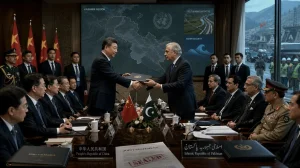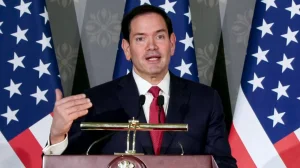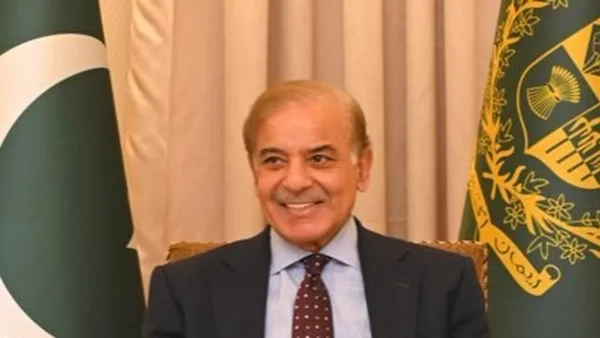
On June 4, 2026, the prime minister put some new life into an old regional conversation, saying in no uncertain terms that Pakistan will be in Donald Trump’s debt for his part in putting a stop to the hostilities with India last year. India, for its part, won’t have it and says there was no third party in the room when they made their deal. New Delhi has been at pains to make clear that the call to end the firing was a matter between the two of them, and nothing more. But these are not just words for the record; they go to the heart of how you handle a crisis down the line and who is invited to the table to do it.
Ceasefire narrative and contested credit
According to Sharif, the de-escalation can be traced back to the aftermath of the Pahalgam terror attack in Jammu and Kashmir where 26 were left dead. That was the prelude to what he termed a four-day military conflict, which saw India bring in Operation Sindoor on May 7 of last year to hit at terror strongholds in Pakistan and PoK. The truce was in place by May 10, he said, and he gives Trump the nod for a firm hand in making it happen. The American president has made no secret of his role in it. “We have a man of peace in Trump,” Sharif said, noting that his actions kept the conflict from spreading and cost millions any further trouble. Here is how the pieces fit together: – Ceasefire date: May 10, last year. – India’s position: a bilateral understanding. – Operation Sindoor was on the ground from May 7. – 26 lives were lost in the Pahalgam incident. – Trump: I was there to see peace was made.
A message to Washington about partnership
You could read the subtext in the venue for Sharif’s comments: a Thursday evening at the US Embassy in Islamabad for the 250th of American independence. It was a way of lending some heft to the occasion.
He put the Pakistan-US bond in context as something special, going back to when the US was one of the first to acknowledge us after ’47. He talked about a relationship of close to 80 years that is now about more than just counter-terrorism or security – we are working together on trade, agriculture, energy, and all the rest of it. Then there is the matter of Trump’s brand of leadership. In Sharif’s view, it has given Washington a certain verve in its foreign policy. “Under his bold, visionary eye, the US is a source of confidence,” he said, while at the same time pushing for progress and prosperity.
Signals from the US mission
Natalie Baker, the US Charge d’Affaires, put it in plain terms: we are strategic partners. She said Trump’s way with Pakistan is personal and gets to the point, with an emphasis on results and making the most of opportunities, whether in a crisis or otherwise.
Diplomacy beyond India-Pakistan tensions
Sharif was also quick to point out that Islamabad is no bystander in the region. He claimed to be putting in a good word for talks between the US and Iran, and he made sure to thank Field Marshal Asim Munir for his part in the work so far. “With the backing of both the US and Iran, we are at it as I speak,” he said, and asked for some prayers for a peace that will hold. If this is the case, it makes for a Pakistan that is very much in the middle of things.
Why it matters now
It is easy to see the tussle over last year’s crisis as a game of spin, but it is more than that. It has a bearing on the playbook for the next one, and on what capitals in the area expect from outsiders. For the ordinary person or the business owner, the story is simple: the fighting was put to rest and we have some stability to show for it. For those in the policy world, however, the question of who to thank is still up in the air, and we will be watching to see how the official stories line up if and when things heat up again.