Prime Minister Narendra Modi used his Australia visit to frame a bigger idea: in an era of supply shocks and energy strain, India and Australia should act as natural and trusted partners. The pitch blends clean energy manufacturing, long-term capital, and faster trade as a pathway to durable growth.
Why Modi is pushing an India-Australia reset now
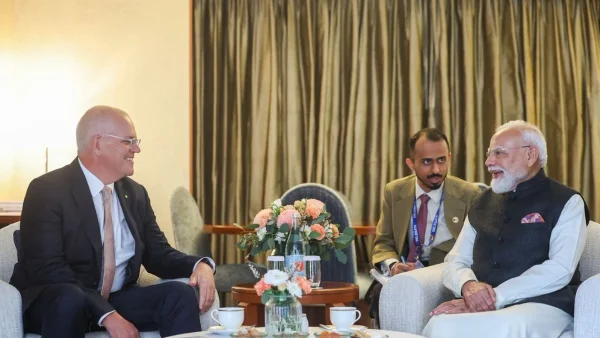
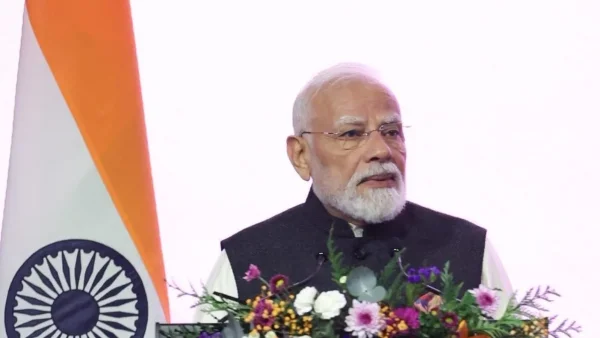
Speaking to business leaders in Melbourne on a three-day visit, Modi said uncertainty has redrawn risk maps for companies and investors. His argument was simple: when volatility rises, trusted partnerships matter more, and India-Australia cooperation can anchor reliability across supply chains.
He cast the relationship as future-facing, saying both sides have prepared a new runway for investments and innovation to take off. The focus, he signalled, is on practical collaboration in trade, technology, and clean energy rather than symbolism.
Big pools of capital, bigger appetite for stability
The investment message targeted long-duration money. Modi invited Australian pension funds to step up exposure to India, calling the country a safe, stable, and sustainable destination for compounding capital over decades.
In remarks echoed widely, he noted that Australian pension funds currently manage assets exceeding four trillion dollars and said pension is considered a sacred trust in India. He added that India aims to protect both investor trust and capital.
He underlined prospects across ports, airports, roads, railways, and urban infrastructure, arguing that patient investors can match India’s scale needs with Australia’s capital depth. The government’s infrastructure push, he said, is guided by scale, speed, and stability.
Clean energy and nuclear: aligned timelines, complementary strengths
Modi positioned the energy transition as the centrepiece of synergy. India has set a target of achieving 500 gigawatts of renewable energy capacity by 2030 and reaching net zero emissions by 2070. He said Australian technology, capital, and resources can accelerate this shift.
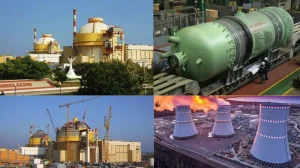
He pointed to a manufacturing ecosystem taking shape in India for hydro projects, green hydrogen, solar modules, and wind turbines. On nuclear, he stated a target of 100 gigawatts of nuclear energy capacity by 2047 and highlighted that Australia’s vast uranium reserves align with India’s nuclear journey.
To crowd in private participation, he said India has opened its nuclear sector to private players through the SHANTI Act. Together, these moves aim to reduce import dependence, build resilient clean energy supply chains, and create bankable projects for long-term investors.
Trade momentum and tech bets set the runway
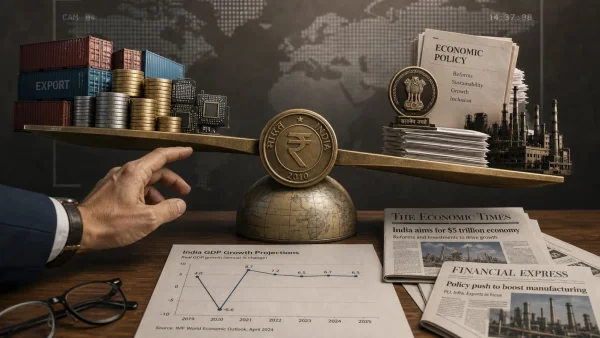
Modi linked capital flows to policy traction. He cited the Economic Cooperation and Trade Agreement, concluded in record time in 2022, as a catalyst for commerce, noting that exports from India to Australia have doubled and both sides gained new market access.
He paired trade gains with a technology push at home. Under AI mission, quantum mission and semiconductor mission, the Indian government has earmarked more than $10 billion in support. The goal, he said, is to build global solutions in a rapidly changing tech landscape.
What to watch next
The immediate test is execution: converting policy intent into investable pipelines and skill linkages. Modi urged both countries to convert student mobility into talent partnerships, signalling a tie-up that spans classrooms, labs, and factory floors.
Below are the near-term opportunities he emphasised for Australian stakeholders:
– Long-term bets in core infrastructure
– Financing and tech for clean energy manufacturing
– Nuclear fuel and private participation pathways
– Education and skills collaborations
The broader takeaway is strategic. Trade frameworks like ECTA create momentum, but the durability of the partnership will hinge on predictable regulation, scalable projects, and cross-border capital comfort. Modi’s message to investors was that India can provide the stability, while Australia brings capital and resources.
As supply chains rewire and energy systems transform, both governments see a window to lock in complementary strengths. If pension capital, clean-tech manufacturing, and nuclear cooperation move in tandem, India and Australia could turn today’s uncertainty into a shared growth engine.